
Activated Alleys
July 2018, Emily Koller (Links updated Nov. 2020)
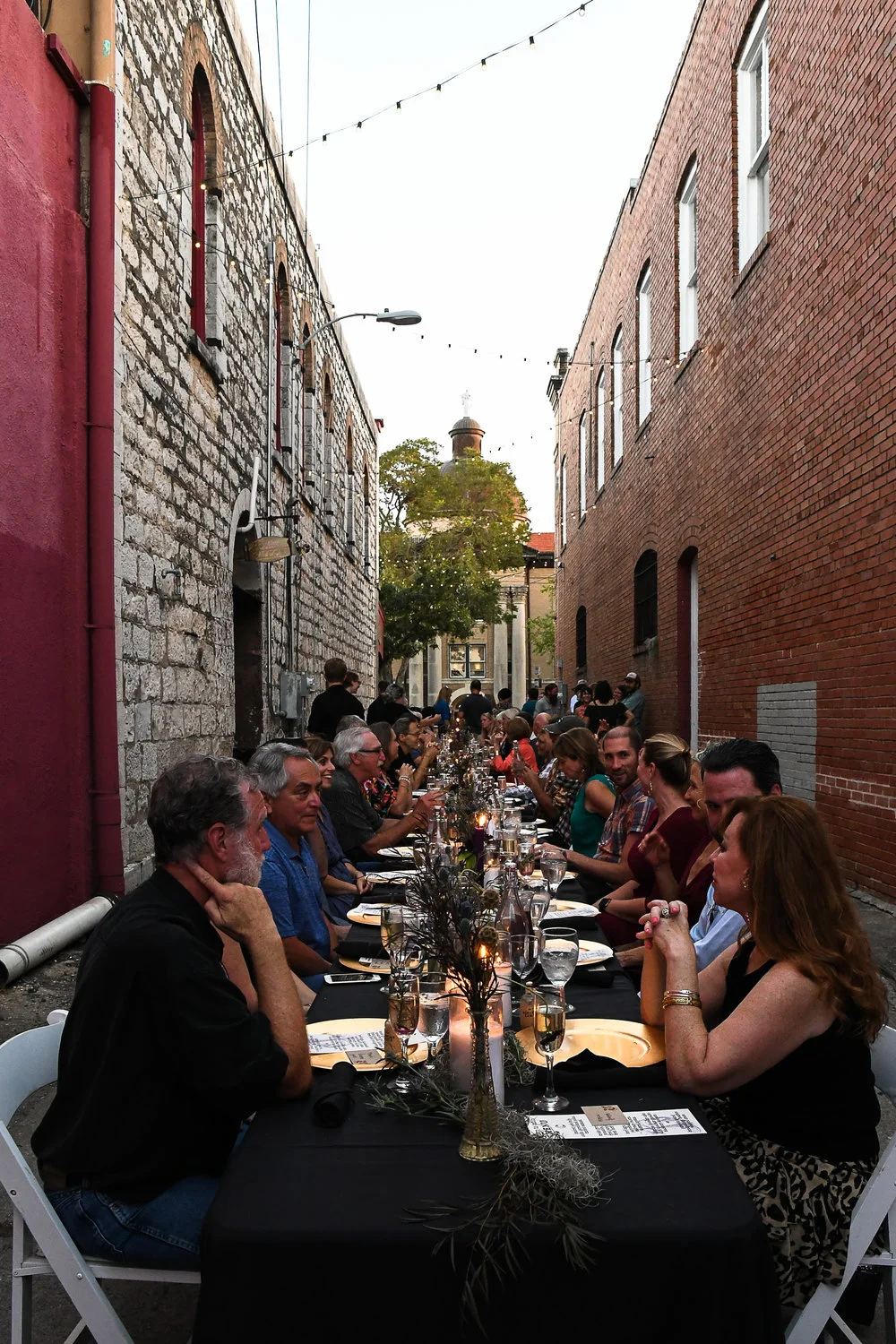
Kissing Alley, San Marcos
Activated alleys can create a functional, safe and walkable network of public spaces that celebrate art and nature, foster commercial presence, allow for outdoor dining, stimulate the senses, honor existing historical features, provide family friendly activities and spaces, respect current legitimate uses, and make people want to return again and again.
Alleys as public spaces are unique in that they are right-of-way, so there can be additional cumbersome city processes that are required in order to close the alley for public events. Typically cities require a Special Events Permit like this example in El Paso: http://downtownelpaso.com/special-event-permitting/
However, some cities are prioritizing alleys and are closing them entirely to motorists to promote them as pedestrian thoroughfares. Others have created a special designation such as “passageways” and “festival streets” which recognizes their value as public spaces and offers a simpler permitting process to close the alley for events.
Here are some examples from different cities that have prioritized alley activation in their downtowns.
Seattle, WA – Pioneer Square Alley Activation and Festival Street Permitting
After a series of very successful “alley parties” by neighborhood groups and businesses, the city created a Festival Street designation which allows the alleys to be closed to cars on some days. With support from the City of Seattle department of neighborhoods, a community-driven alley design process led to accessible design specifications that speak to the history, include an easy-to-maintain surface, and feature a lighting plan. Two alleys just completed construction as part of the City CIP budget. They have five designated Festival Streets AND created a new Festival Street permit.
http://allianceforpioneersquare.org/what-we-do/public-realm/alley-activation/
Old process: http://allianceforpioneersquare.org/wp/wp-content/uploads/2016/01/Alley-Handbook-webpress.pdf
New Festival Street permit for the alleys: http://www.seattle.gov/transportation/permits-and-services/permits/public-space-management-permits#festivalstreets
Austin, TX – Activating Austin’s Downtown Alleys as Public Spaces
In Fall 2012, the City of Austin Downtown Commission created a workgroup to examine opportunities for activating Austin’s downtown alleys in order to contribute to a more vibrant network of people-oriented public spaces in Downtown Austin. This report summarizes the workgroup’s findings and policy recommendations. One of their recommendations focuses on streamlining the permit process (see page 28).
Bozeman, MT – Downtown Alley Sketchbook
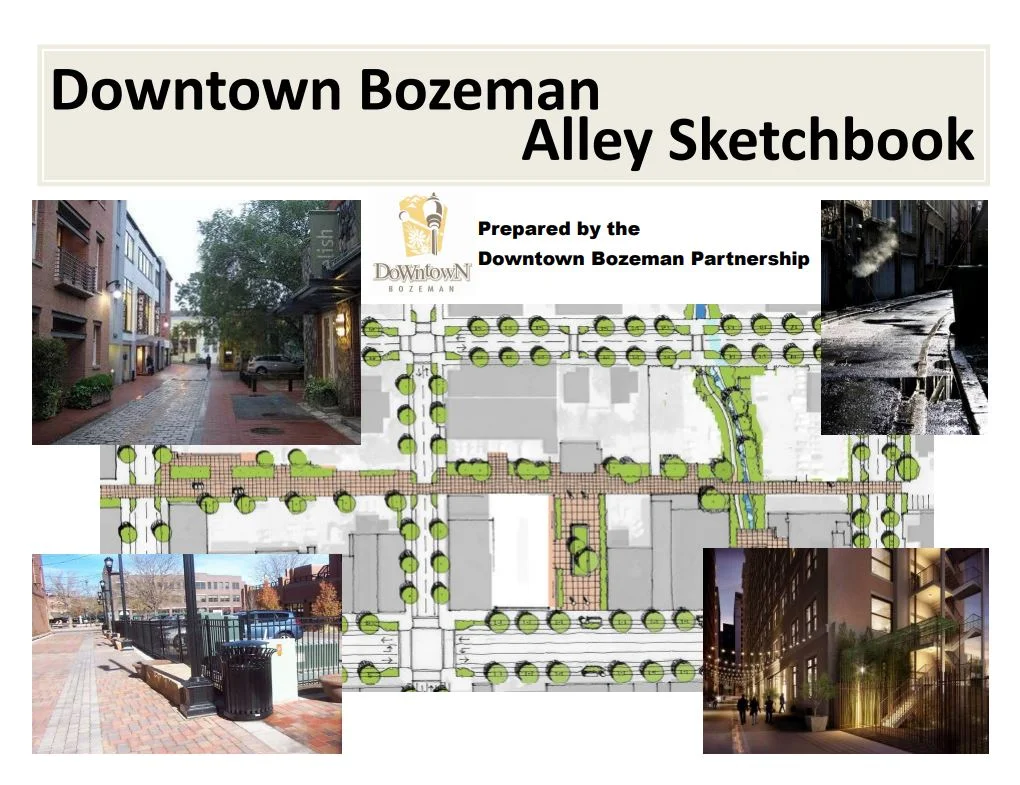
The 2010 Downtown Plan outlined a strategy to create a network of open spaces which included pedestrian-friendly alleys. The Downtown Bozeman Partnership then created a Downtown Alley Sketchbook to showcase possible improvements that can be implemented organically and through public improvement projects. According to their 2018 Progress Report, the Downtown Urban Renewal board set aside funding to pilot some of the alley improvements.
Las Vegas, NV – Downtown Alley Design Guidebook
The city of Las Vegas adopted a thematic goal of focusing on improvements to the downtown area through, among other strategies, creating partnerships and investment strategies for major catalyst projects. Turning existing alleys, where appropriate, into iconic, active, vibrant and pedestrian-oriented spaces supports this goal and cannot be accomplished without engaged and committed partners. Activated alleys will form a clean, functional, safe and walkable network of spaces that celebrate art and nature, foster commercial presence, allow for outdoor dining, stimulate the senses, honor existing historical features, provide family friendly activities and spaces, respect current legitimate uses, and make people want to return again and again. The purpose of the Downtown Alley Design Guidebook [“Guidebook”] is to provide recommendations for possible improvements that can be implemented organically through public/private partnerships.
Birmingham, AL – Activating Urban Space: A Strategy for Alleys and Passages
This study identifies alleys and passages in and around Downtown Birmingham, and seeks to provide a framework to classify alleys and passages into different categories based on their existing uses and to outline options to capitalize on opportunities for aesthetic improvement and activation of these spaces.
Denver, CO – Dairy Block Alley Activation by Private Developer