Exploring Previtalization
September/October 2017 Main Street Matters
Written by Emily Koller, Planner, Texas Main Street Program
On a recent trip to Memphis, Tennessee, I attended a tour organized by the Tennessee State Historic Preservation Office. The tour was meant to highlight recent preservation success stories as well as music history landmarks—such as Elvis’ Graceland and Sun Studio—in a city known as the “Home of the Blues and the Birthplace of Rock and Roll.” Elvis’ music is on the first cassette tape I can remember owning, so I was more than excited. However, Graceland was the last stop of the day and I was prepared to have trouble focusing on everything before that. As it turns out, Graceland was not the most memorable aspect of the tour, and I returned very inspired by a uniquely Memphian strategy called “previtalization,”
which I would describe as a hybrid between historic preservation and the DIY philosophy of tactical urbanism.
We traveled in the nation’s only music bus with stellar commentary provided by the Memphis Heritage Foundation’s dynamic long-time executive director, who was interrupted periodically by different guests, including a musician who provided a lesson in the Memphis backbeat complete with shakers and a singalong. While music was obviously supposed to be an important theme of the day, the other important theme turned out to be this concept of previtalization, but I did not realize it until much later.
The term was first used at the 1890 Tennessee Brewery, a spectacular Romanesque building on the bluff overlooking the Mississippi River on the edge of downtown. Today, the brewery has been converted into 46 apartments with about 13,500 square feet of office and commercial. The “brewery district” also includes a new 88-unit apartment building, a 339-space garage, and plans for an additional 80,000 square feet of
residential development.
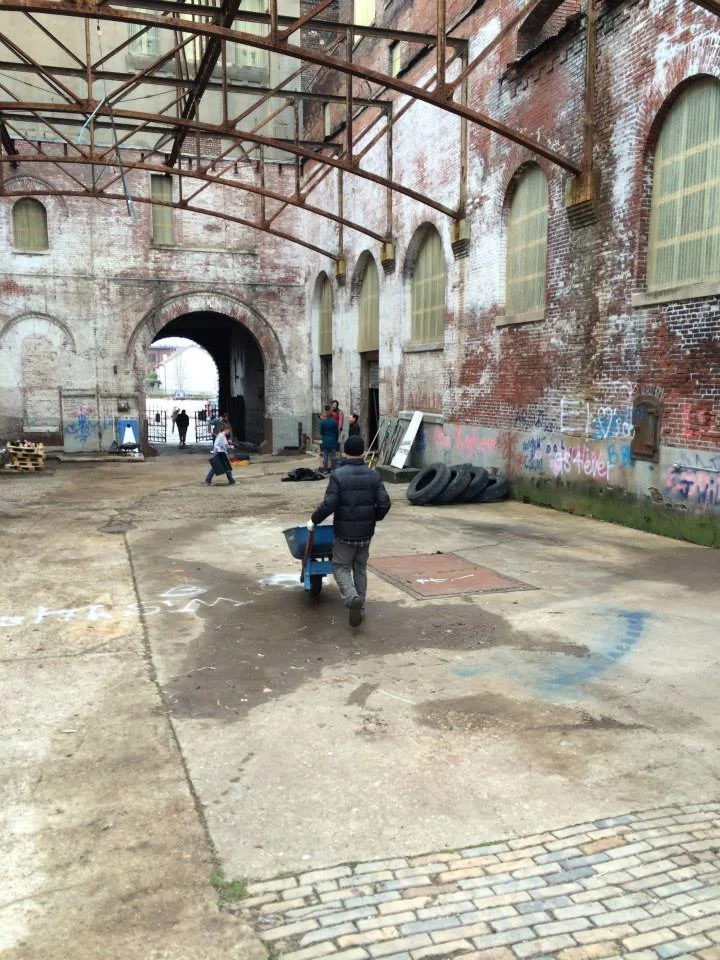
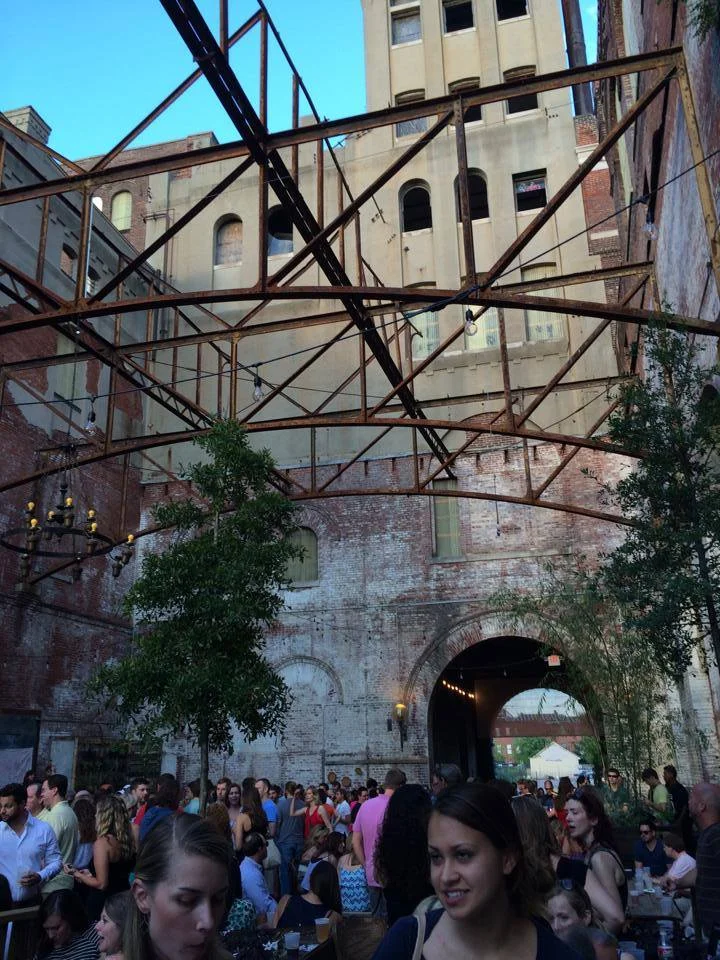
Before (top) and after (bottom) photos of Untapped at the Tennessee Brewery, 2014. Photo Credit: Tennessee Brewery Untapped, @TNBBreweryUntapped
The unbelievable part is that the Tennessee Brewery, vacant since 1953, was facing impending demolition in the summer of 2014—only three years ago! A group of local civic leaders, some of whom were involved with the Mayor’s Innovation Delivery Team, convinced the owner at the time to allow a temporary café and beer garden on the weekends for six weeks. The event was known as Untapped and brought over 20,000 people into the space, or an average of 3,300 people per week! While it offered beer, games, live music, and an assortment of fun events like a spelling bee watch party, the goal was to make the building itself the attraction. By November 2014, a local Memphian closed on the property, and by
the following spring, the developer reached an agreement with the Downtown Memphis Commission, who would build and finance the parking garage to jump start the redevelopment.
This was an amazing success story. I filed it away and looked forward to the next stop—the 1883 Clayborn Temple, best known for being a hub of political activism during the Civil Rights movement. It was the starting point for the Sanitation Workers’ Strike in 1968, which was the cause that would bring Martin Luther King Jr. to Memphis. The Clayborn is in the middle of a major fundraising campaign, and we learned that their primary
strategy for raising awareness about the significance of the building was, you guessed it, previtalization. The church has been structurally stabilized but is nowhere near restored and is hosting numerous events to bring people to experience the raw beauty of the unfinished space. The future vision involves a use that will continue to position the church as a place for positive social change, and all events and activities align with that vision.
Crosstown Concourse was our third and final preservation project on the tour. Built in 1927, this was one of Sears’ massive catalog merchandise distribution centers which now totals about 1.5 million square feet. Completely redeveloped as a “mixed-use vertical urban village,” the project is the largest historic tax credit project in Tennessee history. The scale was overwhelming. We stood around in awe as the project developers described taking it from a cocktail napkin idea to reality. I started to think about Elvis, when once again I heard the term previtalization. Crosstown Arts—as a founding partner, co-developer and tenant of the project—relied on a series of arts-based events to bring people into the massive building, driving engagement and momentum, and eventually tenant commitments which were to be followed by financing.
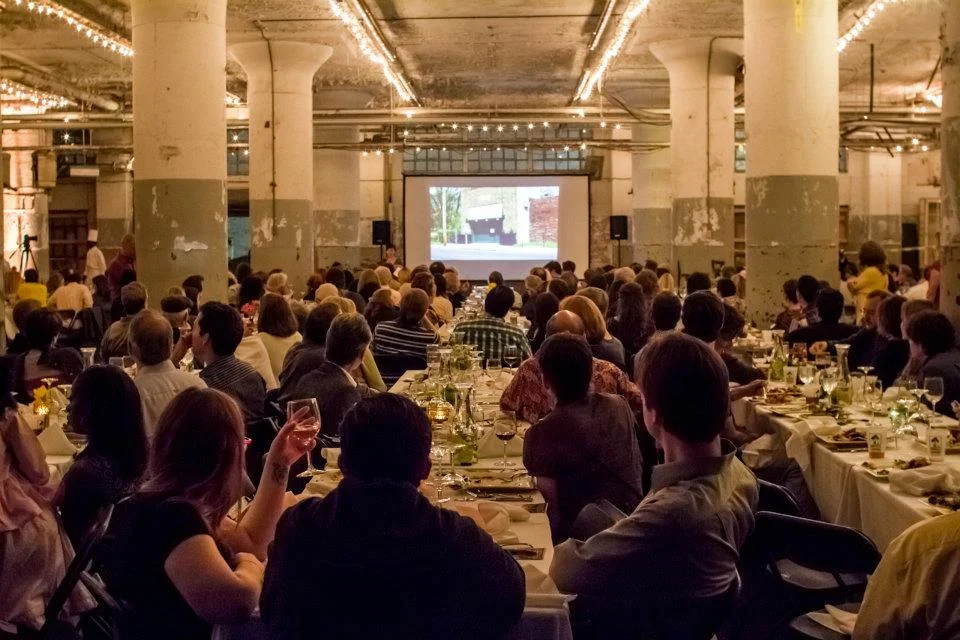
MemFeast at the Crosstown Concourse before redevelopment in 2012. The
event allows anyone from the community to purchase a $25 ticket for a locally
sourced meal along with drinks and a ballot to vote on a series of public art
proposals from a juried selection of artists. At the end of the night, the ballots
are cast and the winning artist receives $5,000. Photo by Jamie Harmon,
Crosstown Arts.
By now, I was piecing together that Memphis was really rocking (pardon the music pun) this previtalization thing, although I knew they did not invent the term or the concept. Technically, this is a strategy from the tactical urbanism approach to community design. The philosophy promotes improving the livability of towns and cities through low-cost, incremental, and small-scale changes that help build social capital and organizational capacity. Often projects are described as “interventions” and are intended to cut through typical bureaucratic procedures to implement simple ideas that get people excited and engaged. For example, taking over a parking space in front of a café to create a pleasant outdoor dining space for people to gather and linger is a common Tactical Urbanist intervention. Street Plans Collaborative, an award-winning urban planning, design, and research/advocacy firm, is credited as developing the term in 2010. They published a series of guides to support those working at the local level.
In the most recent guide, site previtalization is defined as “the temporary re-activation of a previously inactive, underutilized parcel of land.” They do not specifically focus on vacant buildings, but their philosophy emphasizes working at the micro-scale. They also explore pop-up shops and cafes, food trucks, and temporary retail as specific tactics which are applicable to either vacant parcels or buildings. In the downtown revitalization field, none of these tactics are new to us as ways to help people imagine the possibilities of vacant buildings and spaces. So why was I so moved
by Memphis? Part of it is that tactical urbanism is still new enough that there are not a lot of examples of permanent physical changes that are the result of planned interventions. The Tennessee Brewery and Crosstown Commons are major developments that directly attribute their success to simple DIY urbanist tactics.
The other reason these projects made such an impression is that I did not go on a “previtalization” tour. It wasn’t a special thing; it was oddly just part of everyone’s vocabulary there. Often, tactical urbanism projects get caught up in the idea of themselves. “Hey—we did a great thing for our community because we staged an event and activated this space for a day. The end.” The most critical aspect of the approach is the part that is hardest to do—building social capital and organizational capacity. Clearly something is in the water there. There are many people who were stirred to action because of the pop-up events in these dramatic historic spaces—neighbors, artists, beer drinkers, city commissioners, lenders, developers. The pride for the history of the city was tangible. It is not about flipping open a book and picking the latest trendy planning tool. Memphis was a good reminder that tactical urbanism does work, but more importantly, works best when people really care about history and place.
The lesson is that when utilizing such tactics in your own historic downtowns, you cannot be content with temporary activation—the measures should focus on people and capacity. Who are you engaging and are you moving them to action through your projects and interventions? If not, how can you better connect them to history and place?
Links:
More on the Tennessee Brewery and the Untapped Event
http://archive.commercialappeal.com/entertainment/food/tennessee-brewery-untappeddemonstrates-creative-uses-for-vacant-spacesep-
481689162-324118061.html/
http://www.atthebrewery.com/
More on the Clayborn Temple
https://www.claybornreborn.org/
More on Crosstown Commons
http://crosstownarts.org/
https://www.curbed.com/2017/9/15/16311604/crosstown-concourse-memphis-redevelopment
More on Tactical Urbanism
http://tacticalurbanismguide.com/about/
iTactical Urbanism 2: Short Term Action, Long Term Change. Street Plans Collaborative and CNU NextGen. Published by Street Plans Collaborative, 2012. Accessed online at http://tacticalurbanismguide.com/guides/tactical-urbanism-volume-2/