WHEN THE SMOKE CLEARS:
What to do after a Main Street fire
September 2014 Main Street Matters
Article written by Rebekka Adams, Assistant State Coordinator, Texas Main Street Program
Disasters strike around the world every day. Tornados, earthquakes, hurricanes, strong winds, gas explosions, the list goes on. The most common disaster that happens in our Texas Main Street communities is, unfortunately, fire. While you cannot avoid a fire, you can plan to minimize risk and how you will react to the situation. Since disasters rarely herald their arrival, the time to prepare for one is NOW. The first step is to form partnerships in your local community with the key players—local government, first responders, and business and property owners. Take the time to show people why preservation is important, and what that means in the event of a disaster. This article explores stories from Main Street Managers of how and they responded to recent fires in their downtowns. It also includes guidelines on how to prepare your Main Street for disaster, and where to seek help if it happens to your downtown.
Pittsburg, Fire February 2014
The story of the fire from Jenny Rowan, Main Street Manager
Pittsburg experienced a fire in its Main Street district on February 16 this year. There were two buildings completely gutted. The fire started in a computer store and spread to a beauty salon. The buildings were originally built together in 1901 and separated in 1903. Three surrounding buildings had roof damage from the fire/water. The fire occurred on a Sunday night, with a holiday falling the next day. I live in a loft about four buildings down, so I was woken up at 4 a.m. when the incident occurred and was able to be there at the entire time. I immediately contacted business owners whose buildings were neighboring the fire (if they were not already downtown).
Once the fire was put out, we realized that it had consumed the interiors of both buildings, but fortunately, the front façade was still intact. Working with the city, I knew they’d have to get a permit to demolish beforehand, so I knew that was something we wouldn’t have to discuss at work. I called staff from the Texas Main Street program on Sunday morning, who got me in touch with the National Trust’s grant for emergency funding. We applied for the grant, hired a historic preservation engineer, got the grant, and consulted the building owners. Additionally, the property owner is applying for the Main Street matching grant incentive, which is funded through the EDC and funneled by Main Street.
As of August, we are still in the process of rebuilding. The interiors of the two properties were devastated, the front façade was restored, and it just needed some repointing, cleaning, and a bit of structural support. All repointing is completed, as is plumbing and flooring. The roof will be going on next! When asked, “what do you know now that you wish you would have known before the fire?” I wished I would have known it was going to happen. But in reality, I would have handled everything the same.
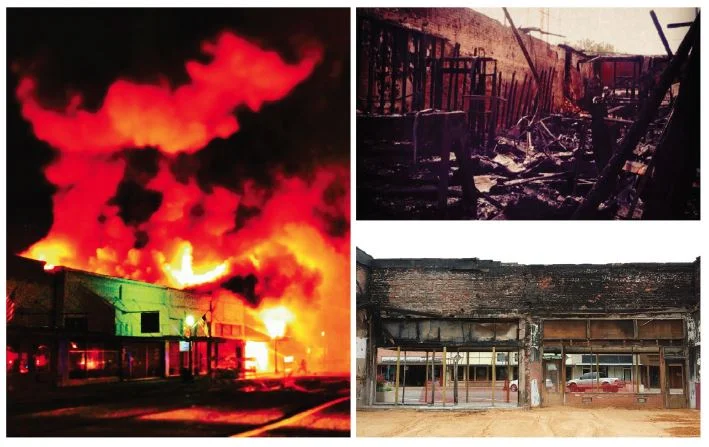
Fire devastates downtown Main Street Pittsburg, February 2014. Images courtesy Pittsburg Main Street.
Eagle Pass, Fire June 2014
The story of the fire from Joe Cruz, Main Street Manager
On Wednesday, June 26 at approximately 9 a.m., the Eagle Pass fire Department responded to a structural fire at 204 Commercial (downtown). A total of four buildings were affected. The building where the fire initiated was completely demolished. Two of the attached buildings were also highly damaged and seem to be uninhabitable. The fourth building received smoke and water damage.
I made contact with the owner of the store just to make sure they were safe. I drove to the site but the whole area was blocked. I immediately contacted the owner of the store (renter) and the owner of the building. I sent an email to the Texas Main Street staff the following morning.
The owner of the building(s) did not have insurance on the property. At the moment the owner is in the process of clearing out the debris and possibly demolishing the attached buildings. The owner of the fourth building, the one that received water and smoke damage, did have insurance. He is in process of receiving some money from his insurance company. The owner of the destroyed building has not yet decided if he is going to rebuild or sell the land once it is cleared out of the debris.
Two days before the fire, I had met with our Small Business Development Center representatives. We discussed an emergency preparedness seminar for small business owners. I wish we would have had this seminar last year. We are in the process of having this seminar next month.
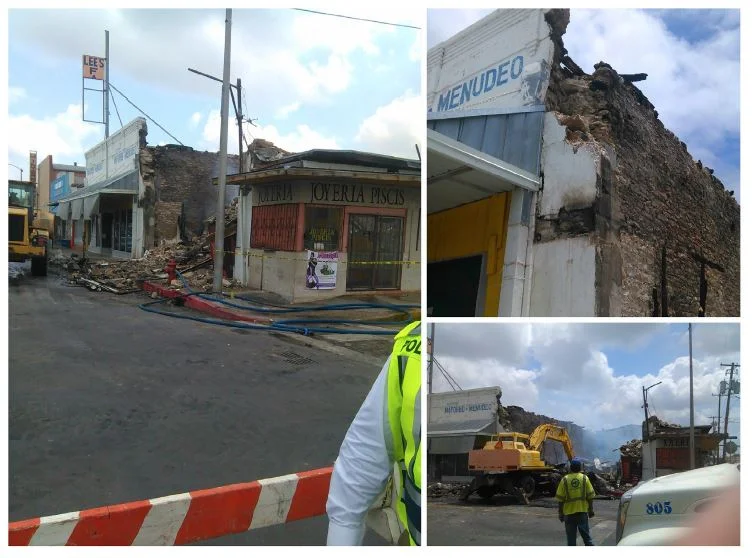
Fire damages four historic buildings in downtown Eagle Pass, June 2014. Images courtesy Eagle Pass Main Street.
Prepare Before a Fire
In the aftermath of a fire or any other disaster, there are many issues that a Main Street manager needs to be prepared for. They include working with the first responders and the property owner, to stabilizing the structure (if possible), to dealing with temporary business relocation, public perception, historic preservation issues, and street interruption during demolition/rebuilding. Now is the time for planning and organizing yourself, your business, and your Main Street property owners. Before a disaster strikes, you should:
- Inventory all businesses in your Main Street district; make sure to keep contact information updated.
- Inventory all buildings in your Main Street district. Make sure to include: property owner, contact information and emergency contact information, location of electrical, water, and gas shut offs, and building materials utilized in construction.
- Keep a pictorial inventory (both historic and current) of all buildings so reconstruction will be in appropriate context.
- Identify and get to know your local, county, and state emergency response personnel. Work with them to identify best cases for preserving historic properties.
- Document the existing condition of your historic property with photographs or drawings.
- Work with your local government to develop a disaster plan and include provisions for historic buildings.
- Partner with local insurance agents to provide educational training to both business and property owners on risks and insurance policies.
- Have a list available with contact information for local utilities, insurance brokers, and any other assistance resources available to distribute to affected business and property owners. Have a list of contractors available to help with rebuilding or demolition.
- Make sure you review all of the relevant health, safety, and building codes for regulations and procedures that might hasten demolition of damaged buildings. Be educated on your community’s process of dealing with emergencies and disasters.
During a Fire
During a disaster, the primary concern is for personal and public safety. Until the disaster threat has passed, this must be the primary concern. Remember:
- Follow all directions from first responders. Their primary goal is to ensure safety for everyone involved. Do not get in their way.
- Turn off utilities and vacate any neighboring properties that are in danger.
- Work with emergency management personnel to organize efforts to reduce damage during the disaster response period and plan for the recovery.
After a Fire
After a disaster is the time to work collaboratively with property owners to develop appropriate plans to rebuild or repurpose the space. Some tips for this process are:
- Take it slow. Allow time to properly evaluate the damage before making decisions that are irreversible (e.g. demolition). Properly secure the structure so further damage cannot be done while decisions are being made. Tarp exposed roofs, board up entrances to keep people out, and clean and salvage any debris that may have fallen from the structure.
- Make sure materials are not removed from the site until they have been evaluated and determined that they cannot be salvaged for reuse, patterns, or reconstruction.
- Strongly encourage the property owner to work with licensed architects and engineers who are familiar with historic buildings (distribute list of contractors that you hopefully generated before the emergency).
- Make sure to take photographs of the damage prior to any activity. It is good practice to keep photographs of work while it is being done as well.
- Use the Secretary of the Interior’s Standards for Rehabilitation as your guide in rehabilitating historic properties damaged in a disaster.
Advice from around the National Main Street Network:
One of the advantages of being a Main Street program is the wealth of knowledge that can be learned from other Main Street communities. Here are some words of advice from other Main Street managers who have dealt with fires in their downtowns:
Advice from Granby, Colorado, is to pre-plan for anything, and then ensure copies of those plans and other essential information are kept in multiple locations.These places can be known to many, but with the information still kept confidential.
In Brattleboro, Vermont, the local Main Street program partnered with a downtown retailer and their local United Way to hold a fundraiser to assist in rebuilding a historic building that was damaged by fire.
Mount Airy, Maryland worked with the city and county to assist rebuilding downtown after a horrible fire. There were three main components that the Main Street program was able to assist with: temporary relocations of affected businesses, working with the planning department, and marketing. The Main Street program helped to provide temporary pods or construction trailers for affected businesses until their buildings were rebuilt. They also worked with their planning commission to fast track site plan reviews for rebuilding efforts. Also, all the development fees were waived for the affected property owners. Finally, the Main Street program launched a marketing campaign to encourage business in downtown immediately after the fire.
Educate Businesses on Disaster Planning
In addition to what you can do as a Main Street program, it is equally important to educate and work with the businesses that were housed in the affected buildings. After two major fires in the downtown area in Davis, California, Laura Cowe, Main Street consultant and former Main Street manager, drafted “Managing Your Business To Minimize Disruption: A guide for small businesses in Downtown Davis” to distribute to all of her downtown businesses. She kindly shared her advice from her experience with the Texas Main Street network. This is an excellent resource to duplicate and share with your downtown businesses. Make sure to add important contact information to key players in your community. Here are her suggestions:
Business Help After a Disaster
Disaster or major emergencies can occur with little or no warning. For these reasons, it is important to have a plan of action in place for the post-disaster phase, after your building has been stabilized and the damage assessed. At the very least, the action plan should include the names and phone numbers of key individuals and organizations you need to contact immediately following a disaster, including your:
- Insurance carrier
- Suppliers
- Creditors
- Employees and customers
- Media contacts
- Utility companies
- Local emergency management agency
Safety First
The safety of people and property are key considerations following a disaster. Buildings must be safe for occupancy before employees and customers re-enter.
- If you own the building your business occupies, have it inspected by structural engineers and contractors to determine its safety and the extent of the damage.
- If you do not own the building, work with the owner to have the building inspected. Whether you own the property or not, you are responsible for the safety of your employees, customers, and anyone else who may be on the premises.
- Restoring your utilities, phone service, gas lines, and other important links should be done as soon as possible. If you discover gas leaks or live wires, be sure to immediately contact your utility provider.
- Get your sprinkler system back into service as quickly as possible.
Assessing Damages
Make note of the damages to the structure by the disaster, such as roofing, siding, and windows. Photos and videotapes are helpful to supplement your documentation. Also note damage to business equipment and property, including product inventory and raw materials.
By making temporary repairs to the building, boarding up windows, or covering holes in the roof to make it weather-tight, you can avoid additional property damage. Consider securing the building from casual entry by using temporary signs to redirect parking or traffic access. You may want to notify your customers and suppliers about temporary changes being made to continue operations, including a change of address if necessary.
Cleaning Up
Your insurance company may instruct you to hire a professional cleaning service for your place of business. Any clean-up effort should be done in a safe and healthful manner. If you or your employees are involved in this effort, use safety items such as proper eyewear, gloves, hardhats, and dust masks. Also, separate the damaged stock from the undamaged and remove all debris after you receive authorization from authorities and your adjuster.
Funding to Assist After a Main Street Fire
As always, Texas Main Street staff is available to assist you with picking up the pieces after any disaster in your downtown. Here are a few funding opportunities that you may be eligible for in the case of a fire:
Emergency/Intervention Funding from the National Trust for Historic Preservation (NTHP)
Intervention funding from the National Trust is awarded in emergency situations when immediate and unanticipated work is needed to save a historic structure, such as when a fire or other natural disaster strikes. Funding is restricted to nonprofit organizations and public agencies. Emergency grants typically range from $1,000 to $5,000, but unlike the majority of grant funding, a cash match is not required for intervention projects. Contact the NTHP if you believe your project qualifies for this type of funding. Please note: the emergency funding is very limited. More information here.
The Southwest Intervention Fund
Grants from the National Trust’s Southwest Intervention Fund are intended to further preservation efforts of the traditional cultures of the Southwest region, exclusively in Arizona, Colorado, New Mexico, West Texas, and Utah. The fund provides support for preservation planning efforts and enables prompt responses to emergency threats or opportunities in the eligible states. Local partners, nonprofit organizations, and government agencies that have strategic opportunities to save sites or help jumpstart preservation projects are eligible for the fund’s small, catalytic grants. Grants generally range from $2,500 to $10,000. More information here.
Hart Family Fund for Small Towns
Grants from the Hart Family Fund for Small Towns are intended to encourage preservation at the local level by providing seed money for preservation projects in small towns. These grants help stimulate public discussion, enable local groups to gain the technical expertise needed for particular projects, introduce the public to preservation concepts and techniques, and encourage financial participation by the private sector.
Grants from the Hart Family Fund for Small Towns generally range from $2,500 to $10,000. The selection process is very competitive. The review process is generally completed within three months of the application deadline, and applicants are notified via email once the review process is complete. More information here.
Additional Resources:
- Preventing & Responding to Fire - http://www.preservationnation.org/resources/disaster-recovery/fire.html#.U-OPd2O2120
- Fire Departments, Life Safety & Emergency Responders: Engaging Preservation - http://www.preservationnation.org/resources/disaster-recovery/fire-depts-life-safety-prep.html#.U-OWq2O2120