
Ground Floor Uses on Main Street
March 2018 Main Street Matters
Written by Emily Koller, Planner, Texas Main Street Program (TMSP)
You can download a printable copy here.
PART 1. Best Practices
We frequently receive questions about how to prevent a single undesirable ground floor use in the Main Street district.
- Can you show us an example of an ordinance that won’t allow storage on the first floor?
- How do we prevent someone from living on the first floor?
- Our entire courthouse square is filled with attorneys. How do we shift to more retail?
- We have several churches occupying the first floors. They are only there a couple days of the week and not during regular business hours. What do we do?
While these may seem like different challenges, they are all related to a city’s land use policy for downtown. The solutions often lie in the zoning ordinance or code, which is not light reading.
This article is intended to help downtown managers know how to approach their particular challenge by better understanding the type of downtown zoning they have in place. It also provides some of the recent thinking on best practices for ground floor uses on Main Street. “Code hacks” are offered at the end in Part 2 to assist with drafting ordinance changes.
Understanding your Downtown Zoning
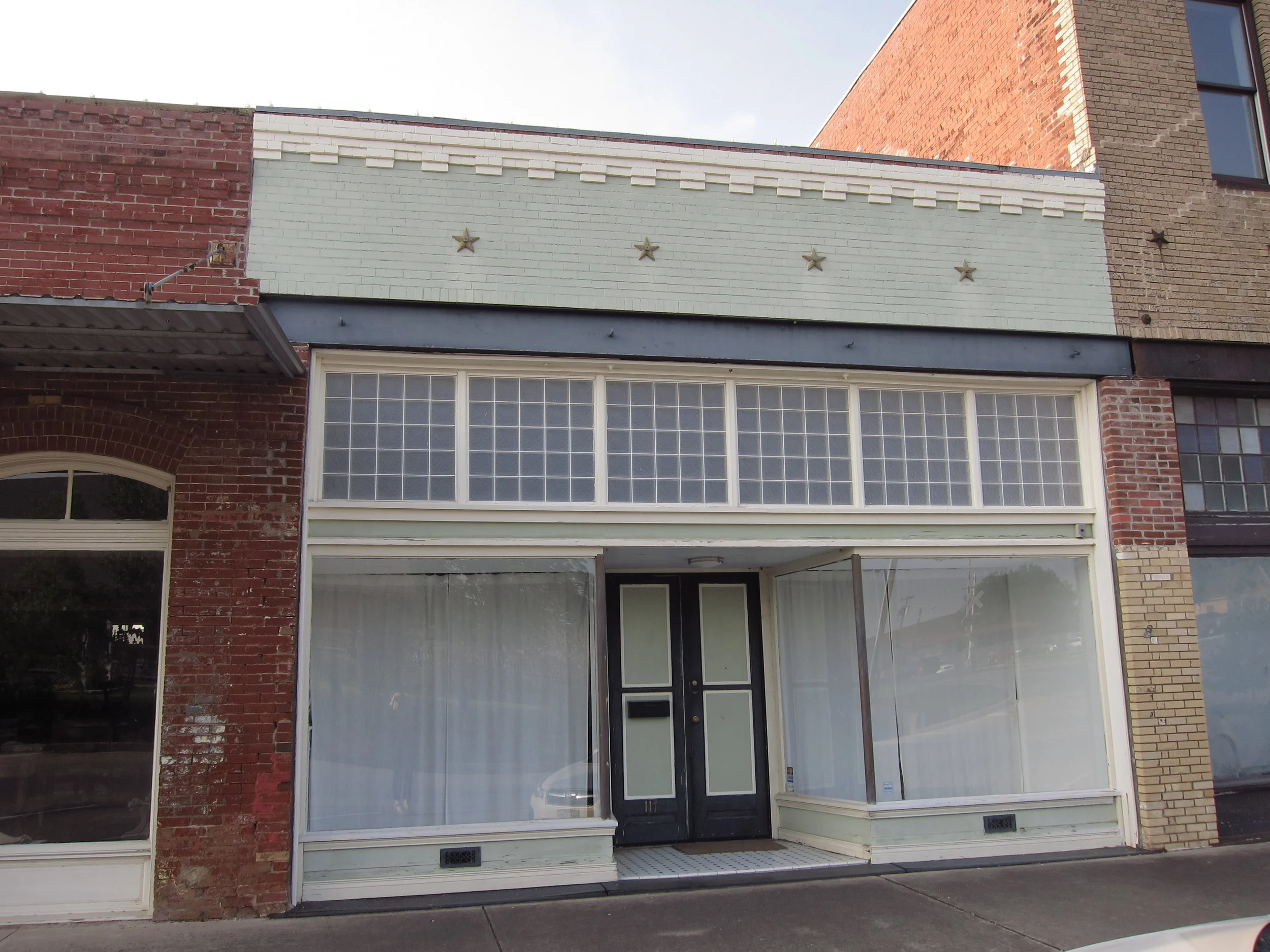
The best downtown zoning codes combine land use regulation with building design to achieve active storefronts.
When faced with frustrations over ground floor use in your district, what you are able to implement and how quickly depends a lot on your existing zoning code. A zoning code is a set of regulations adopted by local municipalities that controls the size of buildings, their placement on lots, and their uses.
Many small communities have conventional zoning codes. Conventional zoning codes (known as Euclidean) are focused on the division of uses by district. They often encourage an automobile-focused pattern of development where uses are laboriously listed by district, parking requirements are high, and the public realm (sidewalks, landscaping, scale, character) is ignored. Typically, there is no “downtown district” – downtowns may be zoned multiple categories like Local Business, General Business, and Central Business. Important uses that contribute to dynamic, livable downtowns like residential, lodging, light industrial, entertainment, etc. may not be addressed or may be allowed in one district but not the other. This type of zoning may make it more difficult to implement small and immediate modifications, while a larger overhaul of the ordinance takes time and requires significant public support. Mount Vernon is a good example of this type of code.
Example of a Conventional/Euclidean Zoning Code in Mount Vernon, TX
Other cities, including many of our Main Street cities, already have a downtown-friendly zoning code in place. These typically treat downtown as one mixed-use district and the standards are written to encourage both residential and activity-generating uses such as retail, restaurant, and personal services while minimizing parking requirements and enhancing the public realm. Main Street programs are instrumental in advocating for the necessity of these types of codes as they make it easier and more efficient to redevelop buildings and sites that are pleasant, walkable
and consistent with historic scale, character and design. If you have this type of ordinance in place, it is an indication your community has already gone through a process to prioritize appropriate land use regulations and policy in downtown. You may be able to quickly make small modifications and successfully avoid public controversy. McKinney is a good example of this type of code.
Example of a Downtown Mixed-Use Zoning Code: McKinney, TX
Before you do anything, assess your existing zoning ordinance. If you have city planning and zoning staff, start the conversation with them. They should be your best partner. If not, determine who on the city staff is designated as the zoning administrator, such as your building official or city secretary. Then decide what is needed versus what can be supported politically. Taking time to understand your code will help you decide if you can make small modifications or if you should consider revisiting it as a whole.
Best Practices for Ground Floor Zoning
It is safe to assume that a primary goal for most Main Street programs is to fill as much ground-floor space as possible with appropriate businesses. In order to reserve that space for retail uses, some towns have modified their base zoning use requirements to exclude non-retail and non-service businesses from first floors and allow them only in upper stories or in zones outside the commercial core. As simple as it may sound, restricting ground floor usage to certain types of businesses can be difficult to implement and often quite controversial among property owners who may balk at such restrictions, especially if the retail market is weak.
Nicholas P. Kalogeresis writes in the zoning and land use chapter of Revitalizing Main Street: A Practitioner’s Guide to Comprehensive Commercial District Revitalization that first-floor, retail-only zoning works best when there is high demand among retailers for storefront spaces, and the number of buildings with suitable ground floor locations is in relatively short supply. [1] Zoning alone will not attract new businesses and it should never be a substitute for good business development practices. Also, restricting office or non-retail usage of first floors could bring up legal and constitutional issues if those uses are also limited elsewhere in the district or in the community at large.
As far as best practices for managing ground floor uses, there have been recent efforts by placemaking organizations like the Congress for New Urbanism to bring coding innovations and changes to local governments with zoning authority. CNU’s Project for Code Reform sees antiquated zoning codes as a major barrier to implementing successful placemaking strategies in downtowns. One of their first project deliverables was the Main Street Corridor Code developed in partnership with the Michigan Municipal League and Michigan’s Redevelopment Readiness Program. This 5-page document is designed to be simple to understand and adoptable without a larger code overhaul for the entire community.
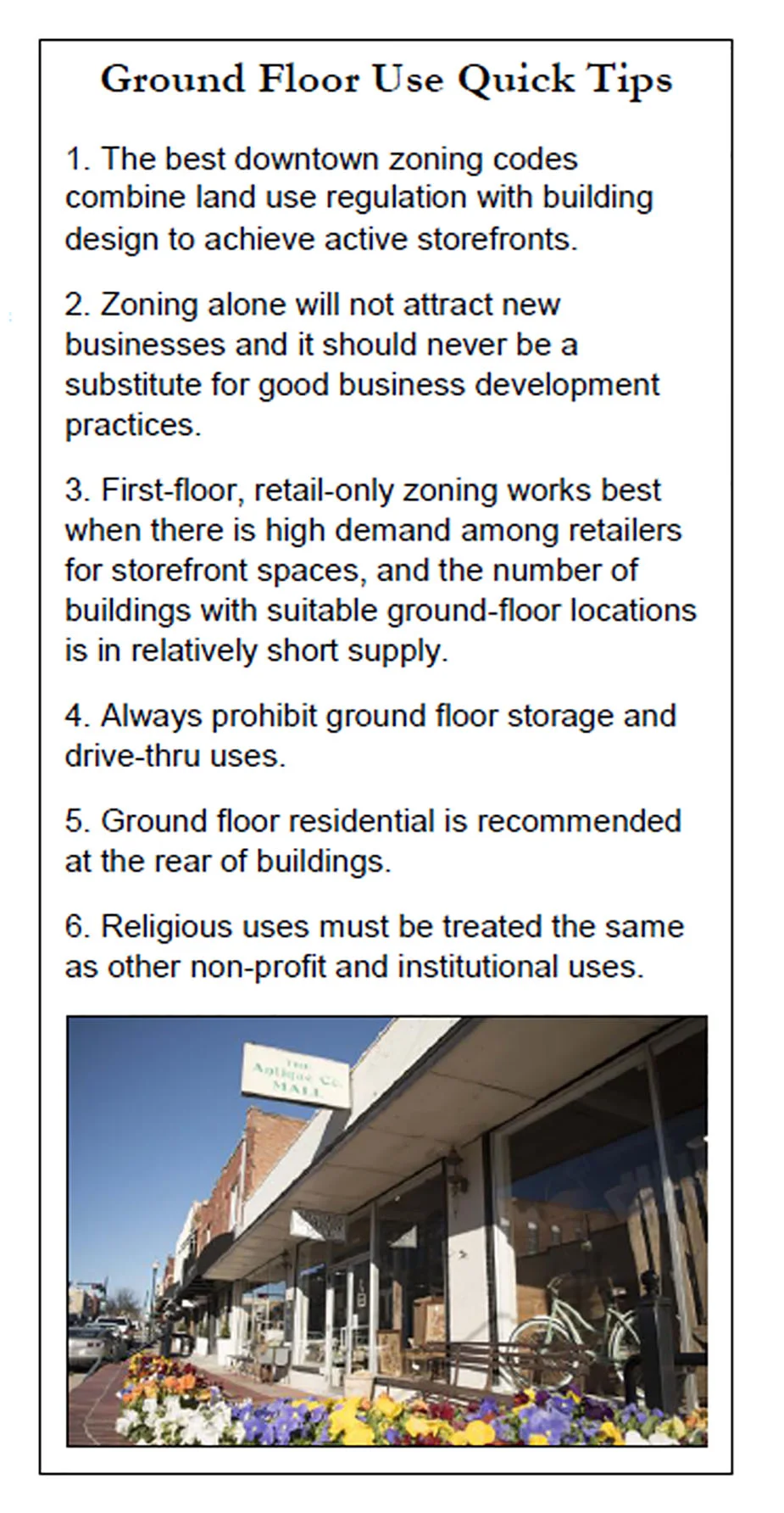
Planners and downtown development professionals often share CNU’s concern about antiquated zoning laws. Downtowns can be “over-coded.” Form-based codes have been introduced as one solution to minimize use requirements as they focus more on building form – especially how the building interacts with the streetscape. CNU’s Main Street Corridor Code is a good example of a downtown zoning code that simplifies use requirements and provides design standards to address the way building frontages engage and interact with the streetscape.
It is important to note that the Main Street Corridor Code example does not require retail on ground floors. Rather it requires active uses that serve the public in some way in the first 20 feet of depth of each building in the Primary Retail Corridor. It is written in this way:
The first 20 feet of ground floor building depth along the Primary Retail Corridor must be used for retail display, dining, offices, meeting rooms, or other public or semi-public gathering spaces.
It also requires several building standards for the facades on the Primary Retail Corridor:
The ground floor building facade along the Primary Retail Corridor must be configured as follows:
(1) 50% clear glass is required along the facade.
(2) Building entries may be recessed from the facade up to 8 feet in depth.
(3) Awnings and marquees may project into the right-of-way to within two feet of the curb.
(4) Display windows may project into building setbacks.
The example code only directly prohibits a few uses: storage, gas stations, drive-thrus, and adult entertainment. Residential is permitted on the upper floors of mixed-use buildings along frontages that are not the Primary Retail Corridor. There are no special provisions for religious uses.
This is a balanced and simplified approach that utilizes both land use regulation and building design standards to achieve an activated ground floor that seamlessly interacts with the streetscape.
It is important to remember that the ultimate goal is the experience of downtown as a place. Use is only part of the equation – the design of the building’s frontage and the way the tenant maximizes that frontage is equally as important. There is no one-size fits all, but generally the most successful downtown mixed-use zoning ordinances (see bigger cities like McKinney and San Marcos, smaller cities like Elgin and Seguin) combine land use regulation with design standards to encourage an active, people-oriented experience at the ground floor level.
[1] “Zoning and Other Land Use Regulatory Tools.” By Nicholas P. Kalogeresis, AICP in Revitalizing Main Street: A Practitioner’s Guide to Comprehensive Commercial District Revitalization. National Trust Main Street Center: 2009.
PART 2. Code Hacks
Requiring Retail
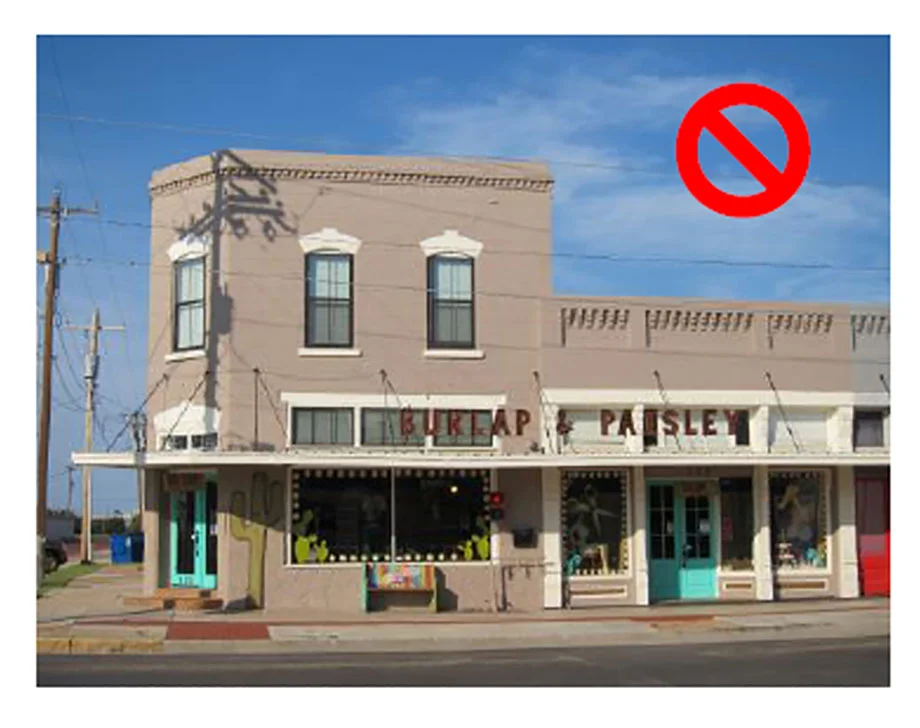
Avoid code language that requires retail uses on 100% of the ground floor.
When struggling with the business mix in downtown, usually one of the first questions is how about a retail use requirement? But as discussed above, requiring retail frontage only works when there is a high demand for the space in “hot” markets. Other solutions would be to require retail in a smaller portion in the front of a building or create a detailed matrix about what uses can occupy spaces that have main street frontage/access. Libertyville, IL illustrates the former while Sylva, NC illustrates the latter.
Libertyville, IL: Link to Code
Libertyville, IL requires the first 35’ of the front portion of the building be dedicated to retail uses. While not particularly user-friendly, the code does provide an example of how to implement this:
5-2.4 Use Limitations
c. Limitation Upon Location of Specified Uses:
(1) 1) All uses which are denoted by an asterisk in Section 5-2.2 or Section 5-2.3 of this Code shall be prohibited from occupying the front thirty five (35) feet of any first floor space within a building with street frontage on Milwaukee Avenue within the C-1 Downtown Core District.
Sylva, NC: Link to Code
Sylva uses a matrix to identify what uses are permitted for the ground floor street access, the second floor and the third floor. The city only allows a limited number of uses – mostly retail and services – on the ground floor. This is a good example of simple, straight-forward way to clearly manage ground floor uses.
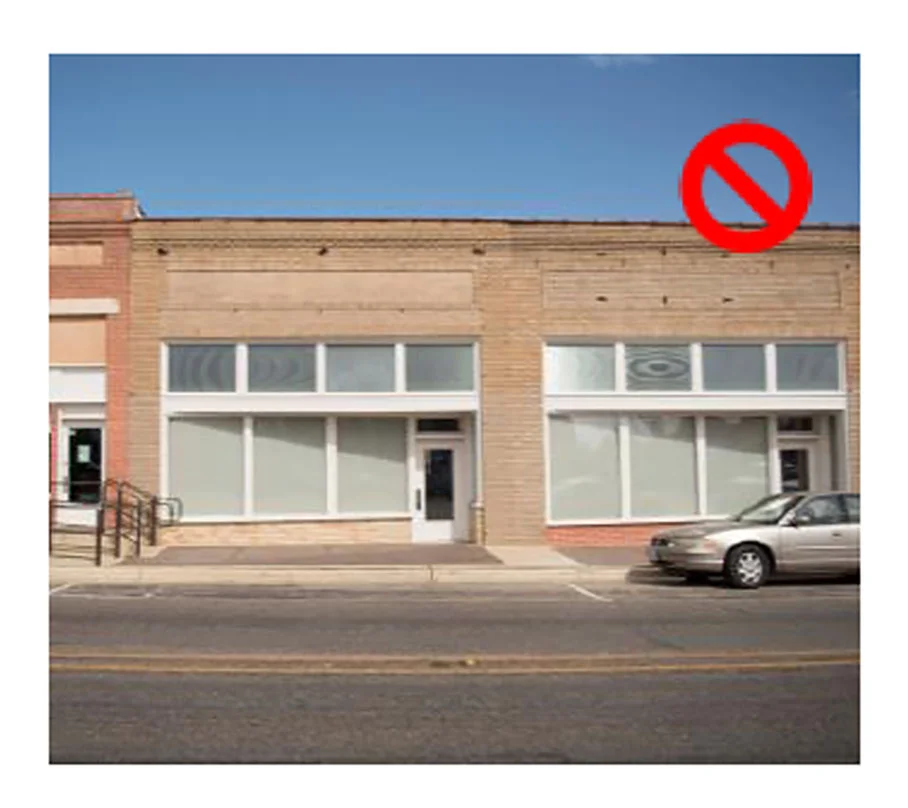
Prohibit storage as a ground floor use unless the storage space is an accessory use to sales and display.
Prohibiting Storage
Storage is a use that has no place on Main Street. Ordinances should be clear about what kind of storage is prohibited as personal storage on the ground floor of a historic building is different than mini-warehousing in a new metal infill building. Storage that is an accessory use to a permitted use, such as bike storage for a bike retailer.
Denison, TX: Link to Code
Denison proactively amended their ordinance to clearly prohibit storage anywhere in the Central Area (CA) district. They added one sentence under special requirements in the Central Area zoning district section.
28.39.5. Special requirements:
B. Storage: Open storage, mini-warehouses, and warehousing in general are prohibited in the CA District.”
Sealy, TX: Link to Code
This is another example the clearly prohibits storage in the entire downtown district (DD).
Sec. 29-3 – Use Regulations
C. Prohibited Uses
6. Storage facilities, including storage warehouses or indoor storage facilities, for the storage of personal, household or business items, except storage facilities accessory and incidental to a use permitted by Subsection 29-3.B. of this section and occupies the same lot of the permitted use.
CNU Main Street Corridor Code Example Language: Link to Code
e) Commercial
iii) Storage facilities (Not permitted)
vii) The following restrictions apply to all commercial uses:
(3) Storage of non-retail materials and the making, assembling, remodeling, repairing, altering, finishing, or refinishing or its products or merchandise is permitted provided:
- These activities are completely enclosed within the premises occupied by the establishment.
- These activities are clearly accessory to sales and display activities.
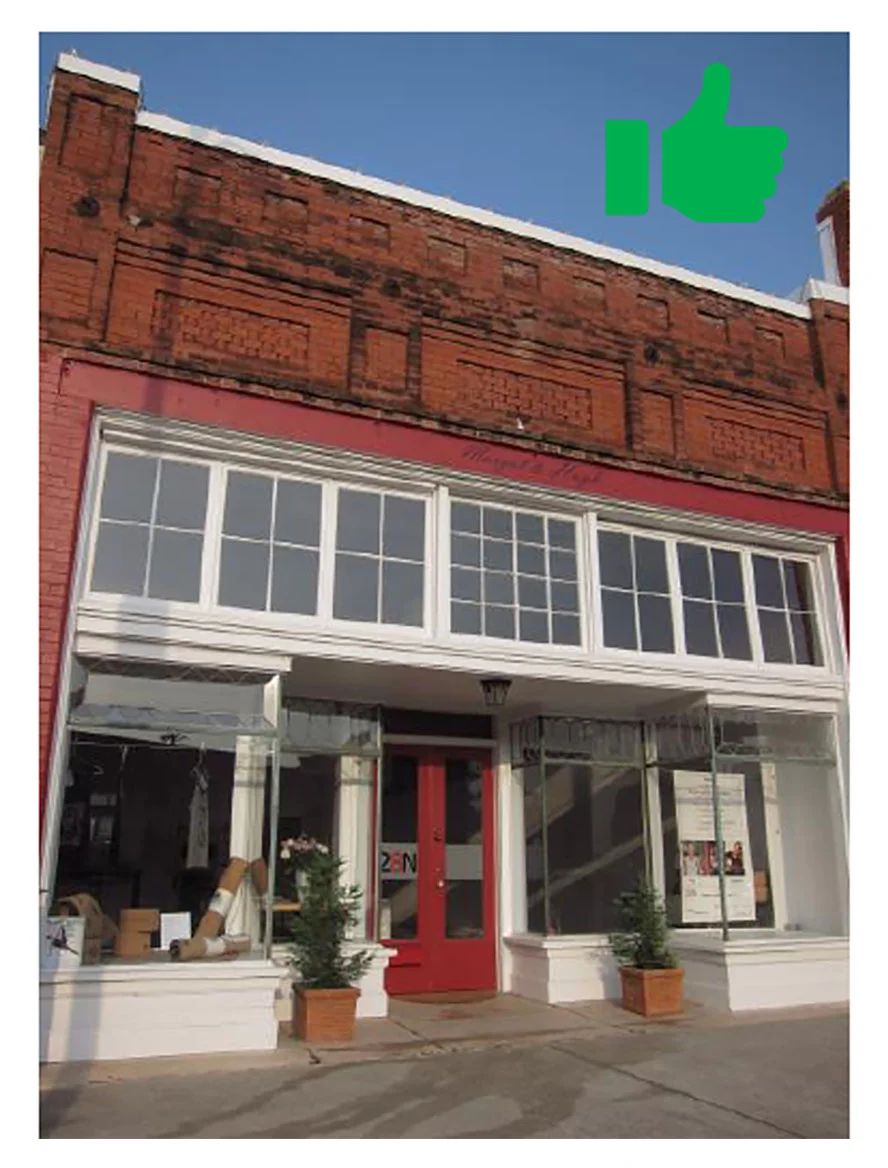
Permit buildings with one floor to use the rear 50% for residential as in this example in Elgin where the front 50% serves as a leasable space occupied by a yoga studio.
Prohibiting Ground Floor Residential
It is uncommon for ground floor residential to be prohibited entirely from a downtown district although there are some examples of this in Texas. It is common, however, to prohibit first floor residential with entryways on your primary retail corridor. Elgin has seen incredible success with a downtown zoning overlay that promoted residential uses as a strategy for redevelopment. The overlay creates two zones in downtown. Zone 1 is the core walkable area and allows 50% residential at the rear of properties with 50% commercial in front. Zone 2 allows 100% residential on the ground floor.
By dividing the long commercial buildings and allowing living quarters in the rear, the redevelopment project becomes economically viable. Owner-operators have purchased to live in the rear and run a business in the front, or owner-investors have been able to move forward with confidence on a rehab project because of the demand for downtown residential.
Denison, TX: Link to Code
28.39.1. General purpose and description
The CA—Central Area District is intended to be used only in the historic central business district of the City of Denison. The uses in this district are generally retail or office in nature and often rely on off-site parking. Uses also have minimal setback requirements due to the compact nature of the downtown area. Residential uses in conjunction with permitted nonresidential uses are also appropriate. Residential uses in the district shall be prohibited on the ground floor of buildings.
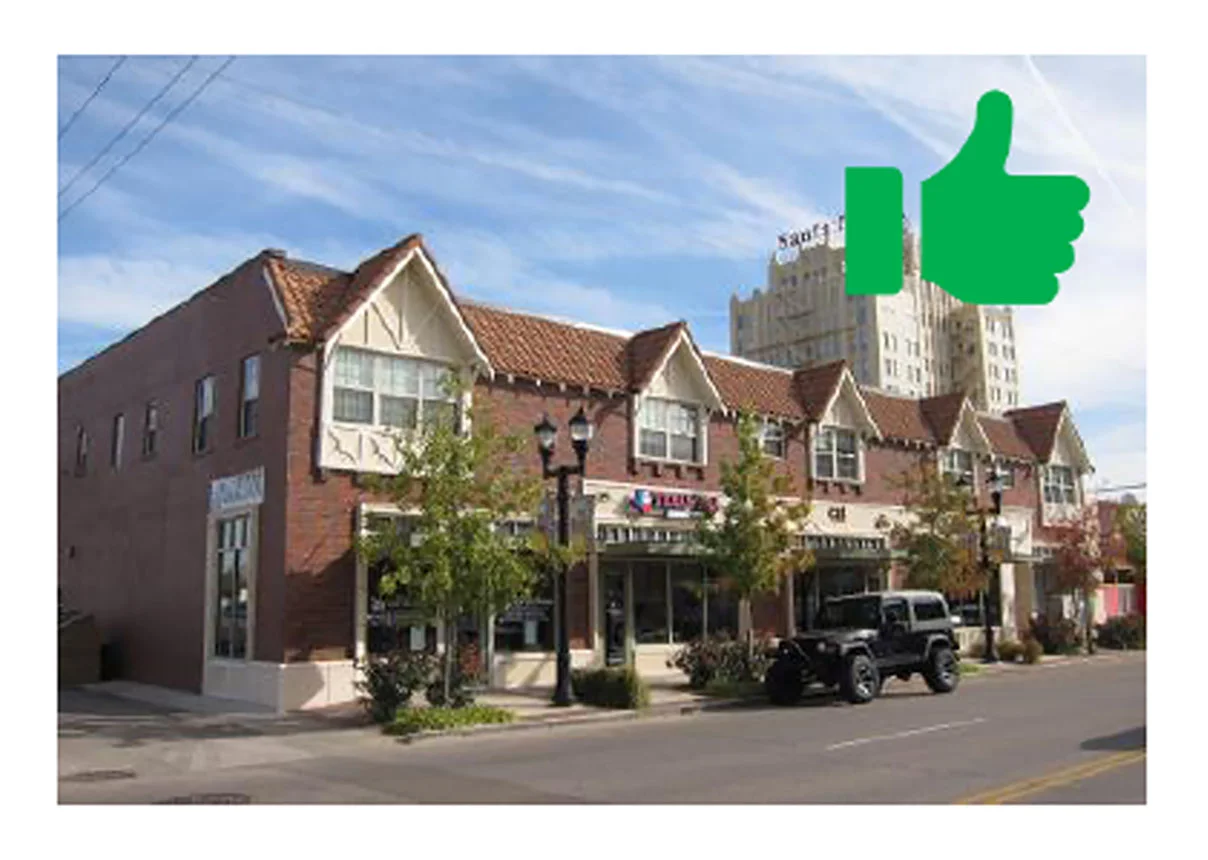
Permit residential within mixed-use buildings above ground floor non-residential uses.
Elgin, TX: Link to Code
(d) Within the Downtown Overlay only, incidental residential uses, also known as "work/live units" are permitted.
2 d. A minimum of the front 50 percent of the square footage of a street-level floor must be dedicated exclusively to commercial uses as allowed in a C-2 General Commercial District and this overlay.
(e) One hundred percent residential uses shall be allowed only within the area defined as Zone 2 within the Downtown Overlay. C-2 General Commercial District is hereby amended to reflect this change.
CNU Main Street Corridor Code Example Language: Link to Code
5) Permitted Uses
d) Residential
i) Single-family detached residential (Not permitted)
ii) Single-family attached residential (Permitted with Restrictions)
(1) Residences are not permitted to face the Primary Retail Corridor.
iii) Multi-family residential (Permitted with Restrictions)
(1) Permitted within mixed-use buildings with ground floor non-residential use along the Primary Retail Corridor.
iv) Accessory dwelling units (Permitted)
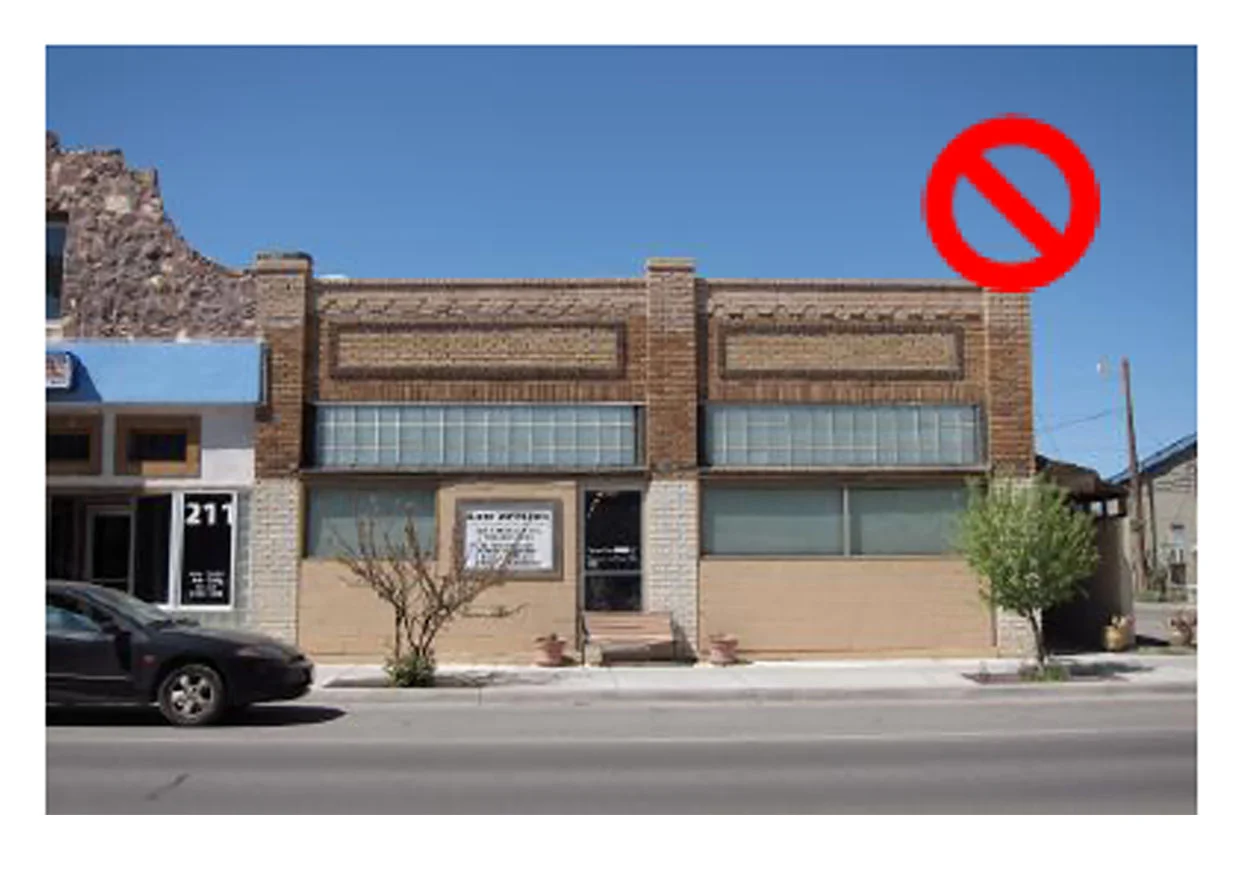
Prohibit alterations to building frontages that affect the pedestrian experience. Include requirements for glazing, signage and built-to lines.
Tips on Limiting or Prohibiting Office Uses
Regulating office use can be challenging as insurance agents, lawyers and accountants are stable downtown occupants and often will locate in downtown when retail is not viable. The problem is freeing up space when the downtown marketplace matures and is attractive to retail tenants. Lawyers are also savvy enough to know when local land use regulations can be challenged legally.
Texas Main Street staff has made recommendations in the past for communities with courthouse squares dominated by office and professional uses to consider an overlay that would require the first 20-25 ft of a building to be dedicated to retail, creating what is called micro-retail. While seemingly very small, this space is ideal for incubating new businesses that may have trouble occupying an entire ground floor. The office use would be considered a legal non-conforming use, so there is no way to require offices to move; however, often these are the building owners so incentives such as a façade grant programs or substantial rehabilitation grants that would pay for a shared elevator may be enough to persuade them to move upstairs. Penciling out a pro-forma to show the increased revenue from the new retail space can also help.
See code examples in Requiring Retail.
Tips on Limiting or Prohibiting Religious Uses
A church is typically a permitted use in all zoning districts and a specific federal law limits local land use regulation for churches. RLUIPA – Religious Land Use and Institutionalized Persons Act of 2000 – prohibits zoning and land marking laws that “substantially burden” the religious exercise of churches or other religious assemblies unless the local government can prove a “compelling state interest.” Municipalities are advised to be very cautious because the case law is inconsistent and has mostly supported the rights of religious institutions. For example, Yuma, AZ, lost a lost a lawsuit where it prohibited religious institutions in order to create a mixed-use pedestrian environment.
Legal precedent has established that zoning regulations cannot allow secular non-profit groups where it excludes comparable religious groups. One of the more common ways to address religious uses locating in downtown is through the conditional use permitting process where “religious institutions” are combined with other assembly uses. Another strategy is to limit what part the building religious institutions can occupy such as upper floors.
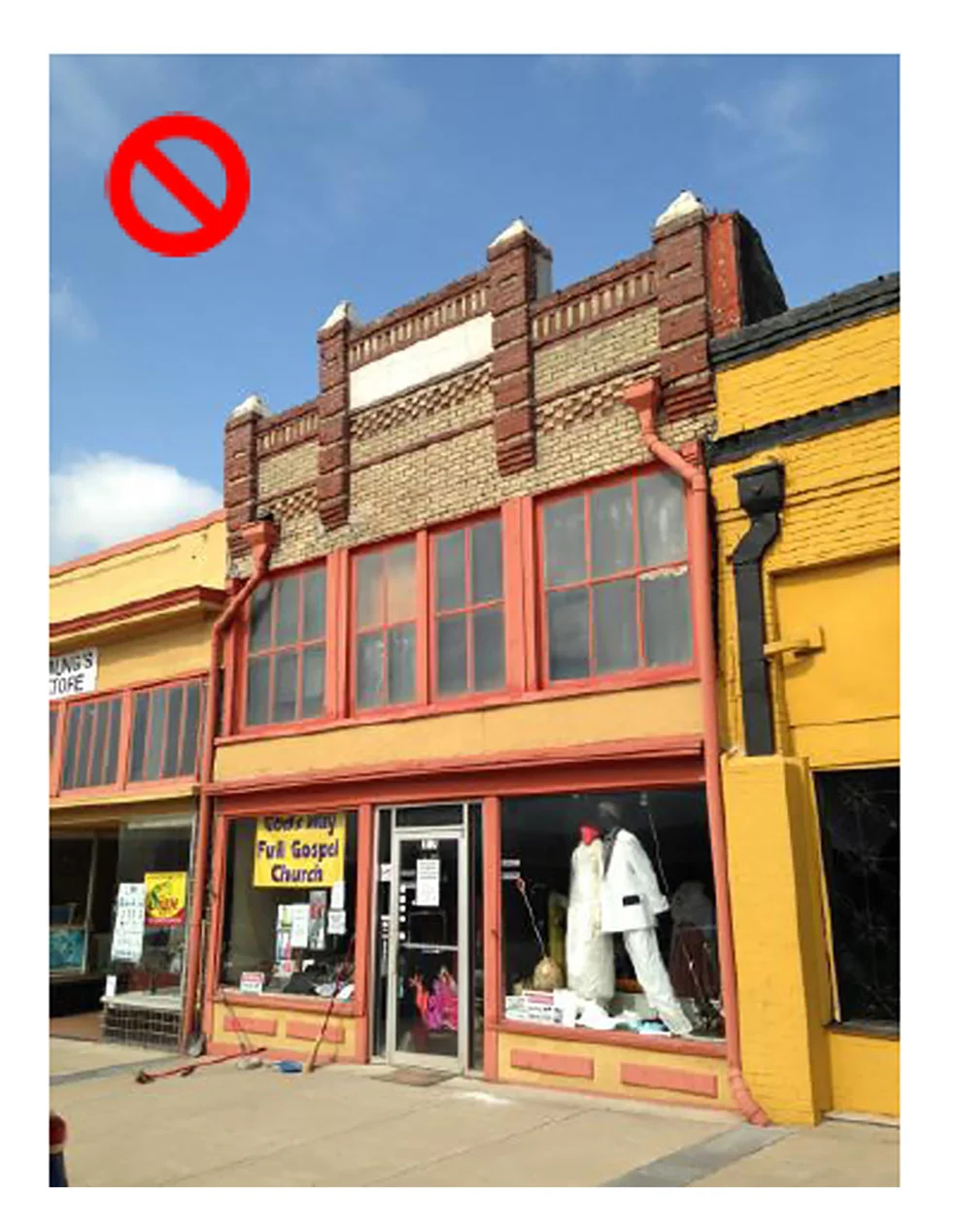
Avoid code language that treats religious uses differently than other non-profit and institutional uses.
Bastrop, TX: Link to Code
Conditional Use Permit Regulations for “Schools, libraries, community/civic facilities and religious institutions.”:
In recommending that a Conditional Use Permit for the premises under consideration be granted, the City shall determine that such uses are harmonious and adaptable to building structures and uses of abutting property and other property in the vicinity of the premises under consideration, and shall make recommendations as to requirements for the paving of streets, alleys and sidewalks, means of ingress and egress to public streets, provisions for drainage, adequate off-street parking, screening and open space, heights of structures, and compatibility of buildings. In approving a requested CUP, the Planning and Zoning Commission and City Council may consider the following:
i. The use is harmonious and compatible with surrounding existing uses or proposed uses;
ii. The activities requested by the applicant are normally associated with the permitted uses in the base district;
iii. The nature of the use is reasonable;
iv. Any negative impact on the surrounding area has been mitigated;
v. Any additional conditions specified ensure that the intent of the district purposes are being upheld.
Sylva, NC: Link to Code
This is an example of a use matrix that permits churches on the second floor but not the ground floor. Note that non-profits are treated similarly.
What About Pre-Existing Uses?
Once new land uses are codified, any use that does not meet the new code is considered a pre-existing use, also called a non-conforming use. These remain with the property. The sale or lease of property to another party that continues the same use does not eliminate the right to use the property for the non-conforming use. Ordinances will often provide that a non-conforming use cannot be resumed after discontinuance. Cities often have another section in their zoning code that deals specifically with non-conforming uses.
Waco, TX: Link to Code
The regulations prescribed by this Downtown District shall not be construed to require changes in land use or the removal or other change or alteration of any structure not conforming to the regulations as of the effective date of this division or otherwise interfere with the continuance of any nonconforming use. All nonconforming uses shall be subject to sections 28-93 through 28-105.
All existing boarded-up windows and barbed wire and/or razor wire fences shall not be considered authorized non-conforming structures and shall comply with the abatement provisions contained in subsections 28-880.6(b) and 28-880.12(b).
CNU Main Street Corridor Code Example Language:
4) Pre-Existing Conditions
a) Any use or structure in legal conformance prior to the adoption of this Chapter may continue, including following a sale or other transfer of ownership.
b) Additions, expansions, enlargements, modifications, or site improvements associated with lawfully preexisting uses and structures are allowed provided the proposed project moves towards compliance with the applicable standards of this Chapter.
Complete Zoning Ordinance Templates
Congress for New Urbanism’s Main Street Corridor District Code
American Planning Association’s Model Mixed-Use Zoning District (Available for Download from the Resource Library)
Examples of Downtown Mixed-Used Zoning Ordinances
Texas
Elsewhere
Other items up for download are below: