
HOMELESSNESS: A DOWNTOWN DISCUSSION
SEPTEMBER 2018 Main Street Matters
Written by Patrick Lloyd, Licensed Master Social Worker, Community Resources Coordinator, Georgetown Public Library
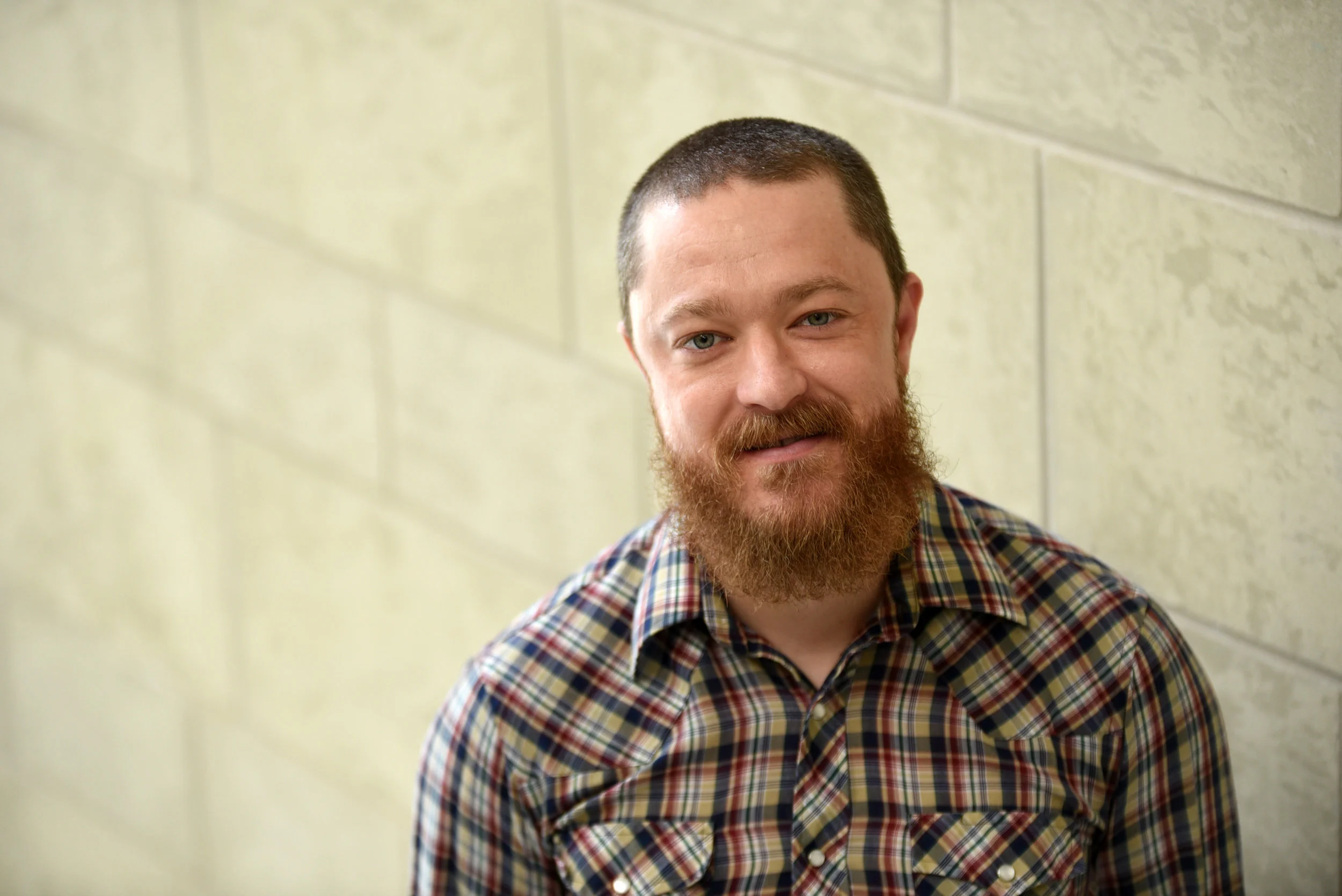
I am a licensed social worker who works at a downtown library. Weird, right? Often, when I tell people what I do, I hear responses along the lines of “I had no idea that libraries had social workers!” When I explain that increasingly they do, and that many public library patrons are folks with low-incomes and a variety of challenges in their lives, my job begins to make sense.
People come to libraries in search of information. Most of the time, the answers to their questions lie within our walls: where to find a certain book, how to use our computers, or assistance sending a fax. However, it is also common for library patrons to come to a library with questions whose answers lie outside of our walls: where can I get a GED? Are there any free clinics in the area? Is there a place nearby where I can sleep tonight?
Sadly, this final question is very common among Georgetown Public Library (GPL) patrons. Georgetown, like many smaller Texas cities, has no emergency shelter. Our housing authority has a waitlist over two years long. Our excellent local non-profits are, largely, built to assist families experiencing brief financial crises, not homelessness. However, this does not stop individuals experiencing homelessness from finding their way to our downtown and to our library, located less than two blocks from our town square.
My job is to try to answer patrons’ questions when the answers are found outside in the community. I attempt to point patrons in helpful directions to help address needs including housing, legal aid, and domestic violence advocacy. I speak to folks experiencing homelessness frequently. Even with limited resources that directly target people who are unhoused, there are a few things that a downtown community can do to treat people experiencing homelessness with empathy and respect while not exacerbating the challenging behaviors that sometimes accompany the issue of homelessness.
First and most importantly, the city government and the downtown community can build relationships with the local non-profit organizations (NPOs), community groups, and faith communities that are doing work to assist and empower the homeless population or those at risk of homelessness. Even in small cities without substantive resources, it is likely that there are individuals or groups of concerned citizens that are working with the homeless population. Identifying these groups and building cooperative relationships with them can help the downtown community understand the issue and the community response. How each individual community is responding to the issue of homelessness looks different; learning about what is already being done can help guide how a downtown and a city government take up the matter.
Related to this, building relationships with the people that are working towards addressing homelessness can help create positive working relationships between NPOs, faith-based groups, business and property owners, and the city government. Sometimes the relationships between these entities can become adversarial, with business owners seeing a church that provides free showers as “the problem” or with the city seeing a restaurant that gives away leftover food as attracting homelessness. The fact of the matter is that no one likes to see the symptoms of extreme poverty in and around their town. Working together to find solutions is more productive than blaming one another.
Beyond that, I encourage anyone--but particularly business owners--to focus on behavior, not living situation or appearance. If the mayor came into your place of business, caused a scene and wrecked your store’s bathroom, you would probably call the police, not because of the mayor’s status but because of what that individual did inside your business. Similarly, if someone who happens to be homeless engages in that behavior, then they should also be held accountable in the same way. On the other hand, if the mayor has not demonstrated problem behaviors, you, of course, would not call the police. This basic principle should extend to folks who are or appear to be experiencing homelessness as well. Homelessness is not a crime. Calling the police on someone solely because of assumptions around their housing status or appearance will cause a scene in your place of business in addition to wasting a police officer’s time and taxpayers’ dollars.
A real world example of how to implement behavior-focused rules would include signs in a bathroom that say something to the effect of “bathrooms to be used only for intended purposes” instead of “no bathing in the bathroom.” Often, communities of unhoused populations will respect clearly posted and equitably enforced rules. They will even police one another in many instances. Problems can arise when members of the homeless community feel those rules are being applied arbitrarily or in a way that is used to discriminate against people experiencing homelessness.
Further, talking to folks and explaining that the issue is a behavior--not their presence in and of itself--may fix the problem without escalating the situation. At the Georgetown Public Library, we often have folks who, for whatever reason, are making too much noise. Many of them have been kicked out of many establishments in the past and expect to immediately be asked to leave. Instead, we approach them and explain that we need them to keep their voice down and that, as long as they comply, they are welcome to stay. By and large, this seems to alleviate the problematic behavior, and the library patrons appreciate it. Our staff has received hugs and handshakes from folks after we have essentially reprimanded them.
Finally, I would encourage downtown community members to engage in a Mental Health First Aid training. It is a low cost, national program, and classes are typically administered by local mental health authorities. It is not aimed specifically at the challenges of working with those experiencing homelessness but, as many unhoused individuals also demonstrate mental health symptoms, it may give your community members new tools for working with all people, homeless or not.
To be sure, these suggestions will not stop people experiencing homelessness from gathering in downtown areas. Access to food, water, internet access, and shade will continue to bring folks downtown. However, incorporating some of these practices may help businesses and their employees from exacerbating already challenging situations. If your city is interested in addressing the issue of homelessness community-wide, I suggest contacting a university or issuing a request for proposals for outside experts to evaluate homelessness in your community and provide solutions that fit the needs, available resources, and political realities of your community.