
Interview with a Property Owner: Paint Removal in Paris, Texas
March 2017 Main Street Matters
Article written by Marie Oehlerking-Read, Project Design Assistant, Texas Main Street Program
Paint removal—can it be done? Some preservation professionals are skeptical. They think once a building is painted, the paint cannot be removed, and sometimes they are right. Paint removal is not an easy task, nor can it be undertaken on just any building. However, I am
here to tell you that in some cases, it works and I have seen the final results. Here’s the story:
In June of 2016, Sarah Blankenship, project design asssistant of the Texas Main Street Program, and I had the pleasure of visiting Paris for a site visit. Cheri Bedford, the local Main Street director, showed us around downtown, their unique architecture, the new downtown park, and numerous local businesses. A lot is going on in downtown Paris, but don’t take my word for it–go see for yourself. Of all the exciting things that are
happening in Paris, one particular project stuck out the most to me, and that was Chris Dux’s project on First Street.
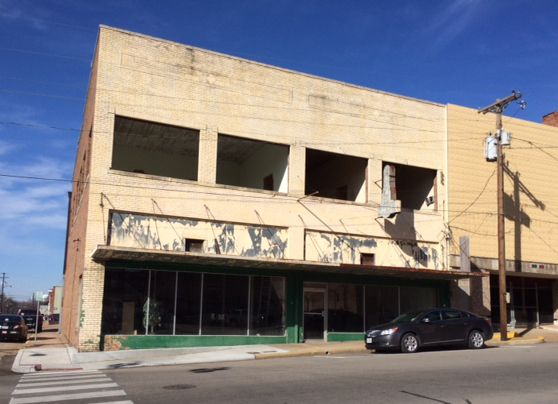
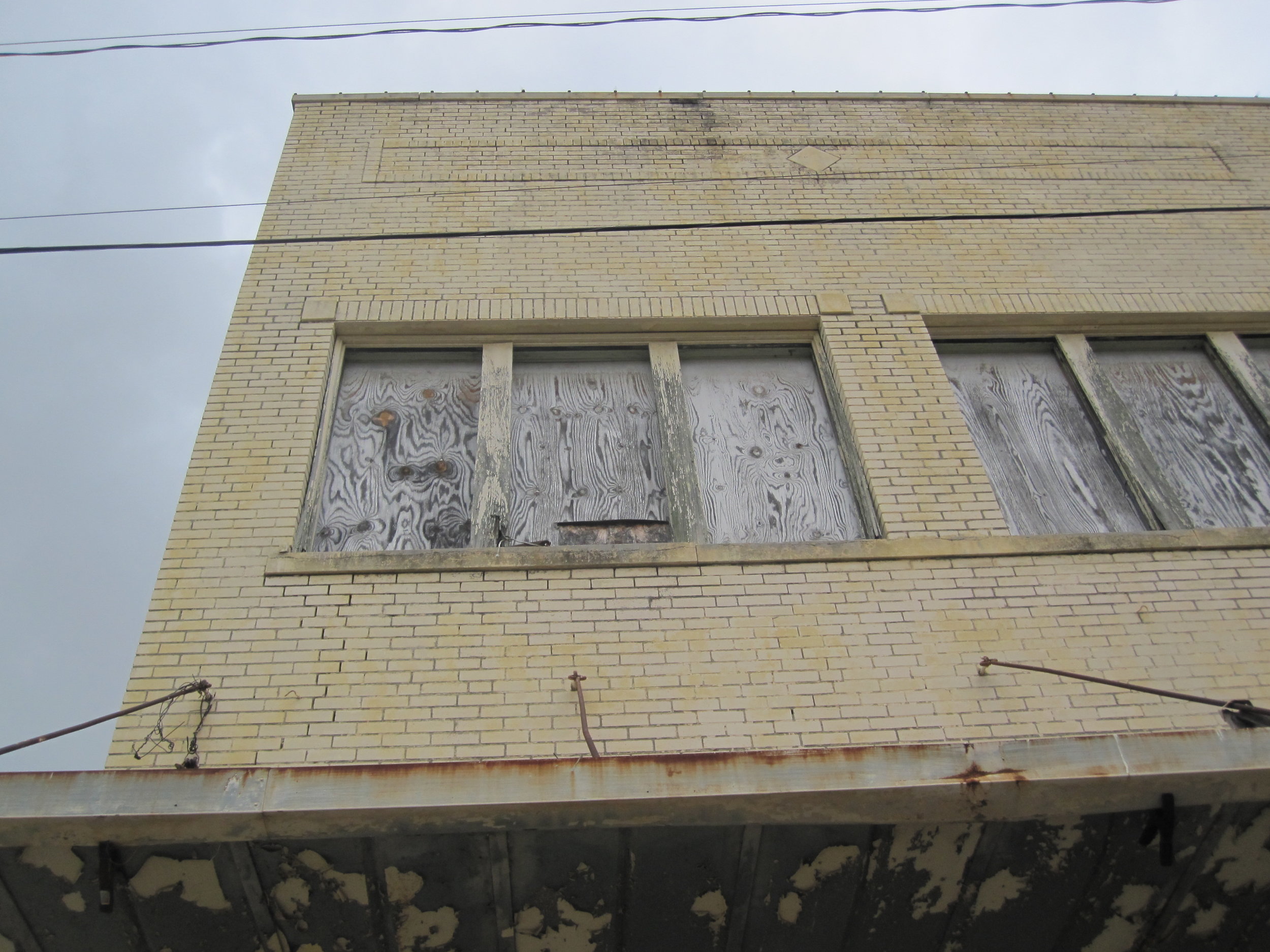
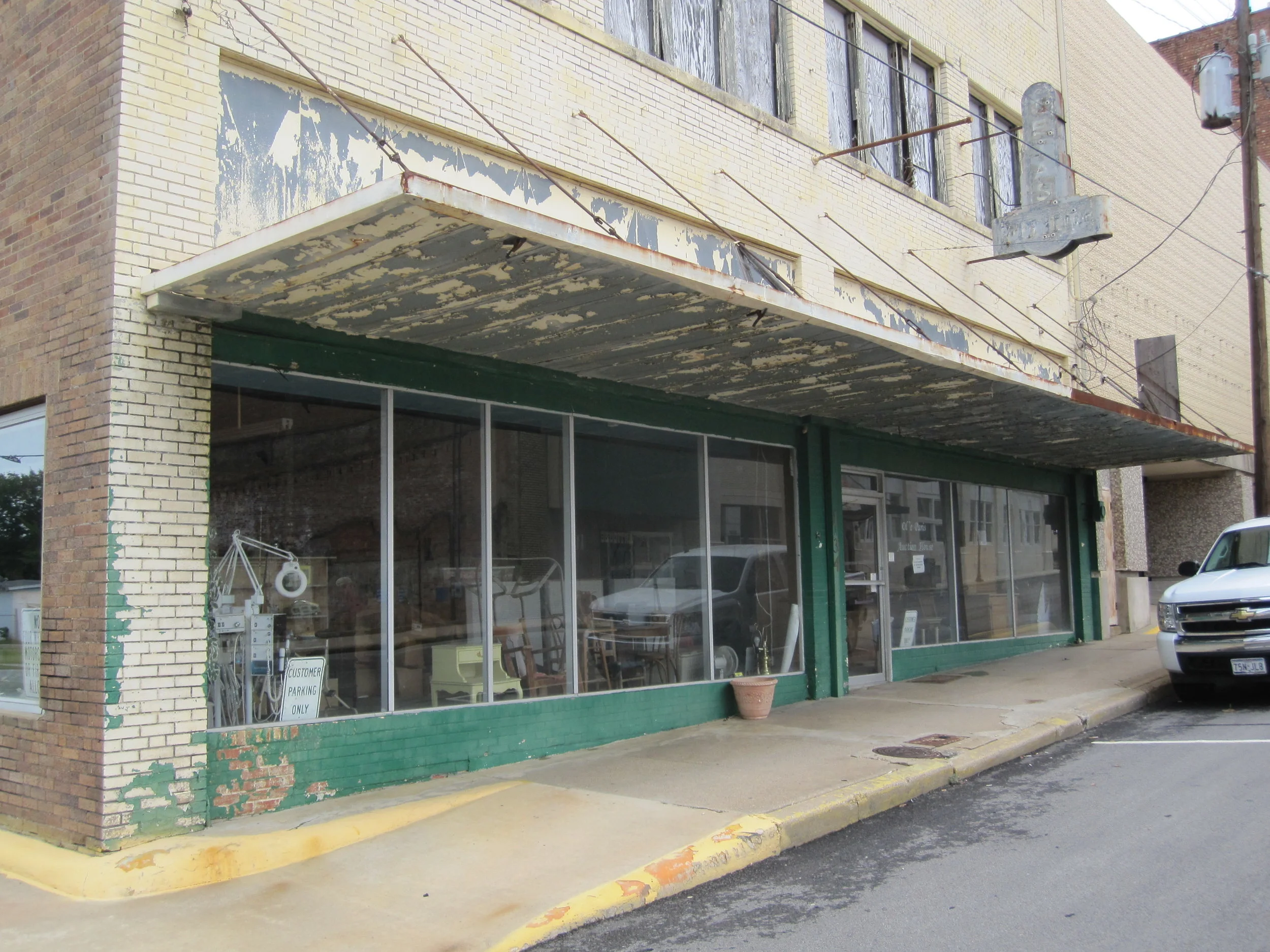
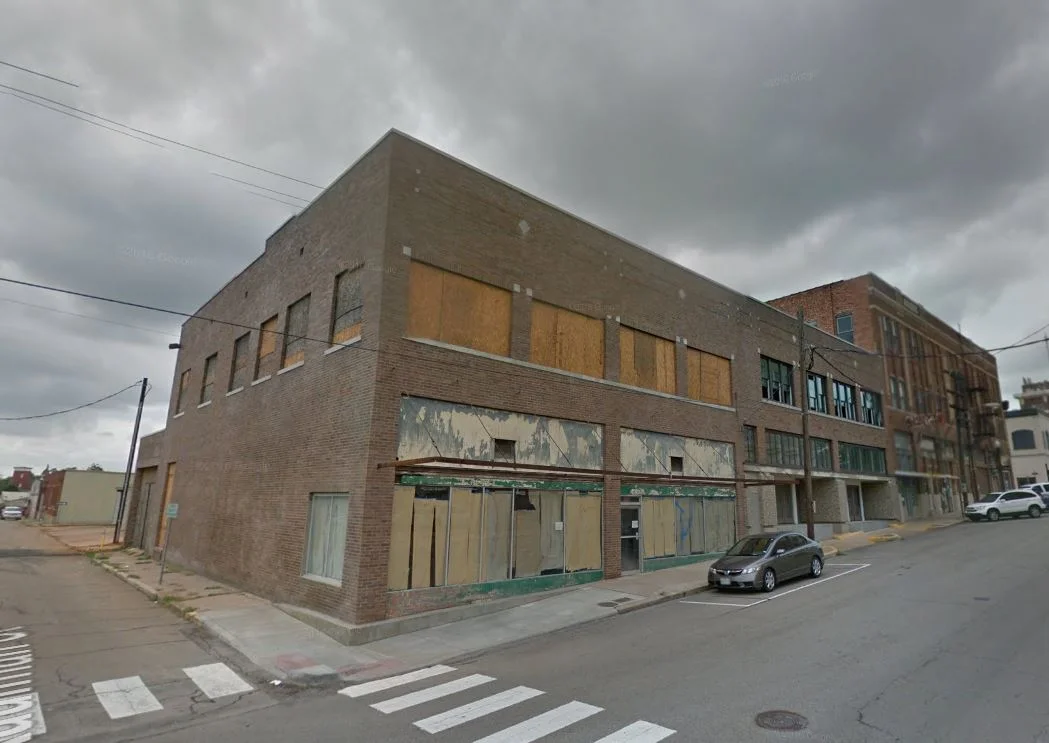
(Top) 134 1st St. SW building in Paris before paint removal; (middle) single layer of paint on upper façade; (bottom) multiple layers of paint on the lower façade.
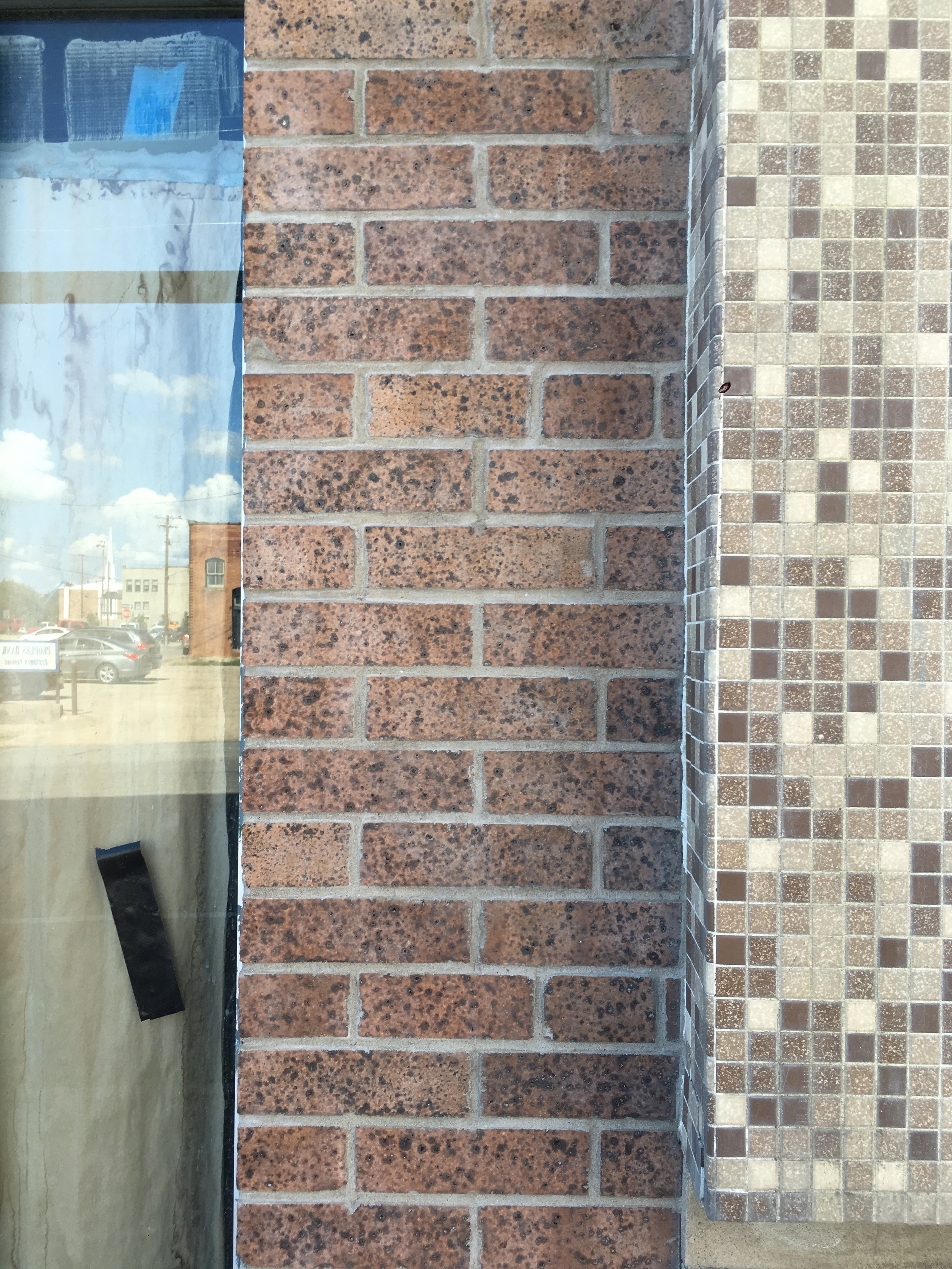
Dux is currently undertaking a rehabilitation project of the building at 134 1st St. SW seen in the photographs to the left. Dux removed the paint from the front façade and repointed the entire building. He is now in the process of rehabilitating the windows and storefront. Sarah and I saw the building up close shortly after the paint had been removed, and we could not believe that the brick had ever been painted. There were no
remnants of paint or any kind of residue on the surface of the façade. Because of this, I had to find out more about Dux’s process, which he was kind enough to tell me about via phone interview.
Why remove the paint?
Dux decided to remove the paint for several reasons. As part of the rehabilitation process, the building needed to be repointed, which means the mortar in between the brick units was deteriorated and needed to be repaired. Water entered the building along the parapet, which resulted in loose bricks. Repointing would stabilize the wall, but if the paint was not removed, the new mortar would stand out while the bricks would still be the dingy yellow color.
Also, only the front façade was painted, and the owner of the neighboring building recently removed a large slipcover, which revealed the original brick of that building. Removing the paint on Dux’s building would not only reunite the appearance of the entire structure, the entire block would begin to coordinate. This provided Dux with additional motivation to remove the paint and restore the entire building to its original appearance.
Process, Professionals, and Products
Dux and his contractors started by using the gentlest means possible, which in this case was applying soapy water to the painted service with a soft bristle brush. This method did nothing to remove the paint. Next, Dux tried pressure washing the façade with a rotating brush, which also did very little to remove the paint.
Dux consulted Western Waterproofing, a specialty contractor company with nationwide offices specialize in masonry restoration and preservation, to determine how to remove the multiple layers of paint. They brought along a Prosoco representative to evaluate the situation. After Dux’s previous experience attempting to remove the paint, the consultants determined that chemical removal should be tried next. They did a
series of tests using four Prosoco products to determine which product could remove the paint without damaging the masonry underneath. The products were applied in one-foot by one-foot squares on both the upper and lower façade as each section had a different amount of paint coatings. Two products, a fast acting paint remover and heavy duty paint remover, were selected to do the job.
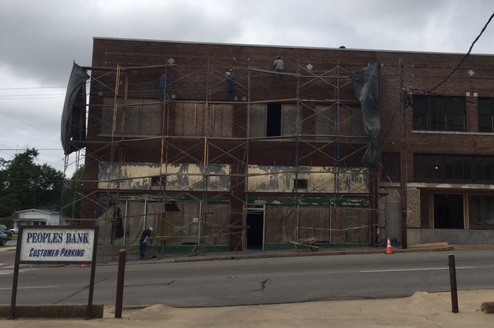
Paint removal in process at 134 1st St. SW in Paris.
The paint removal products are very effective, but they can also be dangerous if used incorrectly. The PH of both solutions is basic, which if it comes into contact with skin, will burn it worse than an acid. Because of this, the products have to be applied in a very specific way. The paint remover comes in gel form. The gel is painted onto the building in small sections and left to work its magic for an hour. Humid conditions are preferred as they prevent the gel from drying out. The solution is then neutralized with a spray-on coating, which sits for an additional 10-15
minutes. This forms a salt-like material, which will not harm the surrounding environment or storm drain systems when it is washed off. The neutralized material is removed with a pressure washer at a low pressure, so the surface of the brick is not damaged.
(*Note - Each city has different regulations when it comes to chemicals and contaminates. Check your local regulations first to determine if this kind of product may be used in your downtown.)
Dux worked with a local general contractor to complete the paint removal process. From setting up the scaffolding to the final rinse took about two weeks to complete a 50-by-50 area with a four-man crew. Labor costs were approximately $8,000 plus the cost of the paint removal products.
For others planning on pursuing paint removal, Dux has a few words of advice: The chemical products are not inexpensive. Follow the instructions closely, so you do not waste the paint remover. If the solution is not applied properly or it dries out during the wait time, it can affect the end result. Also be aware of labor costs and how long the entire process takes. It will add up. However, the magnificent end results are worth the trouble.
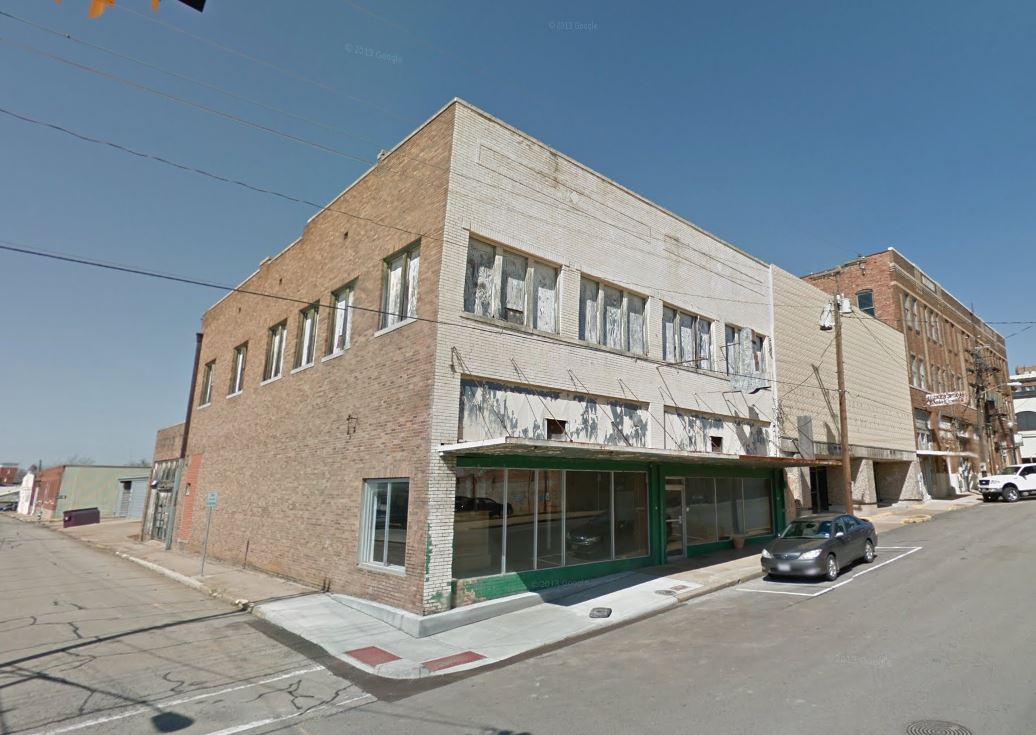
134 1st St. SW, (left) before paint removal; (middle) after paint removal; (right) brick after paint removal.
Important Tips from TMSP Design Staff
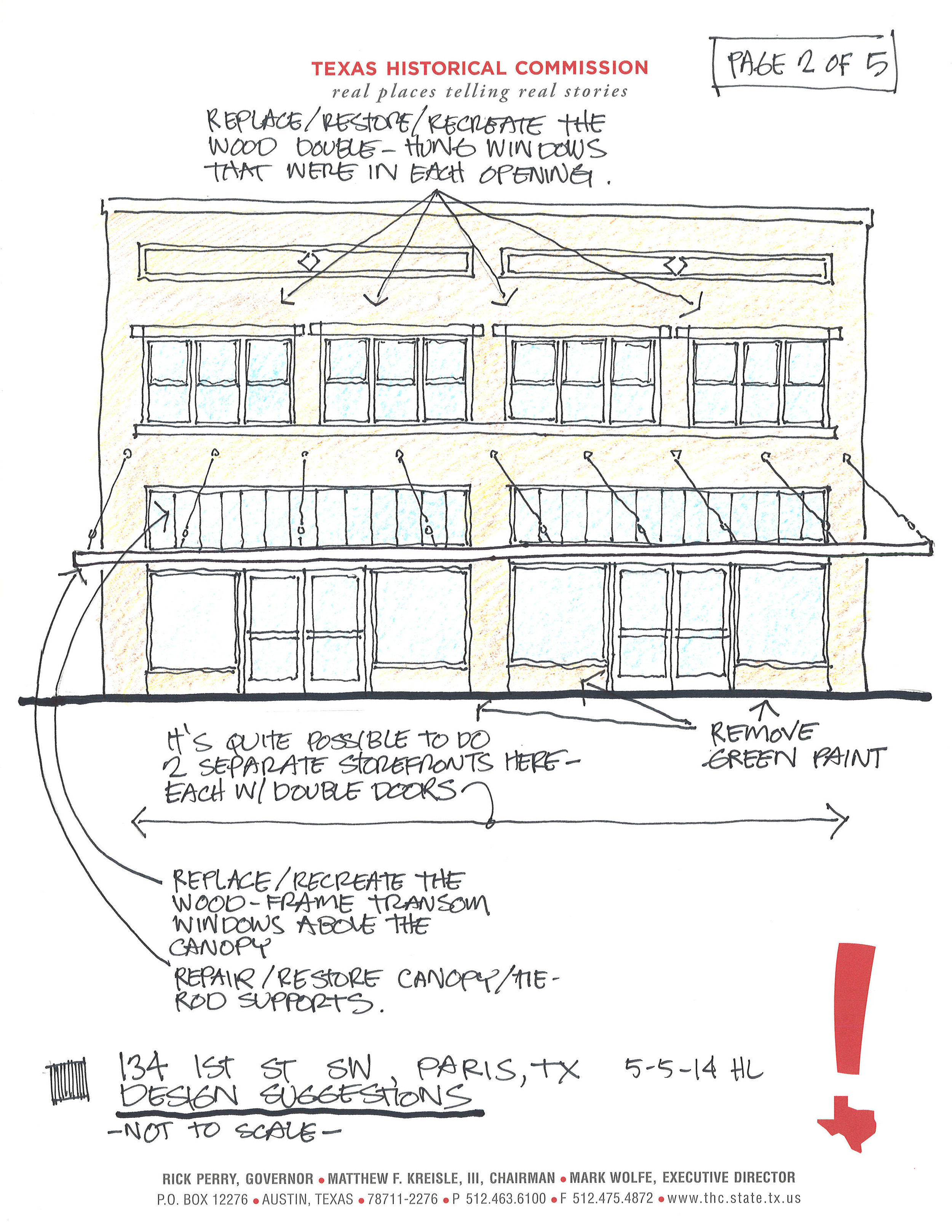
TMSP Design Report from 2014
Before paint removal is undertaken, there are some important tips to remember:
- Contact the Texas Main Street Design Staff; we can assist you with any questions or projects you may have.
- Always use the gentlest means possible, so that the historic materials are not damaged. While some bricks were fired well and have a hard exterior that can withstand higher water pressure and chemical removers, other bricks were poorly fired, which causes them to be soft and crumble very easily. For masonry, this means attempt to remove any substance on brick using a soft bristle brush and water first. If paint is flaking, much of the paint can be removed using mechanical methods, but make sure that the brush or tool that is used does not damage the surface of the brick.
- Sandblasting is NEVER recommended for any reason. It will damage the surface of the brick, which will cause it to deteriorate later.
Paint Removal Resources