Metal Storefronts
July 2015 Main Street Matters
Article written by Marie Oehlerking-Read, Project Design Assistant, Texas Main Street Program
Traditional wood, cast iron, contemporary aluminum—we have all seen storefronts made out of these materials. Most buildings were either
originally constructed with these materials or modernized using them. However, have you ever noticed a copper or bronze storefront? Would
you know what you were looking at if you saw one?
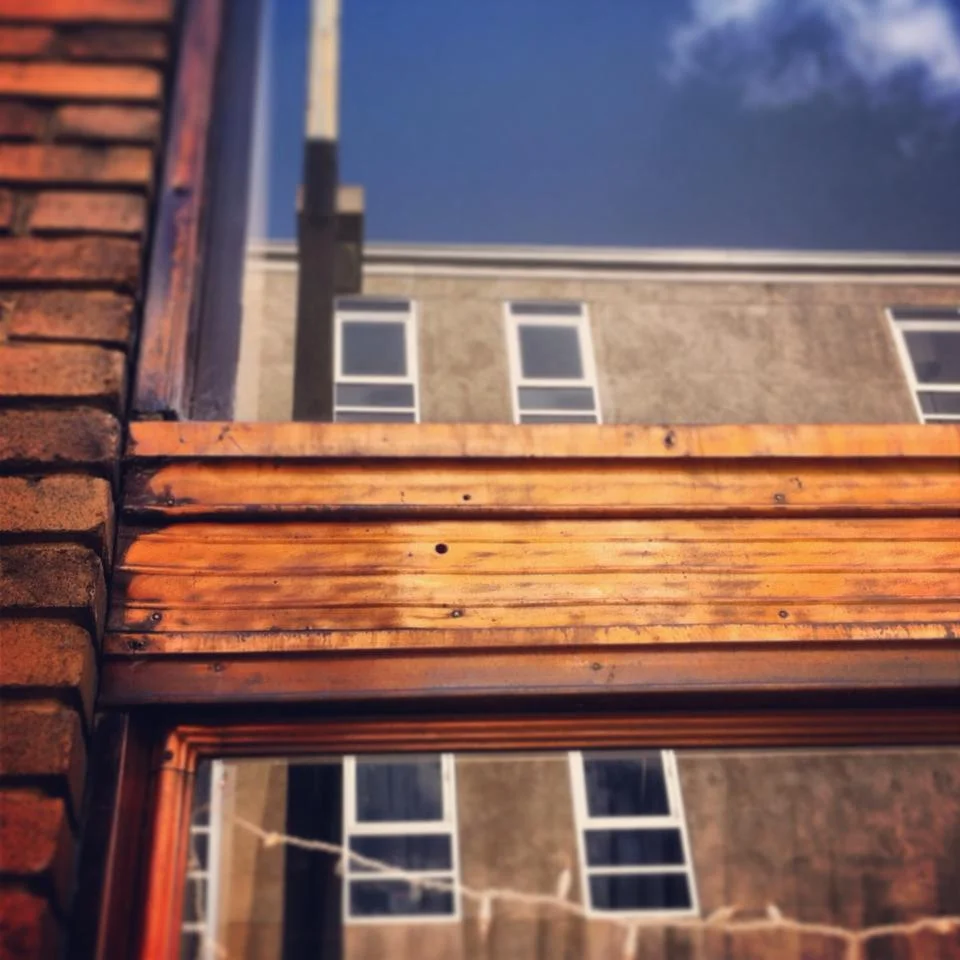
Here in the Main Street design office, we recently received a design request from a property owner in La Grange who wanted to restore their copper storefront. Looking at the image of the full façade, it is difficult to tell that the storefront is anything out of the ordinary. Upon closer inspection, you can see that the storefront is constructed of thin metal frames with a dark brownish patina. Design requests for copper and bronze storefronts are very rare, even though there are many in our Texas Main Street cities. This is a good opportunity to explore and share the history of historic metal storefronts.
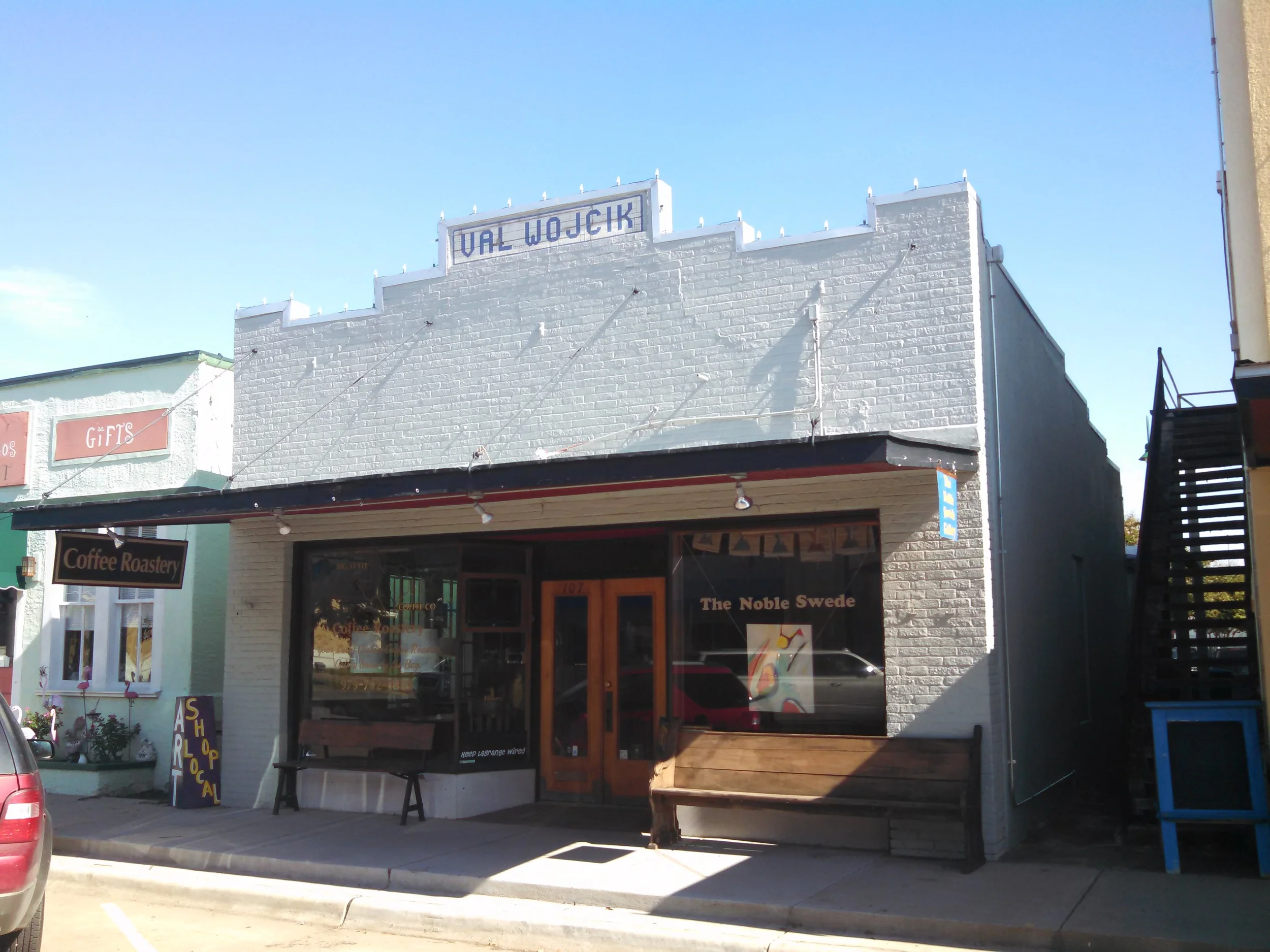
107 W. Colorado - The Noble Swede and the Coffee Roastery in La Grange.
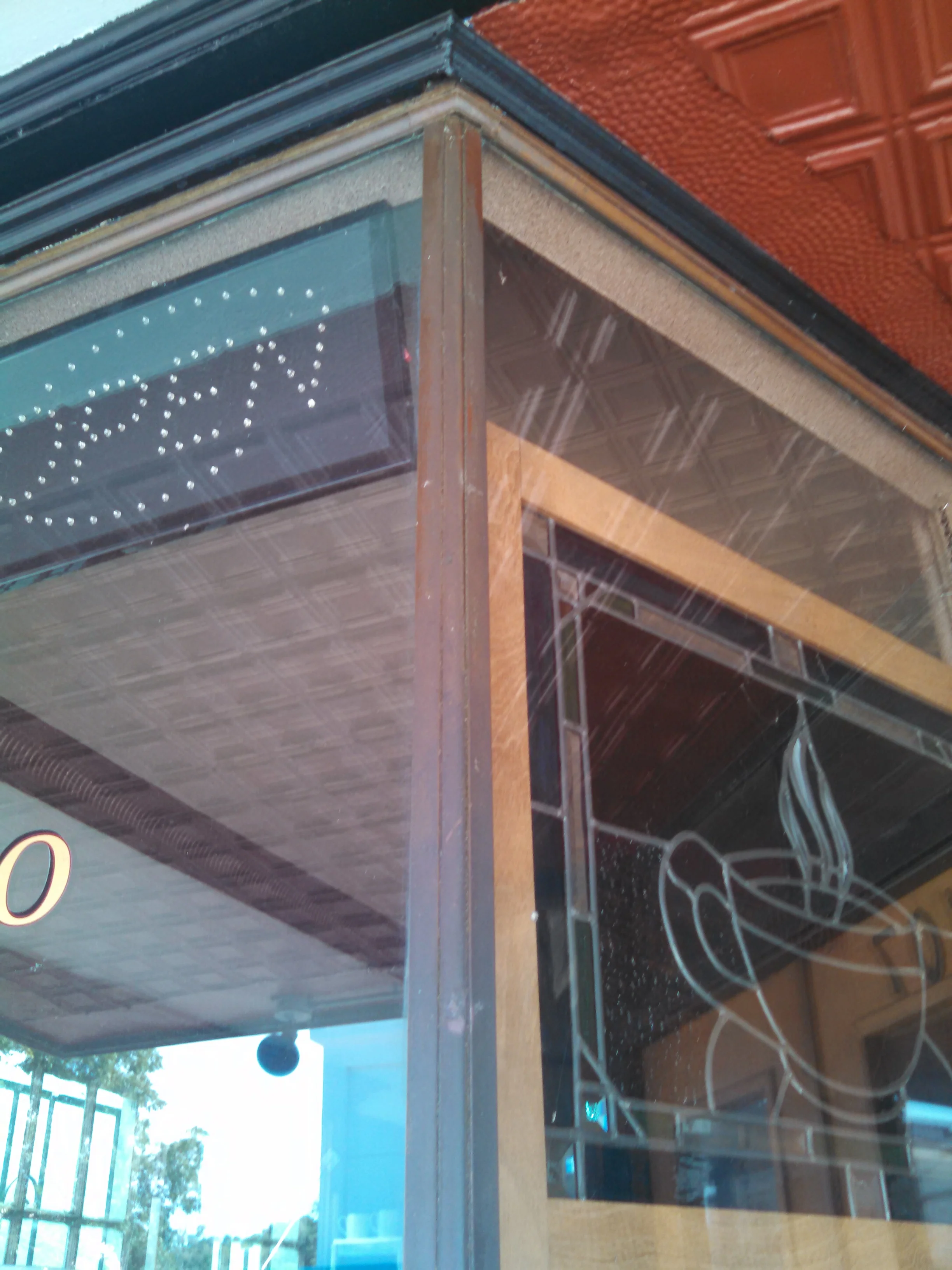
Closer detail of the metal storefront.
History
Before 1900, most commercial storefronts were constructed of wood, cast iron, or a combination of the two. However, near the turn of the 20th century, innovation in building materials changed storefronts forever. Steel beams made it possible to span the entire front façade of a building eliminating the need for structural columns every eight feet. This allowed for larger windows and thinner window frames.
Metal window frames, specifically copper and copper alloys like bronze and brass, were thinner, lighter, and more durable than their wood predecessors. They allowed more light to enter the building and provided a larger viewing area for merchandise. Metal storefronts also
created a more modern appearance for the store. The first metal storefronts were made to look like wood; however, it soon became the norm to have sleek metal entrances. By 1910, metal and other non-wood providers were offering storefronts in copper and copper alloys. By 1920, the storefront as a 100 percent wood item was uncommon. Metal was used for the frame and even to hold in the sash. The wood bulkhead panels were replaced with stone, brick, metal, and marble.
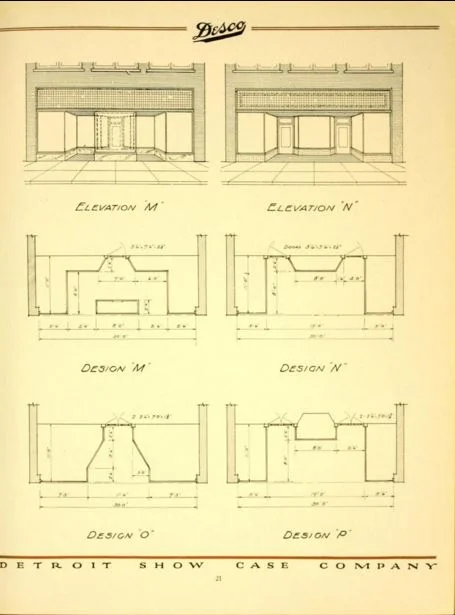
Desco Copper Storefront Catalogue c.1925 – APT Building Technology Heritage
Library - https://archive.org/stream/CopperStoreFrontConstruction_370/DetroitShowCaseCo.Cca45163-2#page/n21/mode/2up
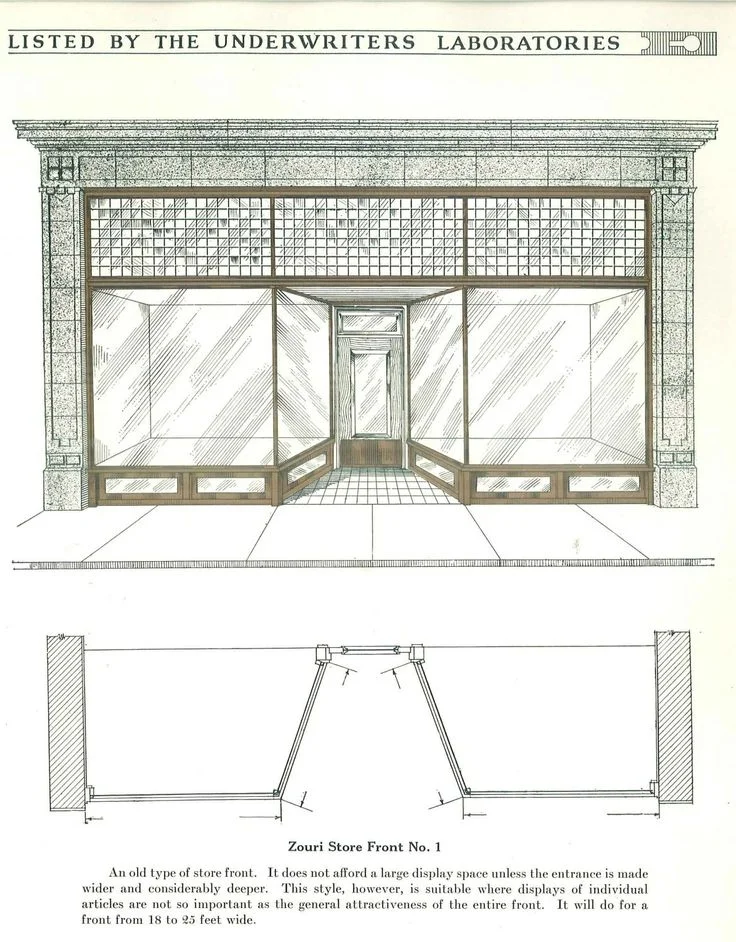
Zouri Copper Storefront Catalogue c.1920 - APT Building Technology Heritage Library – https://archive.org/details/ZouriStoreFronts
The use of copper and bronze in storefront design was short lived due to the introduction of a cheaper alternative, aluminum. This transformation began in the 1930s, but it was interrupted by World War II. Copper and bronze storefronts did not disappear completely. Highend department stores and other big budget construction projects incorporated these storefronts and still do today.
While both types of metals were more modern in appearance than wood storefronts, the copper and bronze frames maintained a certain level of traditional detail. The early metal frames had curves and rounded profiles that added shadow and depth to the overall appearance. Aluminum frames, however, presented a sharp contrast to older metal storefronts due to their rectilinear profiles, which created a true modern aesthetic. These early aluminum frames lead the way for the types of contemporary storefronts on new buildings today.
Preservation
Although metal storefronts look similar visually, each metal type has unique properties and the process of cleaning and restoring copper,
bronze, brass, and other types of metals can vary greatly. It is first necessary to verify the type of metal.
- Copper – a nonmagnetic, corrosion-resistant, malleable metal, initially reddish-brown, but when exposed to the atmosphere, turns brown to black to green.
- Bronze and Brass – nonmagnetic, abrasive-resistant alloys combining copper with varying amounts of zinc, lead, or tin. These copper alloys, more commonly found in office buildings or large department stores, range in color from lemon yellow to golden brown to green depending on their composition and are well suited for casting. The best way to determine the metal type is by the color of the surface without patina, which can most likely be seen on the interior of the building. The natural colors of copper, bronze, and brass can be seen below. To verify the surface color, locate an area of metal without patina.
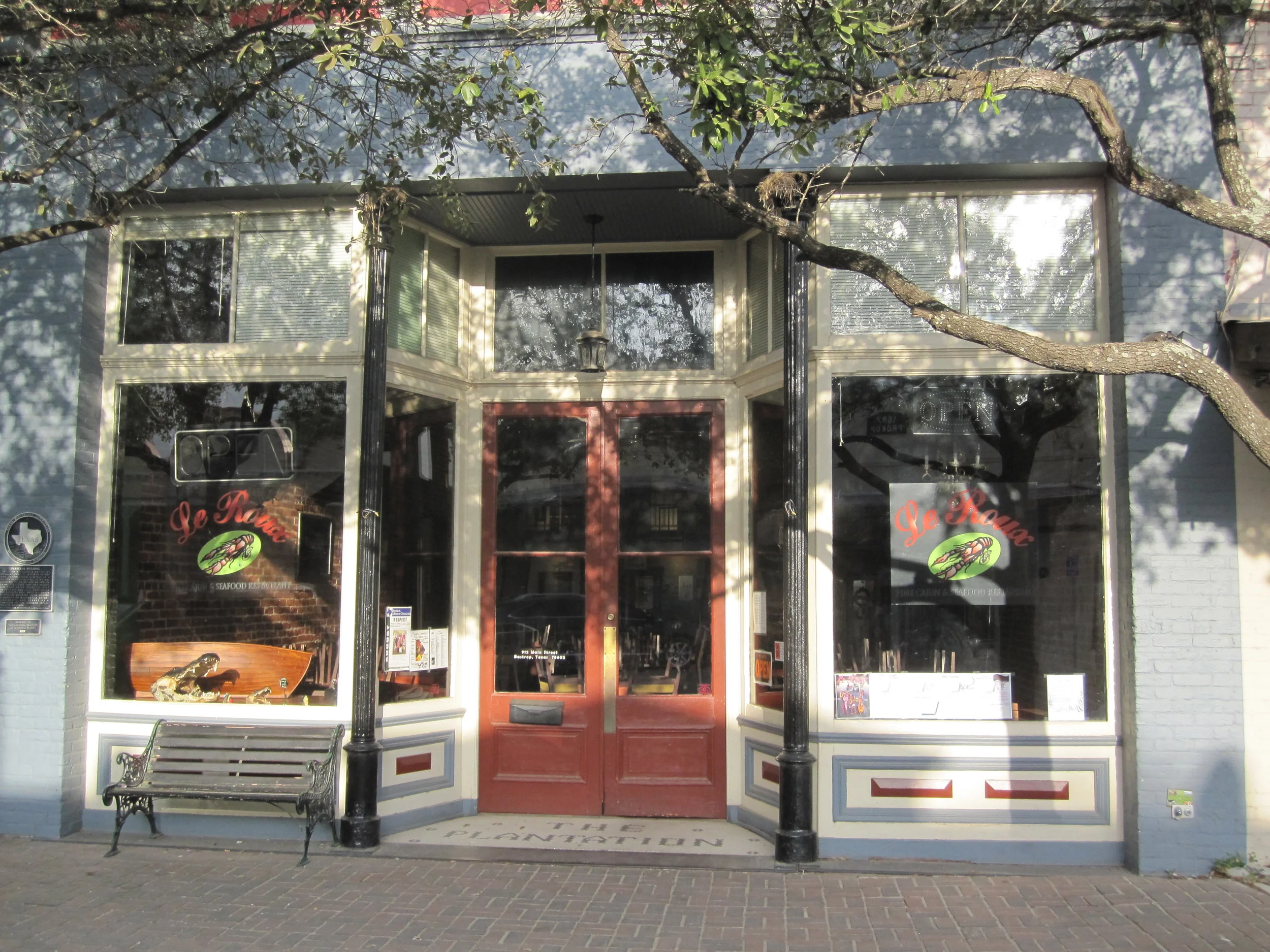
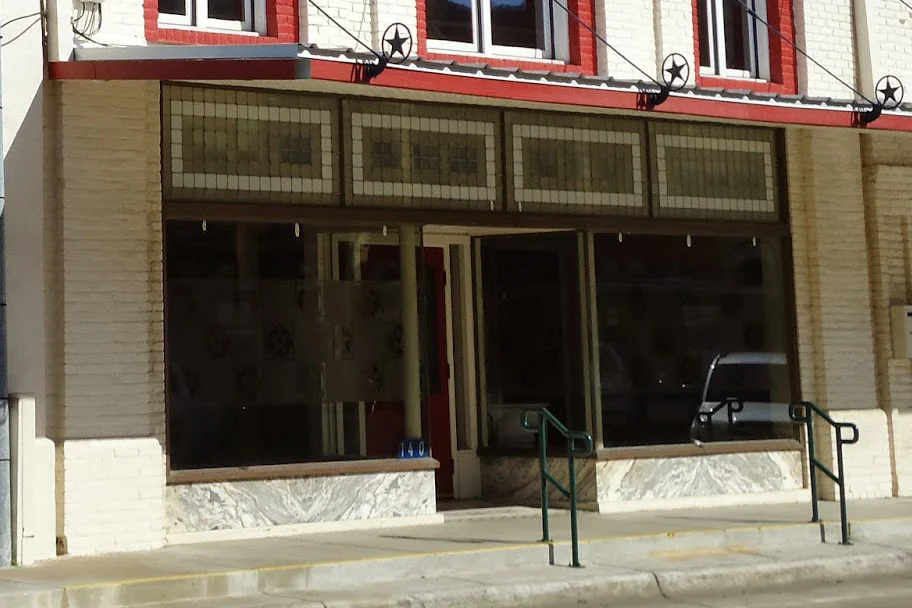
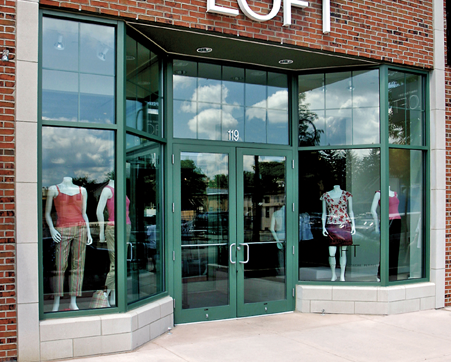
(From left) Example of wood and cast iron storefront, Bastrop (pre-1900s); example of copper storefront, La Grange (1900-1930s); example of contemporary aluminum storefront, (http://www.crl-arch.com/product_page/us_aluminum/storefronts.html)
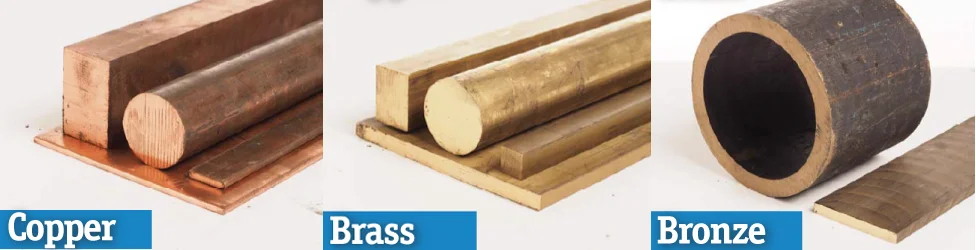
Metal Surface Colors (http://metalsupermarkets.com/blog/difference-between-copper-brass-bronze/)
The National Park Service Preservation Brief #11 explains in detail how to clean each type of metal. For example, “Storefronts utilizing softer metals such as copper should not be cleaned mechanically (grit blasting) because the plating or finish can be easily abraded and damaged. It is usually preferable to clean softer metals with a chemical method, such as acid pickling or phosphate dipping. Once the surface of the metal has been cleaned of all corrosion, grease, and dirt, a rust-inhibiting primer coat should be applied. Finish coats especially formulated for metals, consisting
of lacquers, varnishes, enamels, or special coatings, can be applied once the primer has dried. Primer and finish coats should be selected
for chemical compatibility with the particular metal in question.” The cleaning process should first be attempted on a test spot in a small, discrete location of the storefront. It is important to note that the proper cleaning of metal storefronts should NOT be considered a “do-it-yourself ” project. The nature and condition of the material should be assessed by a competent professional, and the work performed by a company that specializes in it. Additional instructions on how to clean and repair copper and other metal storefronts can be found below.
National Park Service Preservation Brief #11: Rehabilitating Historic Storefronts http://www.nps.gov/tps/how-to-preserve/briefs/11-storefronts.
htm
General Services Administration
- Cleaning Exterior Copper Components - http://www.gsa.gov/portal/content/112026
- Cleaning and Polishing Bronze - http://www.gsa.gov/portal/content/111982
- Additional information on the cleaning and maintenance of various metal types can be found on the GSA website http://www.gsa.gov/portal/hp/hpc/category/100371/hostUri/portal
Do you have copper or bronze storefronts in your town? Have you taken a closer look? Have you documented these features? Documenting and recording unique architectural features is an important part of local preservation. If you have examples of historic metal storefronts in your town, make sure you take current pictures. They might be useful in the future. Also, please send us a copy to ensure we have the most up to date records.