
MIDBLOCK CROSSWALKS
April 2015 Main Street Matters
Article written by Howard Langner, Texas Main Street Design Staff
The care and respect that we strive for in rehabilitating historic Main Street buildings also applies to how we treat historic Main Street sidewalks and roads. The walkable streets movement, along with initiatives such as Better Blocks, Tactical Urbanism, and Livable Centers, has had a profound impact on our Texas Main Street cities. As preservationists we need to be mindful that no matter how successful an urban strategy has proven to be, we must introduce such strategies in a manner that respects and upholds the goals of historic preservation in general and the restrictions that a local historic district might impose. One such strategy that we will explore in this article is midblock crossings.
What is a midblock crosswalk? It’s a place for pedestrians to cross the street without having to go to either end of the block. It is most commonly found in mid-size to larger cities but it can work quite well in smaller towns too. Studies have shown that people routinely cross at midblock locations even if it means crossing several lanes of moderate to higher–speed traffic. Studies have also shown that a considerable amount of foot traffic and subsequent sales are lost because people don’t want to make the effort to walk the length of a block to cross the street. A midblock crosswalk can decrease random and unpredictable crossings associated with a high risk of collisions, especially in areas that are heavily traveled by pedestrians or where block lengths are long.
Is the Midblock Crosswalk Needed?
You want to be sure that the midblock crosswalk is necessary before you make the decision to build. A pedestrian tracking survey should be used to document where and how people cross a street or intersection. The survey will incorporate such things as speed and traffic volume data, pedestrian volume, ages, and levels of mobility, location of pedestrian origin and destination points, existing sidewalk ramps, sight distances and obstructions, street characteristics including grades, curvature, pavement widths, and number of vehicle and bicycle lanes, location of adjacent driveways and alleys, on-street parking, street lighting, location of drainage structures, traffic signal progression, and vehicle accident history. Once you have determined the need, you must be sure that the design is successful at solving the problem in a safe, economical, and aesthetically pleasing manner. A midblock crosswalk can be so much more than a series of painted rectangles on asphalt. Vertical elements such as trees, landscaping, and overhead signage help to identify crosswalks and islands for motorists and provide peace of mind to pedestrians as they venture out into active lanes of traffic.
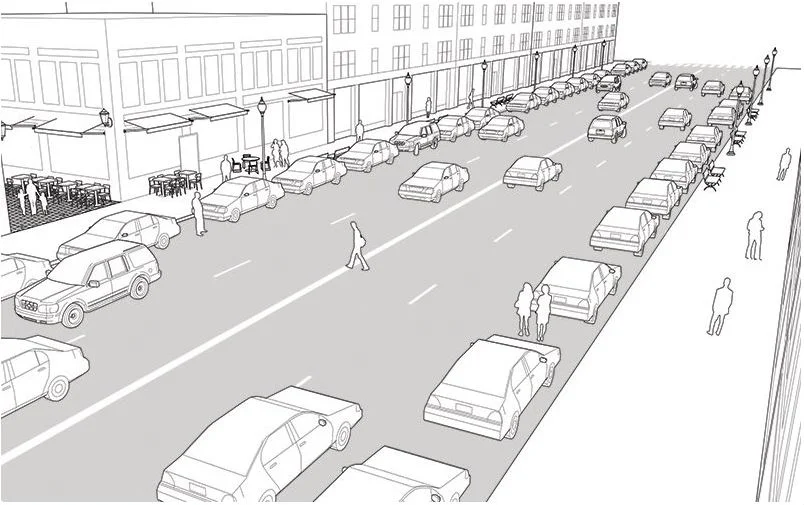
Figure 1. Image from the Urban Street Design Guide from the National Association of City Transportation Officials (NACTO)
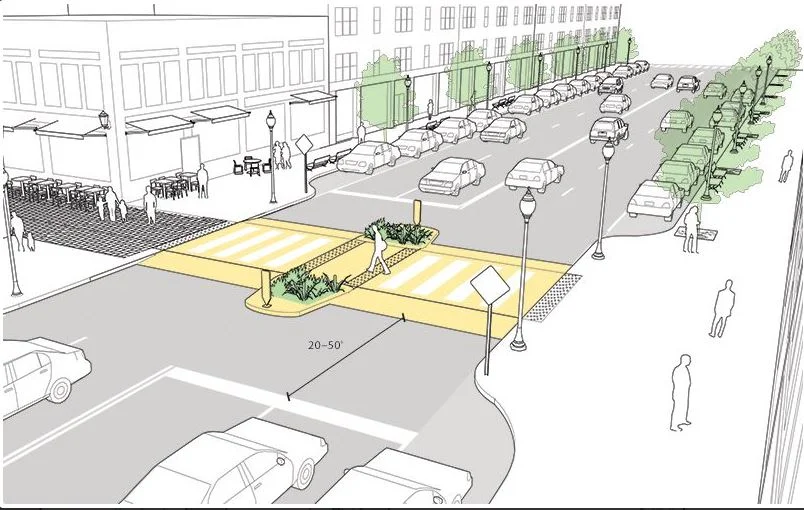
Figure 2. Image from the Urban Street Design Guide from the National Association of City Transportation Officials (NACTO)
A typical Main Street condition is illustrated in the image above: a busy street with parallel parking on both sides, four lanes of traffic (two in each direction), vibrant sidewalks, display windows along well-defined sidewalks, and no place for pedestrians to cross except at the ends of the block. In Figure 1 above, a pedestrian is shown crossing the street while three others consider doing the same. This situation is inherently wrong and it should be thoughtfully addressed.
In Figure 2 above, please note the following design features:
- The sidewalk is widened at the midblock crossing location. This increases the visibility of the pedestrian before the crossing is made. Removing parking spaces (up to three on each side of the street depending on specific situation) prevents pedestrians from “suddenly appearing” between parked cars.
- Stop lines for oncoming cars are set back 20 to 50 feet from the edge of the crosswalk. This allows a second driver to see the pedestrian in the crosswalk when the first driver is stopped at the line.
- The walk should be striped, painted, or paved in such a way that it is in clear contrast to the roadway surface. If contrast is insufficient, the walkway will be difficult to see especially in the evening.
- Safety islands (the long oval element in the second image above) create an additional area of refuge for the pedestrian. They also provide an opportunity for additional landscaping which creates a better looking crossing.
- There are many situations, often involving children, where raising the crosswalk (and tapering the sides) increases visibility and creates a safer pedestrian environment.
- ADA accessible ramps are included at both ends of the crosswalk installation.
- Adequate street lighting is provided throughout the crosswalk area. Remember, the crosswalk will be used in the evening hours too!
What are some other considerations?
Depending upon where the crossing is being proposed and the anticipated frequency of use, it may be desirable to include an actuated pedestrian signal (a temporary constant red light that transitions to a flashing red light). The beauty of this method is that the traffic flow remains continuous until an actual crossing is imminent; far better than a permanent stop sign or traditional traffic light.
The safety benefits of a midblock crossing cannot be stressed enough. Midblock crossings account for more than 70 percent of pedestrian fatalities. Midblock crosswalks consolidate pedestrian traffic and allow drivers to predict and expect pedestrian traffic. A study performed in Michigan revealed that 83 percent of pedestrians surveyed changed their crossing behaviors where midblock crossings were present. Where pedestrian islands have been included in the crosswalk design, pedestrian crashes were reduced by 46 percent and vehicle crashes were reduced by 39 percent.
How will the midblock crosswalk affect the historic integrity of the Main Street District?
Midblock crosswalks along with any other street/sidewalk/streetscape modifications will likely have an impact upon the historic integrity of your Texas Main Street commercial district. While the purpose of this article is to discuss the general notion of midblock crosswalks, it is essential that the historic context be thoroughly understood and respected during the assessment and pre-design stages.
A midblock crossing design should never damage, compromise, or literally mimic historic street or sidewalk features. The new midblock crossing design should be tailored to respond to the history and needs of the community. The design professional responsible for the crosswalk might be required to consult with reviewers at the Texas Historical Commission (THC) depending upon how the project is funded. When consultation is required (a 106 review) the THC reviewer will use the Secretary of the Interior’s Standards for Rehabilitation as the basis for their consultation.
Sources:
• National Association of City Transportation Officials (NACTO) nacto.org
• Improving Pedestrian Safety at Unsignalized Crossings, Transit Cooperative Research Program Report 112
• HAWK Pedestrian Signals, Bureau of Highway Operations, Wisconsin DOT
• Michigan Complete Streets michigancompletestreets.wordpress.com
• Kansas LTAP Fact Sheet, University of Kansas Center for Road and Bridge Agencies