
Article written by Marie Oehlerking, Former Project Design Assistant, Texas Main Street Program
I love mid-century modern design. The buildings, storefronts, signage, materials, furniture – if it was created between the late 1940s to the early 1960s, chances are I will like it, and I am not alone. From popular magazines like Dwell to primetime television shows like Mad Men, mid-century modern design is extremely popular. I recently had a gentleman ask me why I loved midcentury design so much. Was it just my generation or was it something more? He claimed that he did not like the style when it was new and he really does not like it now. For me, mid-century design is a point of inspiration. The colors, shapes, asymmetries, and clean lines excite my creative right brain, and motivate me to design better. The images below are just a few examples of some of my favorite mid-century designs in Main Street cities. For some, like the fashion industry and home décor companies, mid-century design might just be a fad that will go out of vogue as quickly as it came in. However, for historic downtowns, it poses a larger more serious question—should mid-century designs be preserved?
Preserving mid-century designs can be a challenge. The modern designs of the mid-20th century contrast sharply with the traditional Main Street buildings of the 1800s and early 1900s that all preservationists identify with and embrace. Some believe that modern elements detract from the “more historic” buildings around them. Mid-century resources are often ignored by preservation efforts because they are too “new” to be culturally or historically significant. The new materials and technologies used in mid-century design also complicate repair and conservation efforts. However, these mid-century designs have now reached the 50 years or older mark, making them historic in their own right.
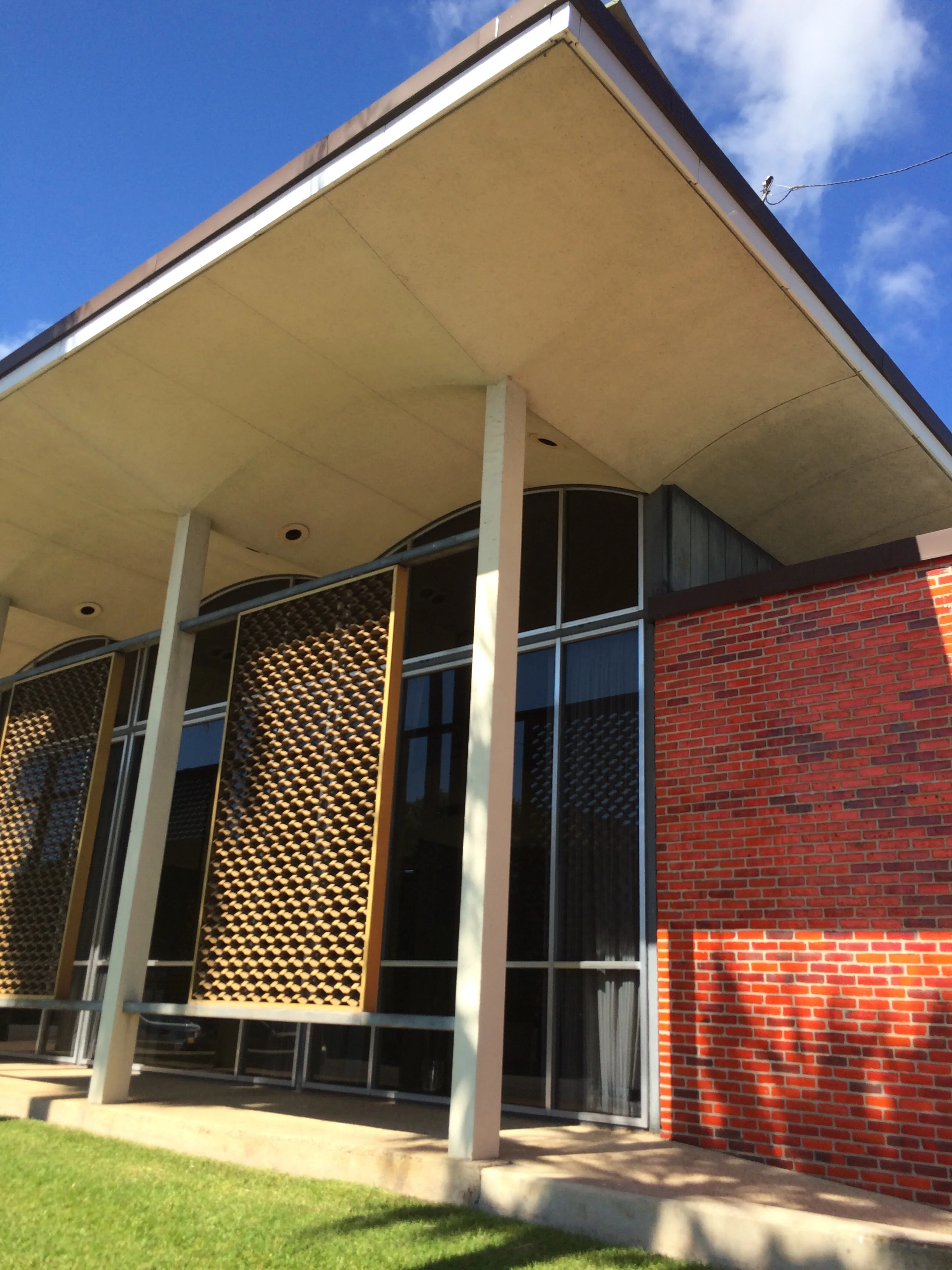
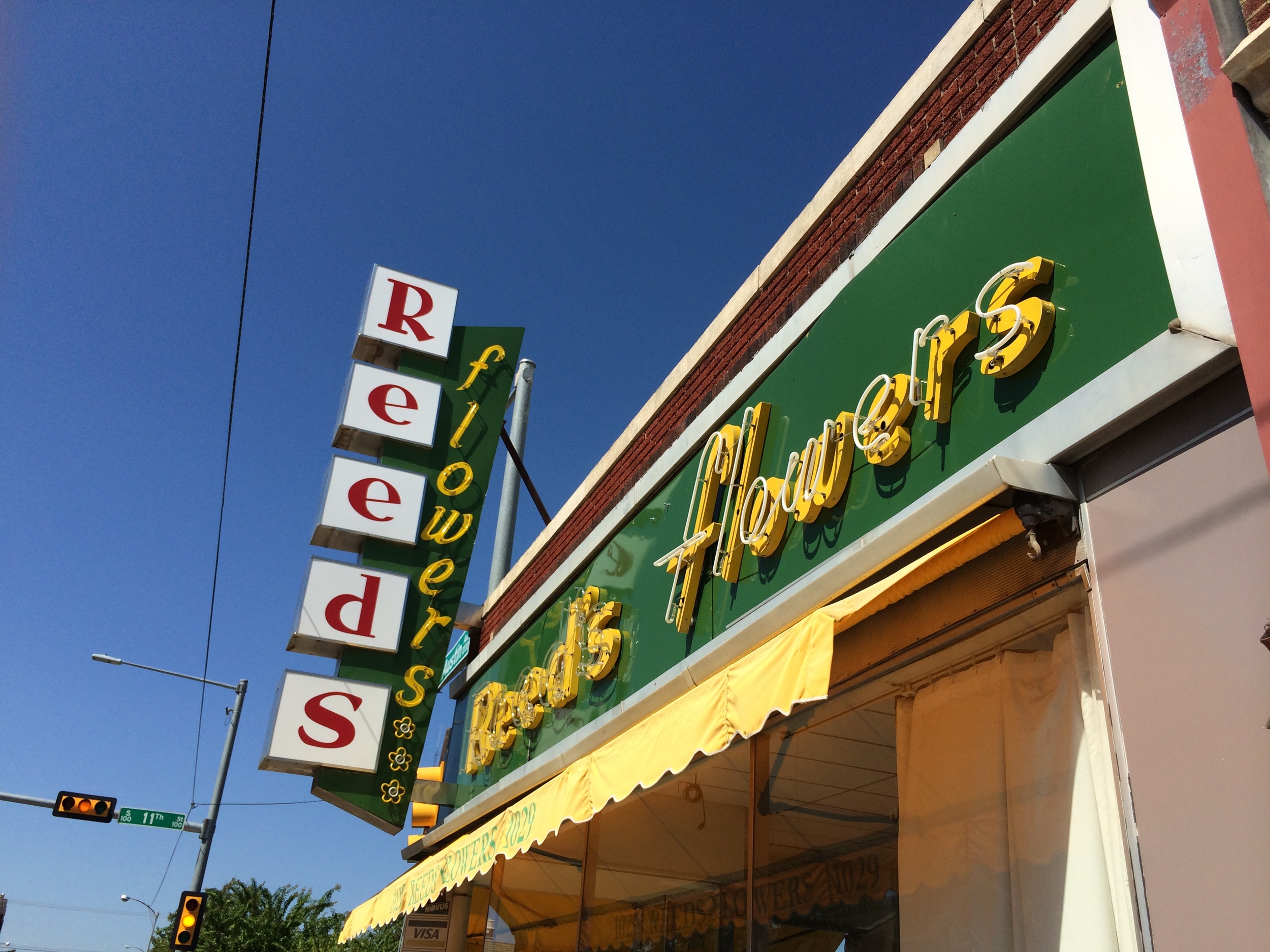
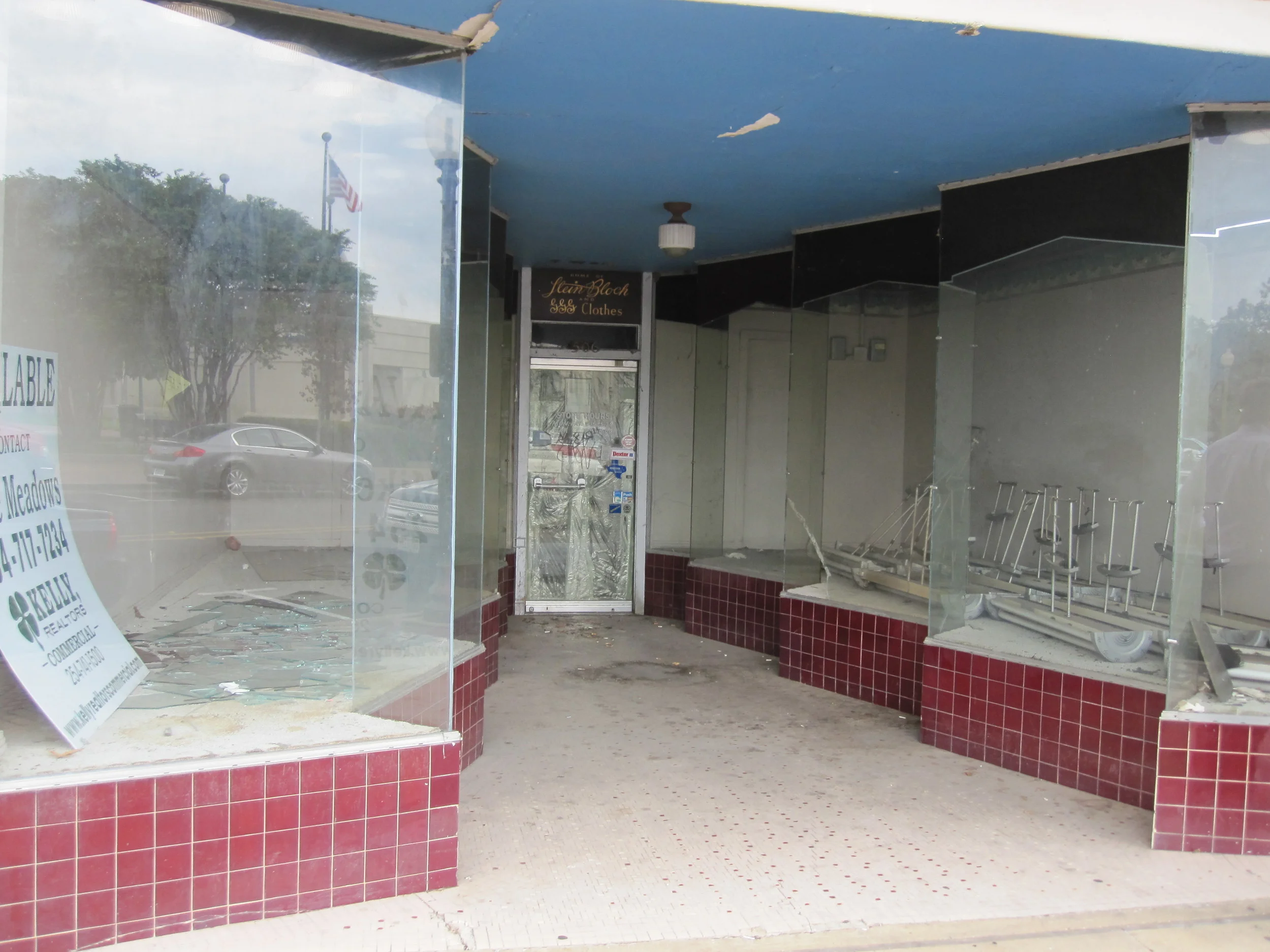
(Left image) Frost Bank in San Marcos; (middle image) Reed’s Flower Shop in Waco; (Right image) Vacant Chevron Storefront in Waco.
In order to make the decision about preservation, we must first understand why these buildings and storefronts came to be initially. Main Street changed dramatically in the mid-20th century as storefronts were modernized in appearance and new buildings were constructed to compete with suburban developments along highways. These designs were influenced by architectural trends known as the International style and Bauhaus movement, which started in Europe. In larger cities, architects and designers took inspiration from these movements and created new storefronts and building forms that set trends in downtowns across the country. Modern materials also influenced the change in Main Street design. Architect Carol Dyson from the Illinois Historic Preservation Agency, explains:
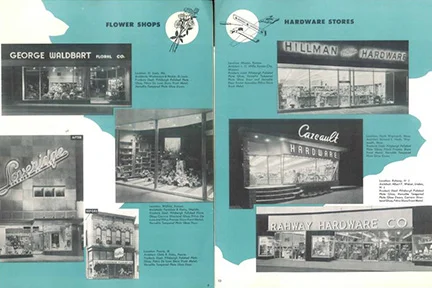
Storefront catalog – Source: National Main
Street Center
“The companies that produced glass and aluminum storefronts also promoted renovation. Glossy brochures showings sophisticated shoppers coaxed store owners to modernize in order to match new styles of goods and fashion. The results were striking. Glassy storefronts spilled light onto busy sidewalks for evening shoppers. Redesigned buildings were honored by special events, celebrating up-to date looks worthy of an optimistic post-war age. With new signs, shop fronts, display windows or slipcovers, Main Street became “modern.” Banks, specialty shops, cinemas, and pharmacies were often the first buildings to be modernized in a downtown.
Mid-century updates often segmented a building or covered the original facade. For example, the Withrow Furniture Co. slipcover in Corsicana was placed on the front façade of the building while the original side façade was left exposed. In Ennis, only the storefront of the T Mobile building was modernized, most likely soon after the new bank building was constructed next door. While the new storefront has an interesting shape, the building is visually split into two parts. For this reason, preserving mid-century resources can be complicated and presents even more questions:
Should the slipcover be removed?
Should the storefront be restored to match the original façade configuration?
How do you repair the unique materials used in mid-century designs?
Each resource should be evaluated on a case by case basis in order to create a preservation plan.
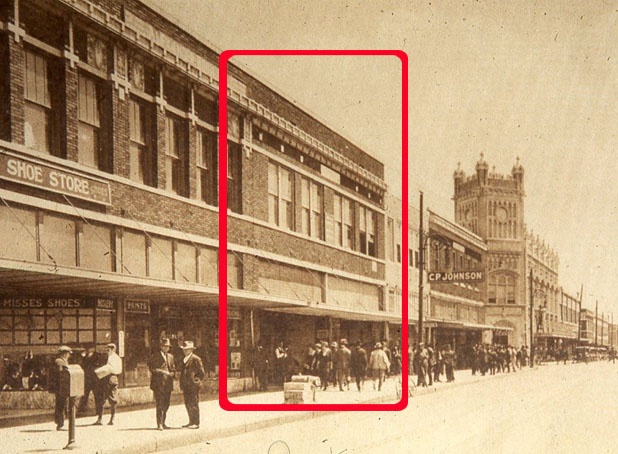
For instance, in Paris the building highlighted in the historic photograph was covered with an elaborate porcelain tile slipcover seen in the image below. After a thorough investigation, the owner discovered that very little of the original facade remained under the slipcover and chose to repair the midcentury façade.
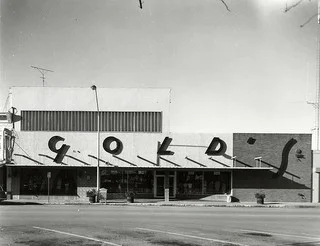
While in Georgetown, the Gold’s Department Store slipcover was removed to reveal portions of the original façade beneath. The owners
chose to restore the original façade and reconstruct missing elements like the cornice details along the top of the building.
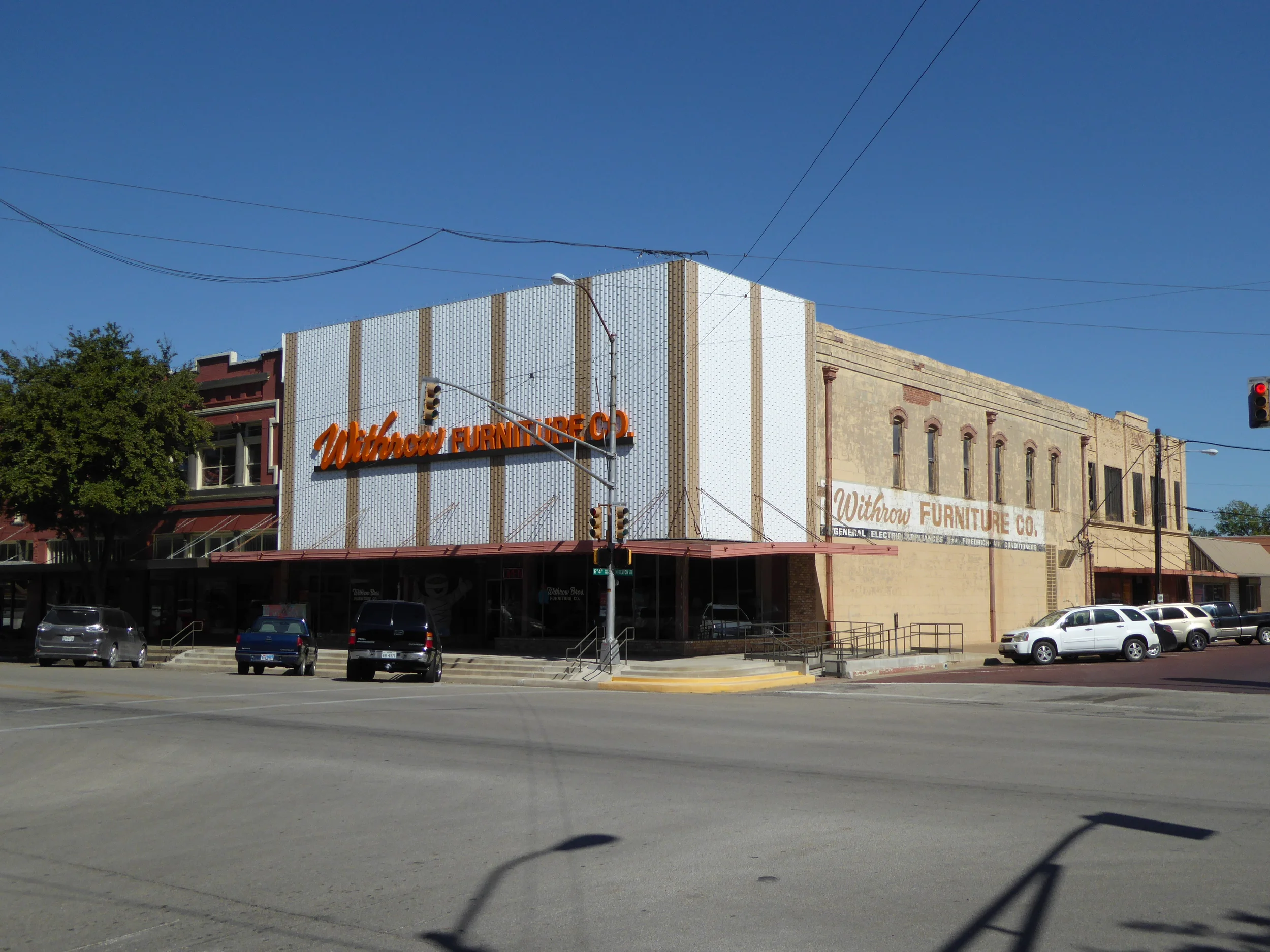
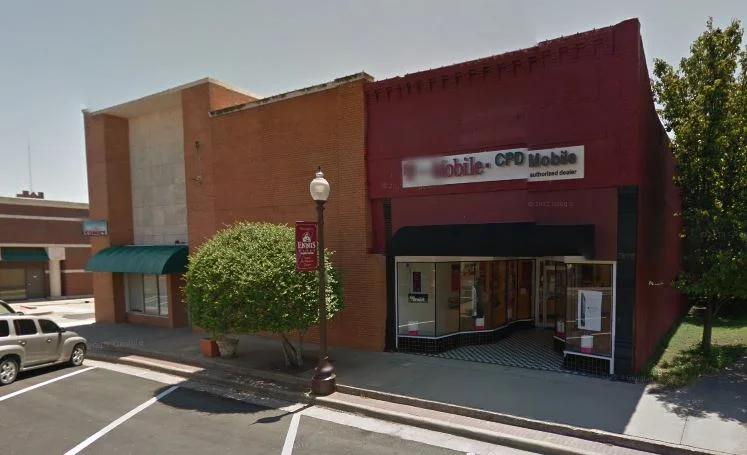
(Top image) Midcentury slipcover and signage
in Corsicana; (Bottom image) Midcentury
modern bank building and storefront in Ennis
(Source: Google Street view.)
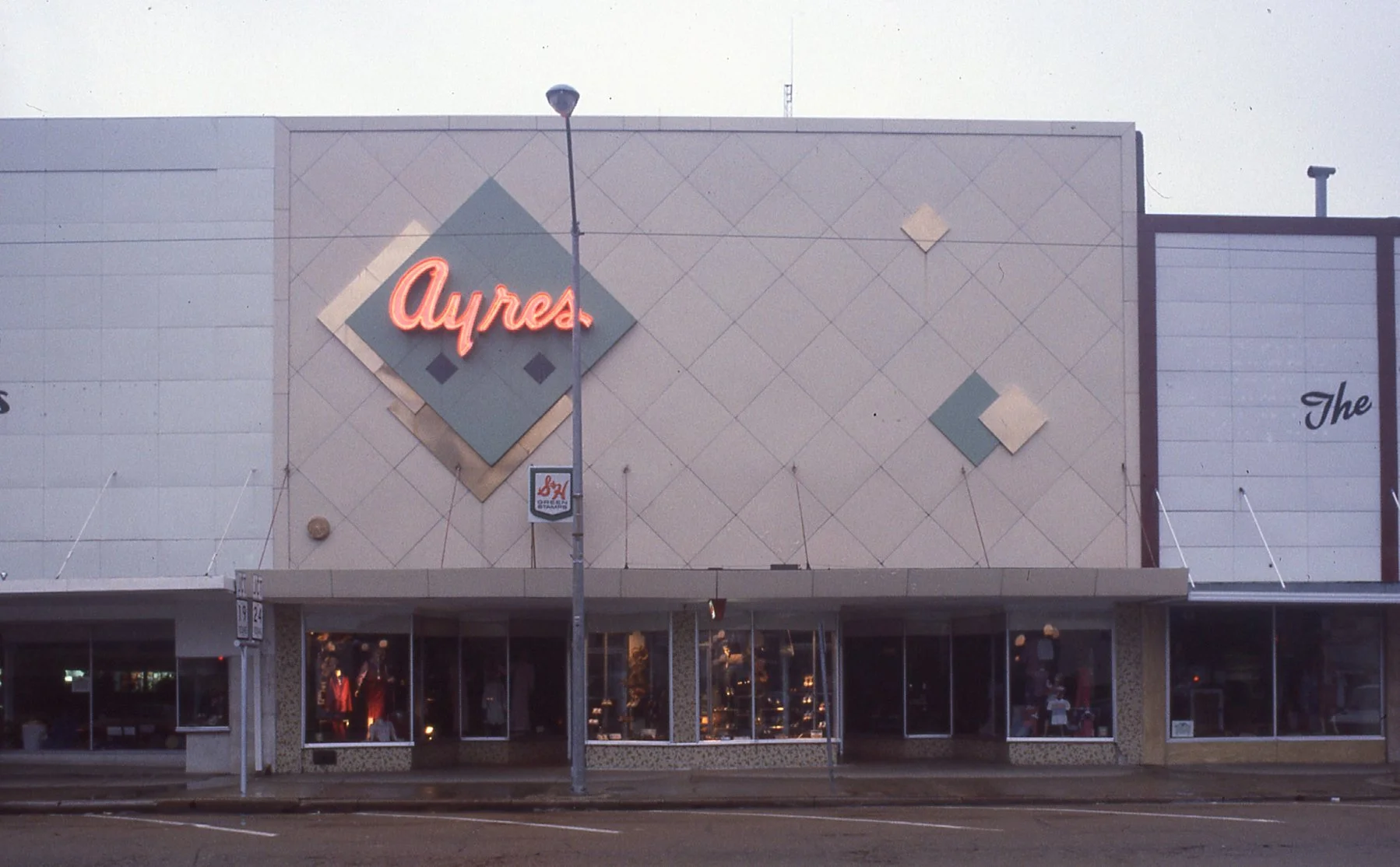
(Top image) Original facade; (Bottom image)
Mid-century facade.
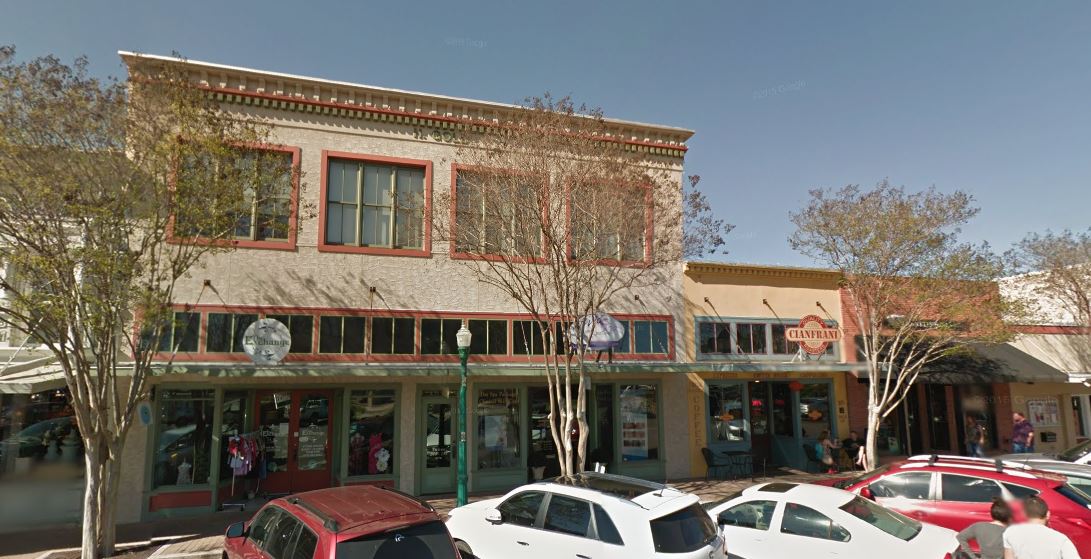
(Top image) Before restoration - Gold’s Department
Store (source); (Bottom image) After restoration
(Source: Google Street View).
Mid-century resources are artifacts of a specific period in each city’s history. They are a visual record that contributes to a community’s story at street level and deserve to be preserved and represented like all other styles found in a historic downtown. The process is arduous, but local
preservationists can encourage the preservation of mid-century resources by:
Creating design guidelines for the downtown district that allow for the unique shape and size of midcentury signage and aesthetic of materials
Educating the public on how modern designs became a part of their downtown and why they should be maintained
Allowing for the repair of significant slipcovers and segmented facades in grant applications
For additional information, please visit:
How to work with storefronts of the mid-twentieth century – Carol Dyson
https://www.illinois.gov/ihpa/Preserve/mid-century/Documents/modern-storefrontglossary.pdf
Mid-Century Storefronts – Michael Houser
http://www.dahp.wa.gov/sites/default/files/MID%20CENTURY%20STOREFRONT.pdf
Mid-Century Commercial Modernism: Design and Materials
https://ncptt.nps.gov/blog/midcentury-commercial-modernismdesign-and-materials/
Main Street Meets Mid-Century Design - Main Street Now – Mike Jackson
http://www.preservationnation.org/assets/photos-images/mainstreet/main-street-now/2014/summer-2014/MSN_Summer_Final.pdf
Modernism and the Recent Past – National Trust for Historic Preservation
http://www.preservationnation.org/information-center/saving-aplace/modernism-recent-past/#.Vf810mTBzRY