DAZZLED BY THE FOOD TRUCK TRAIN? SMART THINGS FOR MAIN STREET TO CONSIDER
February 2016 Main Street Matters
Article written by Emily Koller, AICP, Texas Main Street Planner
Gone are the days when people get excited by a food truck simply because it is a food truck; however, the trend continues. The lure of
a low barrier to entry can be too great to resist for entrepreneurs, and cities are attracted by the idea of a low cost transformation strategy
for underutilized areas of town. Nonetheless, what works for big cities does not necessarily work for small towns. Here are some things
to consider should your Main Street decide to pursue food trucks.
Is the Market Ready?
In rural areas, food trucks have always been used at festivals and fairs, and there is a long history of roadside farm stands and trucks.
However, the urban food truck is more about better-quality food, innovative concepts, and creating an “experience” like artisanal grilled
cheese, fusion food, and specialty desserts. Should your city be pushing the creation of a food truck ordinance for revitalization purposes, it is
important to consider if the market is ready. Ebay and Craigslist offer an unfortunately large number of food trucks for sale. While the lure
of a low barrier to entry can be hard for entrepreneurs to resist, running the actual business can be far more challenging than expected, especially
in places where cuisine may be new or unfamiliar. Food trucks can be most effective as a way to “incubate a hospitality concept,” meaning
they allow an entrepreneur to test their concept before making a larger investment.
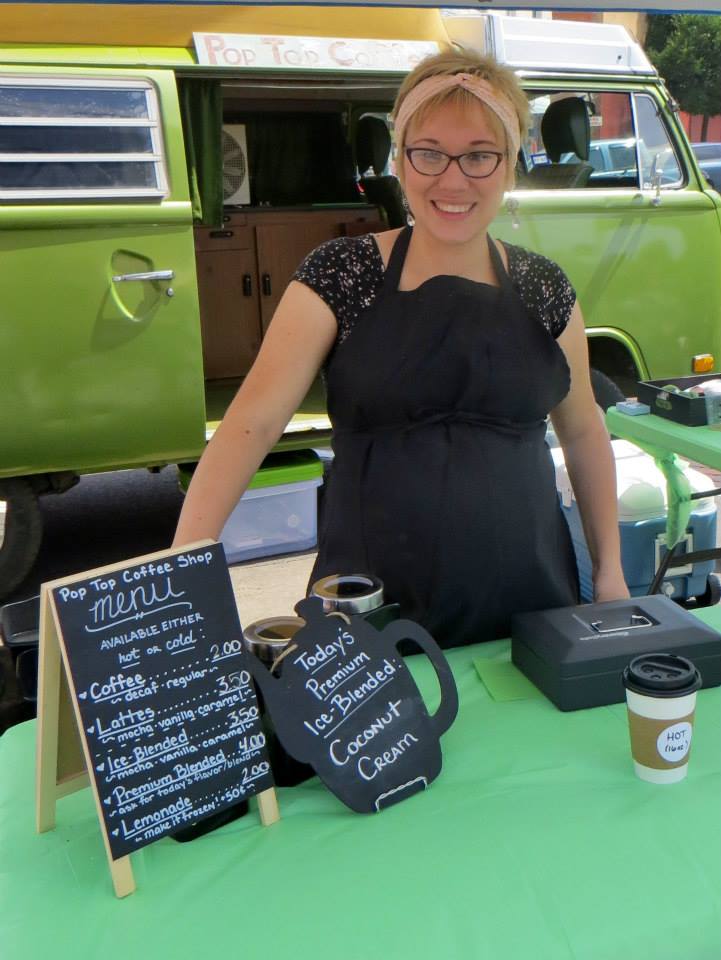
Pop Top Coffee Shop founder Mandie Tartaglia
stands in front of the bus, “Zooey,” at the Farmer’s
Market in Ennis. Photo courtesy Pop Top Coffee.
Is your town short on usable buildings that will meet code for a restaurant? Testing the concept first and then helping your business owner move into a bricks-and-mortar restaurant space once the market has responded is a win-win for everyone. This was the case in Ennis where Pop Top Coffee began at the local farmer’s market selling delicious hand pulled espresso, ice-blended coffee creations, and loose-leaf tea drinks out of their 1978 Volkswagen bus in 2014. Just six months after debuting at the Farmers Market, they received so much support from the community, they were able to set up a permanent shop in the Ennis National Bank Event Center, where they continue to thrive.
Policy Issues
While food trucks seem harmless and fun, they present a whole host of regulatory questions for city officials. Municipalities are forced to address issues that arise over competitiveness, parking, sanitation, property and sales taxes, and proximity to brick and mortar businesses. Local regulatory
debates are shaped by the different perspectives of the varied stakeholders, including food truck vendors, local restaurant owners, restaurant associations, consumers, and city officials.
Generally there are four main policy areas for your local decision-makers to consider:
Economic Activity–What is the city’s overall economic strategy for wanting to encourage food trucks? What aspects of a food truck ordinance could potentially enhance economic development (e.g., streamlining permitting processes and permitting costs)? Permitting food trucks should be a strategy to increase economic activity, and not deter potential investment by making the process difficult and cumbersome.
Public Health–What aspects of an ordinance relate to sanitation and food safety? Should the process originate from the health department, planning department, or be managed equally by both departments? Who will review the plans and inspect the physical truck?
Public Safety–What aspects of the ordinance relate to the utilization of private property, vending proximity to schools, and pedestrian safety? How do you ensure the trucks do not create an unsafe environment for patrons?
Public Space–What aspects of the ordinance address the utilization of public property to conduct business (e.g., time constraints, proximity rules, and geographic limitations related to density)? Where can trucks be located so they meet the city’s strategic revitalization goals, but do not compete with existing businesses?
Ordinance Examples
There are many recently adopted policy examples from around Texas to serve as a guide for a city considering food trucks. Typically a city adopts an ordinance outlining the standards for operation along with the permitting process. It is common that both the health department and planning department will be involved–often multiple permits and inspections are required. Main Street programs can be a helpful intermediary to help explain and simplify the process so that it is as business-friendly as possible. Main Street managers can visit the Online Resource Library for links to these examples:
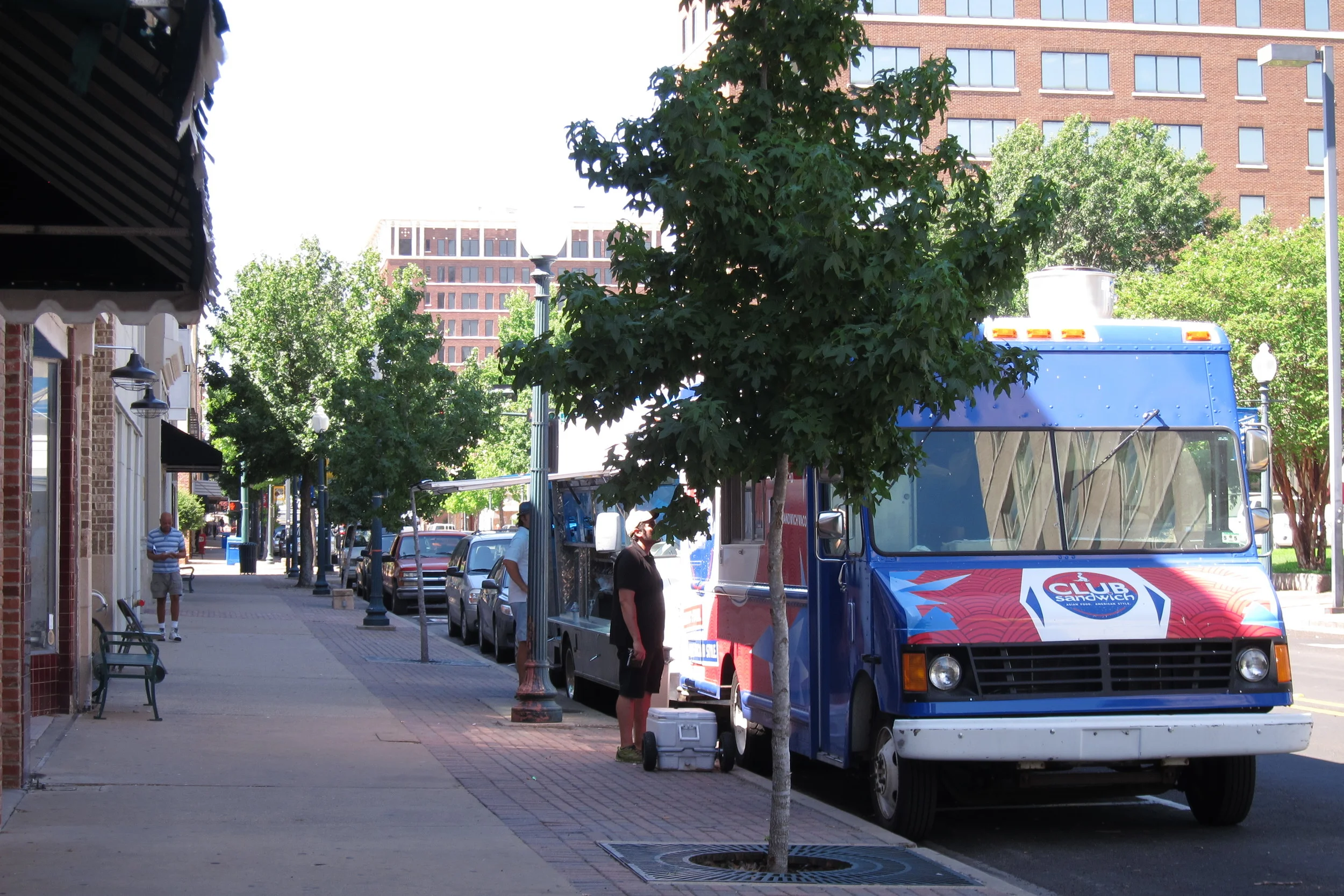
Food trucks line up in front of the popular Dichotomy Coffee shop on Austin Avenue in Waco for the lunch rush. The right combination of food offerings complements the foot traffic to the popular coffee hang out. Visit the Texas Main Street Resource Library for examples of the ordinances.