Energy Efficiency
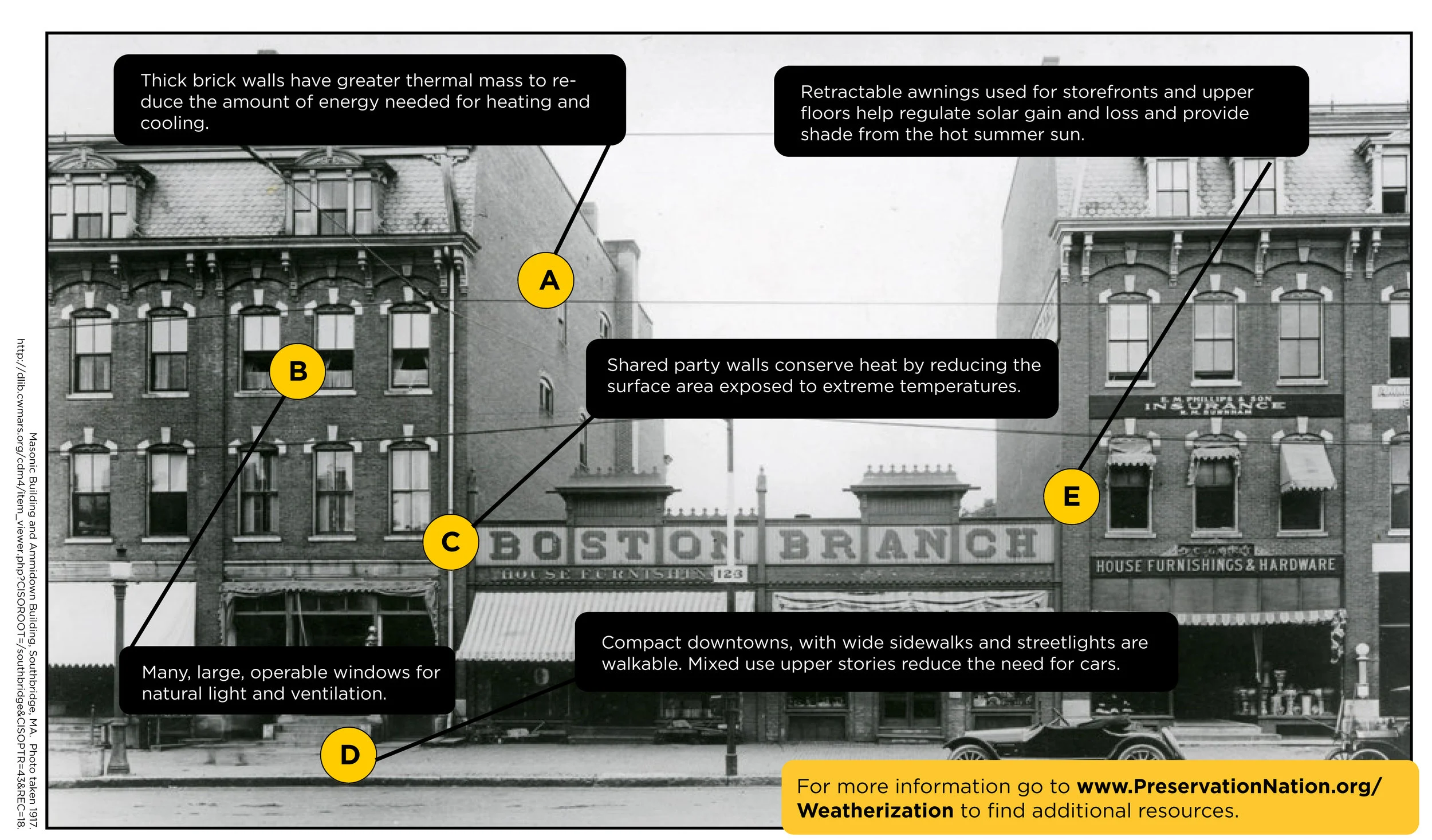
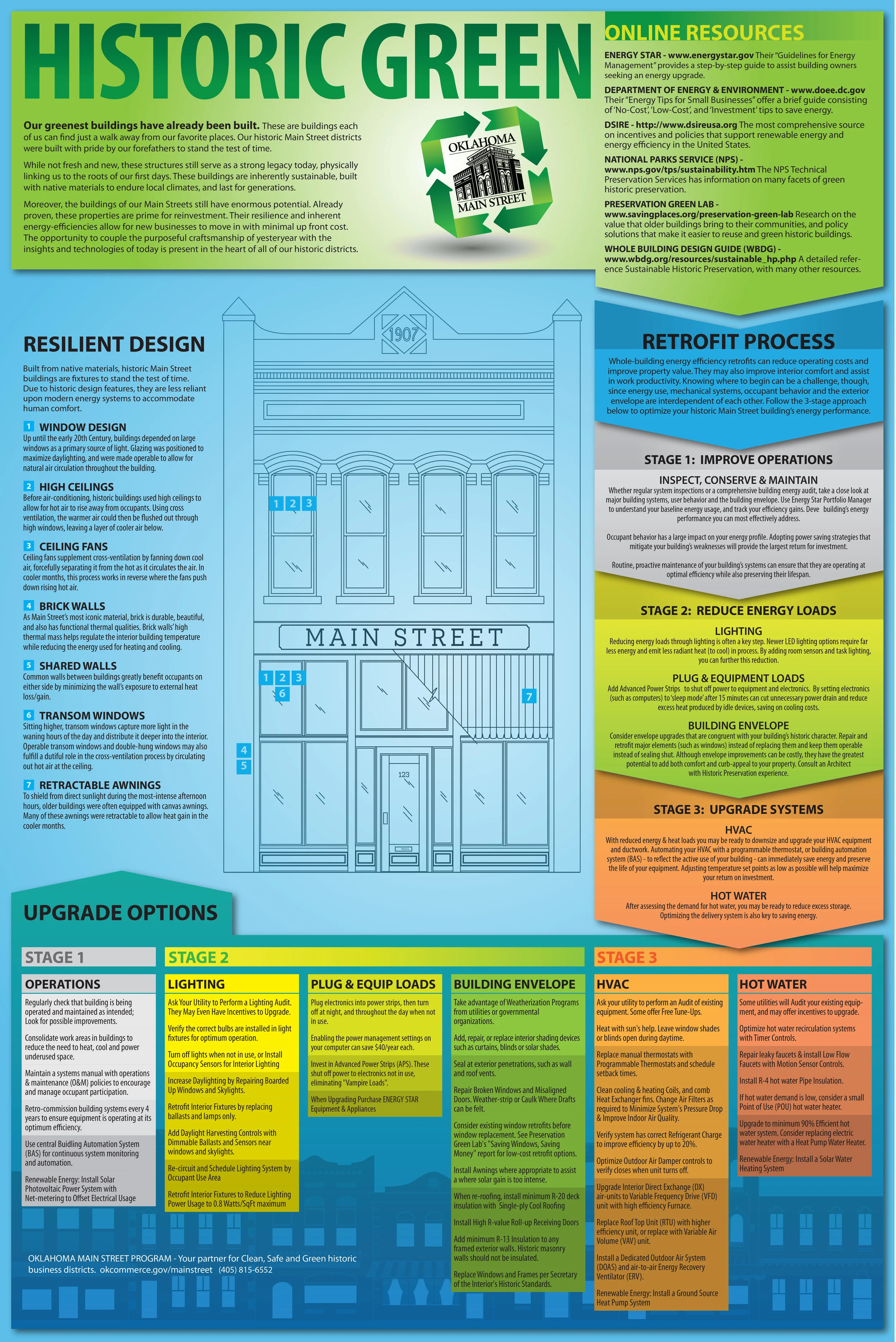
Most of your old downtown buildings were built before the creation of heating, air conditioning, or electric lights. Historic buildings were designed in such a way to make their occupants comfortable through "passive" means, by taking advantage of the outdoor climate and manipulating it through specific buildings features. Over time, alterations to historic buildings have changed the way each building functions and the passive design features have been forgotten. With a little help, your historic building can be energy efficient once again.
Here are a few resources to get you started:
- Historic Building Energy Efficiency Guide (also see image below)
- Whole Building Energy Efficiency Retrofits in 3 Stages
- Weatherization Tips for Historic Buildings
- Preservation Brief #3 - Improving Energy Efficiency in Historic Buildings
- NPS Weatherization Measures for Historic Buildings
- Realizing the Energy Efficiency Potential of Small Buildings Study
- Saving Windows, Saving Money: Evaluating the Energy Performance of Window Retrofit and Replacement Study
Weatherizing or otherwise improving the energy efficiency of historic buildings should be undertaken carefully to preserve a building’s historic character. Because energy retrofitting is continuously evolving, products or solutions that are popular today may fall out of favor in the future. So it is important to select products and treatments that are reversible and do not require major structural or material changes.