
Article written by Emily Koller, Texas Main Street Planner
Downtown mixed-use development is a common phrase in our Main Street cities. Downtowners in the network certainly understand the value in creating a district with first floor commercial uses and upper floor residential. However, a series of recent questions prompted some additional research on the appropriate way to balance a mix of uses in smaller Main Street cities. Mixed-use model ordinances primarily focus on places with a larger population and more market demand. Smaller cities and towns do not always have the market pressure that creates demand for prime restaurant and retail space on the ground floor and loft style residential above.
So is it necessary to implement a mixed-use zoning policy and will it change anything? The short answer is yes. Every town, no matter the size, needs to make sure that the historic development pattern can legally be built today. This historic pattern commonly includes multi-story, mixed-use buildings with zero lot lines and ground floor facades that interact with the street. While a zoning policy is not the magical single solution that will create the perfect mix of uses, it is a concrete action step that every municipality can take to provide certainty for potential investors in downtown.
When considering a mixed-use policy, start with two tasks.The first step is obvious: check your zoning ordinance to understand what it actually says and does not say. In many of the smaller communities, the land use and zoning rules date back several decades. Multi-story buildings are typically regulated as a single use. Residential and lodging uses may not even be permitted at all. Check to get an accurate list of what specific uses are permitted by right (meaning the business could open tomorrow); permitted with conditions (requires approval by council/planning commission), or not permitted at all.
The second step is more difficult: define the intent. When talking about creating additional residential downtown, make sure the intent is clear.
- Do you simply want to allow residential downtown?
- Is the desire to incentivize more downtown residential to support the commercial businesses?
- Is the issue that building owners are living on the first floor spaces and occupying valuable commercial frontage?
- Or, is the goal to attract specific new projects to town like lofts for professionals or boutique lodging?
There are many ways to implement a mixed-use policy that encourages downtown residential. Defining the intent helps narrow the many options.
Basic Mixed-use Ordinances for Smaller Cities
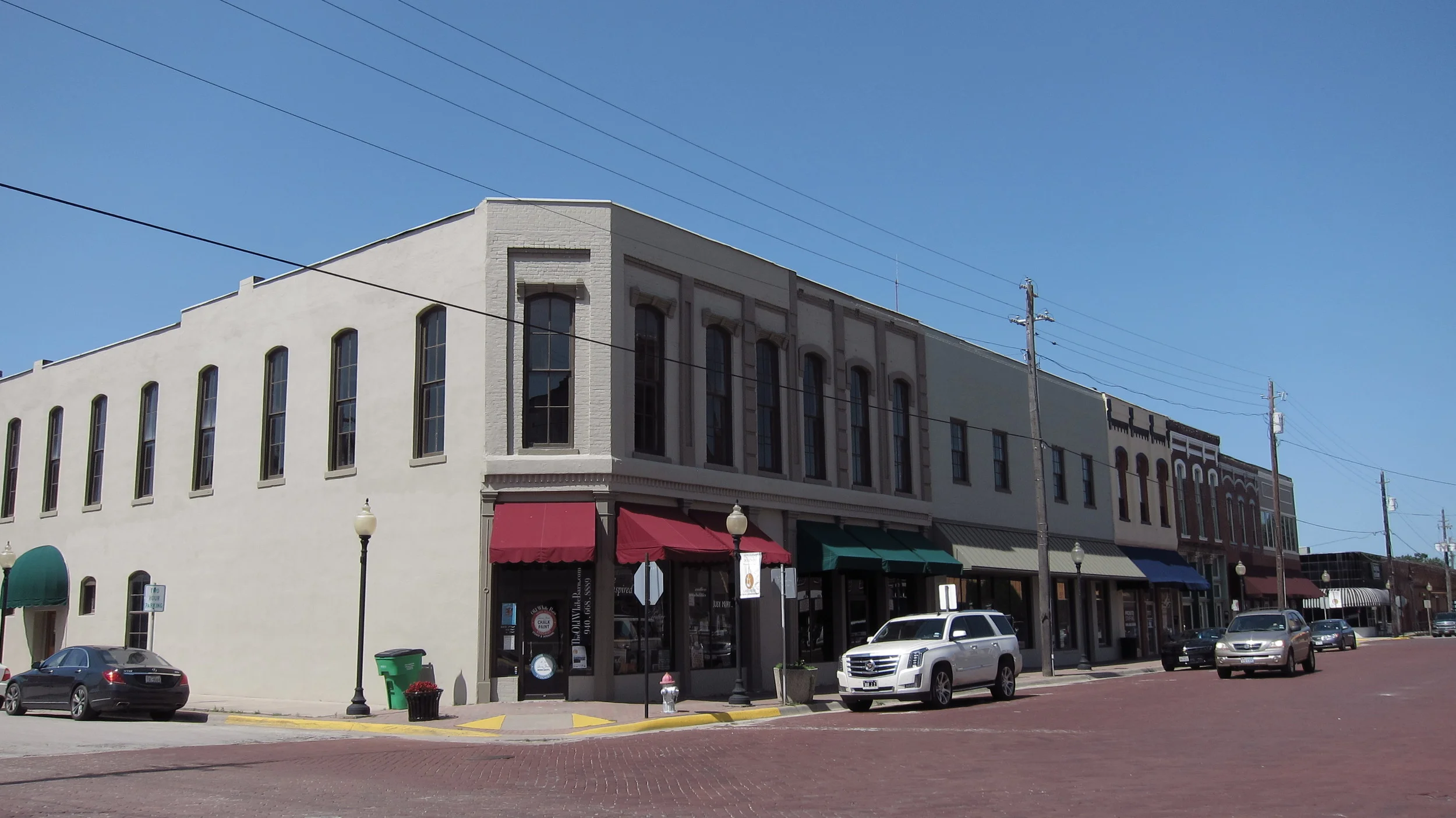
While Gainesville struggles to diversify its ground floor mix, it has a surprising number of downtown residential units - seven in this block alone.
Gainesville’s Central Area Commercial District is a very good example of a straightforward downtown mixed-use zoning designation. The purpose is stated as the following:
The CA Central Area District is established to encourage mixed-use development within the downtown district of the City, while maintaining the unique historic character currently found within the district. This district is a pedestrian-friendly district. Uses are limited to a succinct list and the ordinance clearly states that residential uses “shall be located on or above the second floor, from ground level, of the commercial structure.” There are more than 12 residential units on the courthouse square alone. Gainesville’s ordinance located here.
Sealy’s Downtown Preservation District ordinance is another good example of a simple, easy to administer downtown mixed-use ordinance. It is especially interesting because the city of Sealy does not have zoning in the rest of the community. The downtown district does not prohibit ground floor residential entirely (allowing for single family), but does require multi-family to be on floors two and above. The ordinance also allows the desired mix of uses for a typical, pedestrian-friendly experience and preserves the historic character and scale of downtown. Read Sealy’s ordinance here.
Zoning to Attract More Downtown Residential
Generally, if a downtown district is working actively to attract more residential, there are several critical pieces that need to be in place: a zoning policy that provides predictability to developers and investors; an efficient city permitting program and incentives to attract the type of desired development. A developer-friendly mixed-use zoning policy can be the first step in moving downtown towards a “welcome investors!” reputation.
This was the case in San Marcos. The city implemented a form-based code downtown in 2011, which shifted the emphasis of development review from use to form. A form-based code is a land development regulation that fosters predictable built results and a high-quality public realm by using physical form rather than separation of uses as the organizing principle for the code. Now, a mix of uses is allowed in any configuration within a single building, including a range of residential products. This was done with very few incentives available, but a more streamlined permitting process, increased density allowances, and predictability for future development created investor confidence. In addition to many small projects, special approvals for additional height beyond the 5-story limit have been granted for two residential towers between downtown and the university. The SmartCode is complicated, however, and not recommended as a universal option for smaller Main Street communities. Find the San Marcos SmartCode here.
In some of the smaller Main Street communities that are not as fortunate to have a major state university a stone’s throw from downtown, a robust incentive policy may be necessary. Historic Downtown San Angelo offers many incentives to any existing or new building with at least 75 percent of the floor area used as residential, retail, restaurant, or entertainment. Projects must also apply for historic overlay zoning approval. Find Historic Downtown San Angelo’s incentive program here.
Zoning to Create Residential in Specific Areas
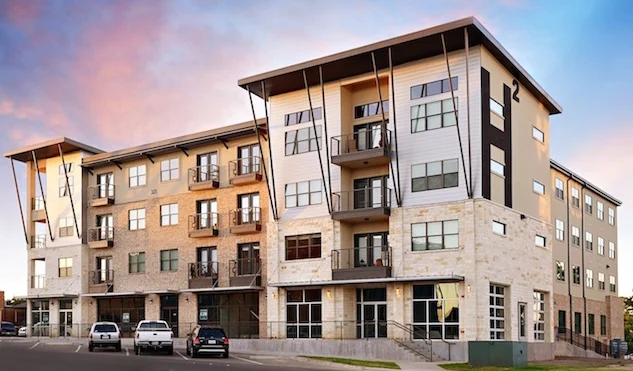
Mixed-use zoning was implemented in Denton’s greater downtown area in 2002. A variety of housing types are now available in downtown including townhomes and apartments with ground floor commercial such as the 42-unit H-Squared project (pictured above) which opened in 2014.
Interestingly, there aren’t many examples of codes that prohibit first floor residential entirely in a downtown district. The majority allow single family in at least a portion of the district but require multi-family to be on floors two and above. Denton’s code is a good example. They have four different downtown districts, which permit a variety of residential uses. This allows for a more nuanced approach to permitting specific housing products. For example, two districts allow detached single family and two districts do not; multi-family units are permitted in three of the four; and live/work units are permitted in all four. Read the ordinance here.
Rather than thinking about prohibiting first floor residential, it may be more beneficial to think in terms of requiring ground floor “active uses.” These are typically in concentrated areas where there is a desire to create a specific cluster of activity. It would be difficult to mandate this in a downtown district as a whole, but it has been done in smaller communities in the most prominent commercial areas. While not Texas, Milwaukie, Oregon, (population 20,512) provides a good example.
Downtown Storefront Zone
The Downtown Storefront Zone is established to preserve and enhance the commercial “Main Street” character of downtown Milwaukie, ensuring that new development in areas designated DS is compatible with this desired character. This zone allows a full range of retail, service, business, and residential uses. Retail or restaurant uses are required as the predominant uses on the ground floors of buildings fronting on Main Street. Residential uses are allowed only on upper floors. Warehousing and industrial uses are not allowed. The desired character for this zone includes buildings that are built to the right-of-way and oriented toward the pedestrian, with primary entries located along streets rather than parking lots.
Read Milwaukie’s ordinance here.
Defining Residential Uses
Another thing to consider for downtown residential is the wording. One word can make a difference in a zoning policy, so it is important to describe exactly what you mean when you say downtown residential. Here are a variety of residential housing terms to think about:
- Single-family Residence/Dwelling
- Attached Single-family Residence/Dwelling
- Accessory Residence/Dwelling Unit
- Rowhouse
- Courtyard House
- Lofts
- Dwellings Above Businesses
- Live/Work Units
- Duplexes
- Multi-Family Dwellings (can be specified on second floor and above)
- Apartment Building
- Fraternity or Sorority House
- Dormitory
- Group Homes
- Household Living
Model Mixed-Use Zoning Ordinance
Finally, the American Planning Association has prepared a model mixed-use zoning district. This is not specific to smaller cities with historic downtowns, but does provide a good starting point for those considering a mixed-use policy. www.planning.org/research/smartgrowth/pdf/section41.pdf