
DOWNTOWN PLANNING AND MAIN STREET:
How Effective Involvement Can Influence Decision-Makers and Ensure Progress for Downtown
June 2014 Main Street Matters
Article written by Emily Koller, Planner, Courthouse Square Initiative, Texas Historical Commission
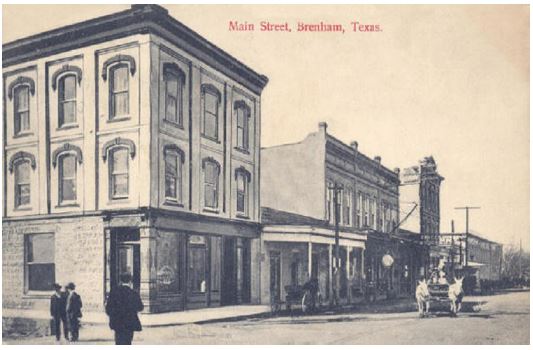
Brenham's historic Main Street circa 1911. The Brenham Main Street program lead the effort to initiate a downtown master planning process by positioning the value of the historic downtown in the context of the overall economic health of the city.
The first mention of a plan or planning process rarely excites anyone. However, a well-crafted community-based plan that is implemented effectively leads to a downtown that excites everyone.
Planning, and the responsibilities of a planning department, can be difficult to describe. At the most basic level, planning is a community process that creates consensus around a vision and then establishes policies that make it possible to achieve that vision. Your city planning departments likely manage both aspects: long range planning – the vision and desired development pattern; and current planning – the policies and regulations that guide developers and property owners in order to create the desired pattern.
A downtown master plan can be a complex, lavishly illustrated, detailed document or it can be a simple, concise list of community goals and strategies to help you get where you want to be. Regardless of the sophistication, the most effective plans have a large number of stakeholders involved in their creation including:
- Downtown property owners
- Business owners
- Developers
- Residents
- Community groups and non-profits
- Leadership from educational institutions and students
- City personnel responsible for transportation, parks, utilities and public infrastructure
- City and county representatives
- Tourism and economic development partners
- And perhaps most importantly – every day downtown users, not just those who speak at every public meeting
There is no real secret to a good downtown master plan. In fact, they all look similar. The elements commonly included are:
- Enhancing identity and ensuring authenticity
- Fostering business development
- Creating effective connections, transportation options and parking management
- Implementing urban design standards that unify the pedestrian experience
- Implementing development standards that will result in compatible redevelopment and infill
- Creating a downtown management framework to maintain focus on and secure funding for downtown revitalization efforts over time
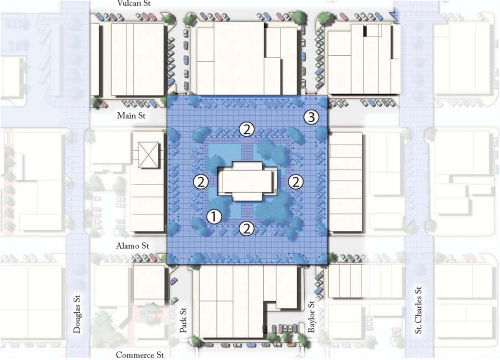
The plan identifies place-making projects and preferred development activity for the district.
Concept plan courtesy of Brenham Downtown Master Plan, rendering by the Mesa Team
Master plans contain specific recommendations for each plan element. These are the projects implemented on a daily basis by city staff and other partners. The projects require more detailed review, input and discussion and could even generate additional public outreach. However, adopted master plans with significant stakeholder participation and support, in turn, have significant political support. Implementing a plan in a favorable political environment makes it easier to secure funding for and move quickly to complete projects.
Main Street boards and volunteers should play a leadership role in the downtown master planning process and be actively involved as projects are implemented. The organizational capacity created by the Four Point approach lends itself to a strong political voice for downtown. This voice should be leveraged to advocate for downtown issues throughout all stages of the planning process.
Ongoing issues you may not associate with planning could potentially be solved by increased involvement in the process. Finding funds for wayfinding or a new website, converting a street to two-way, or drafting a code revision to allow second floor residential, may already be identified in a master plan. The key is to use the consensus created for the master plan’s vision to gather political support for funding and implementation of those specific projects. There are some great examples from our Main Street cities of effective ways to be involved in downtown planning.
Garnering Support to Start a Planning Process
While downtown is our highest priority, it may not always be the highest priority for political leadership. Main Street boards can work to position the importance of downtown in a community-wide context leading to a reallocation of funding and resources.
Main Street Brenham worked for months to garner community support for a downtown master plan by explaining to community leaders why a plan is important. Lead by the Economic Restructuring Committee, members positioned the importance of downtown in the context of the overall economic health of the city persuasively arguing, among other things, that downtown development affected property values city-wide and downtown drove community identity. Funding was approved in 2011 and the final plan was adopted in September 2012.
Ongoing Oversight of Implementation Strategies
After the adoption of Brenham’s Downtown Master Plan, Main Street board members wanted to ensure that the plan would be implemented. They formed a fifth committee – Planning – to manage oversight of implementation strategies involving a city planner as well as a council member. While it is relatively common to form an oversight committee after completion of a master plan, this is a very pro-active step by Main Street leadership to house the committee within its structure, rather than a more general downtown master plan oversight committee.
Involvement in Planning Department’s Daily Decision-Making
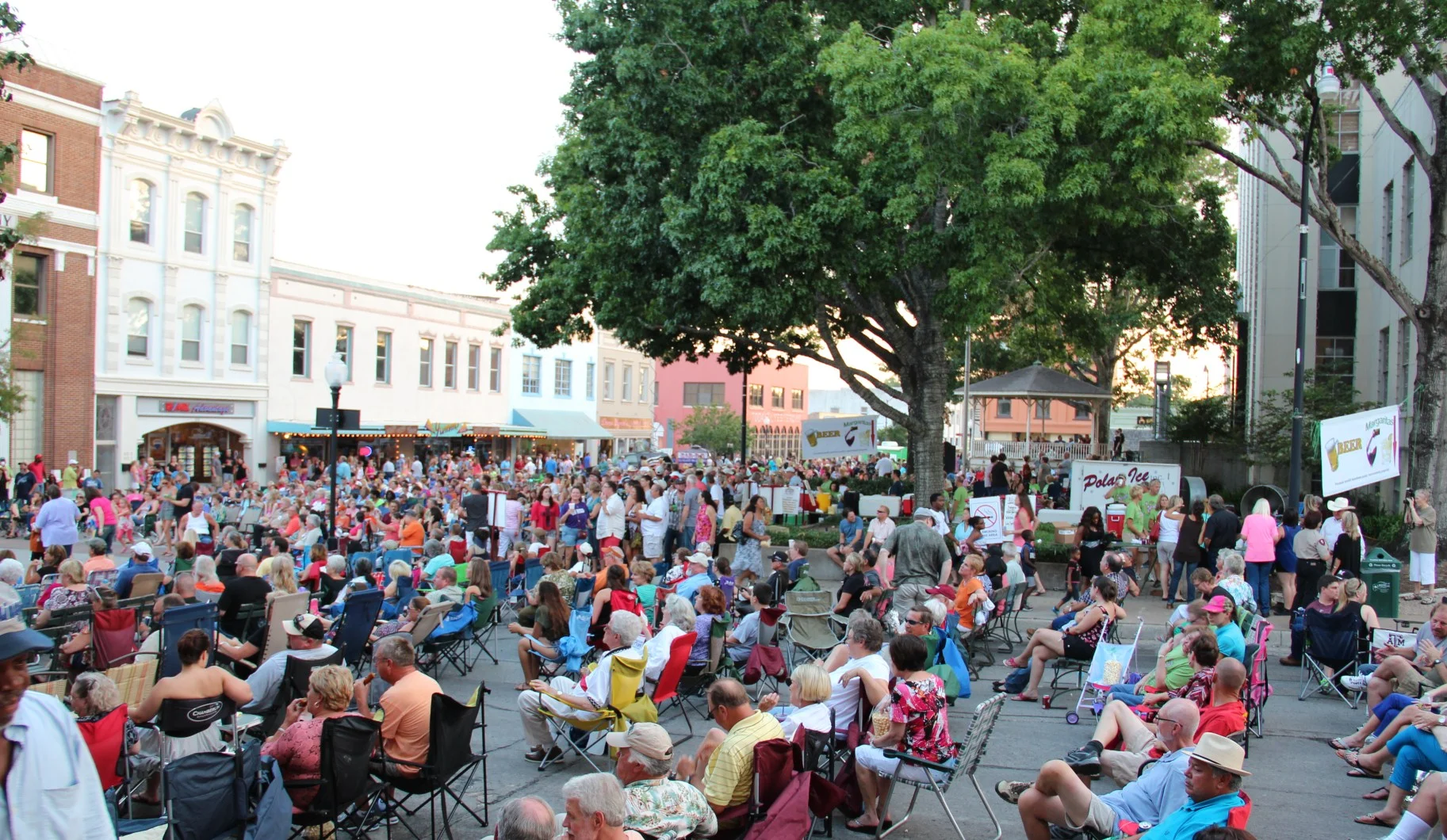
Brenham’s Main Street Planning committee provides oversight for implementation of the projects identified in the Master Plan. Place-making projects will further enhance the Courthouse Square – seen here as the backdrop for the "Hot Nights and Cool Tunes" concert series in summer 2013. Image courtesy Brenham Main Street.
It can be difficult to bridge the gap between the regulatory responsibilities of the Planning or Development Services department and the business-friendly Main Street program. In San Marcos, planning staff worked to implement recommendations in the downtown master plan, but had trouble moving projects forward politically. As development increased downtown, an inter-departmental review committee was established to review development proposals and work on all downtown-related planning projects. The team included members from Planning, Engineering, Building, Permitting, Public Services and Main Street.
The weekly meetings dramatically improved the flow of information. Main Street’s involvement has allowed greater input from the downtown business perspective in the planning department’s decision-making while Main Street is able to stay informed about all permits, applications and public improvement projects. Main Street assisted with public outreach for a key presentation on downtown implementation items and the program even hosted an open house for a controversial development project to help diffuse tension.
There are many ways to be involved in the downtown master planning process. A strong voice by Main Street will influence key decision-makers and ensure progress for downtown. A good starting point is to assess what role your Main Street program plays in the downtown planning process and ask whether increased involvement can assist in solving ongoing issues. We realize not all Main Street communities may be large enough to staff a planning department, but creating a vision for your downtown with systematic steps to reach your goals does not necessarily have to be the responsibility of city staff. In fact, working towards an organized vision on your own may demonstrate the necessity of committing more city staff and resources to a full-fledged planning department.