
LOVE THOSE PRESSED TIN CEILINGS!
August 2014 Main Street Matters
Article written by Howard Langner, Main Street Architect
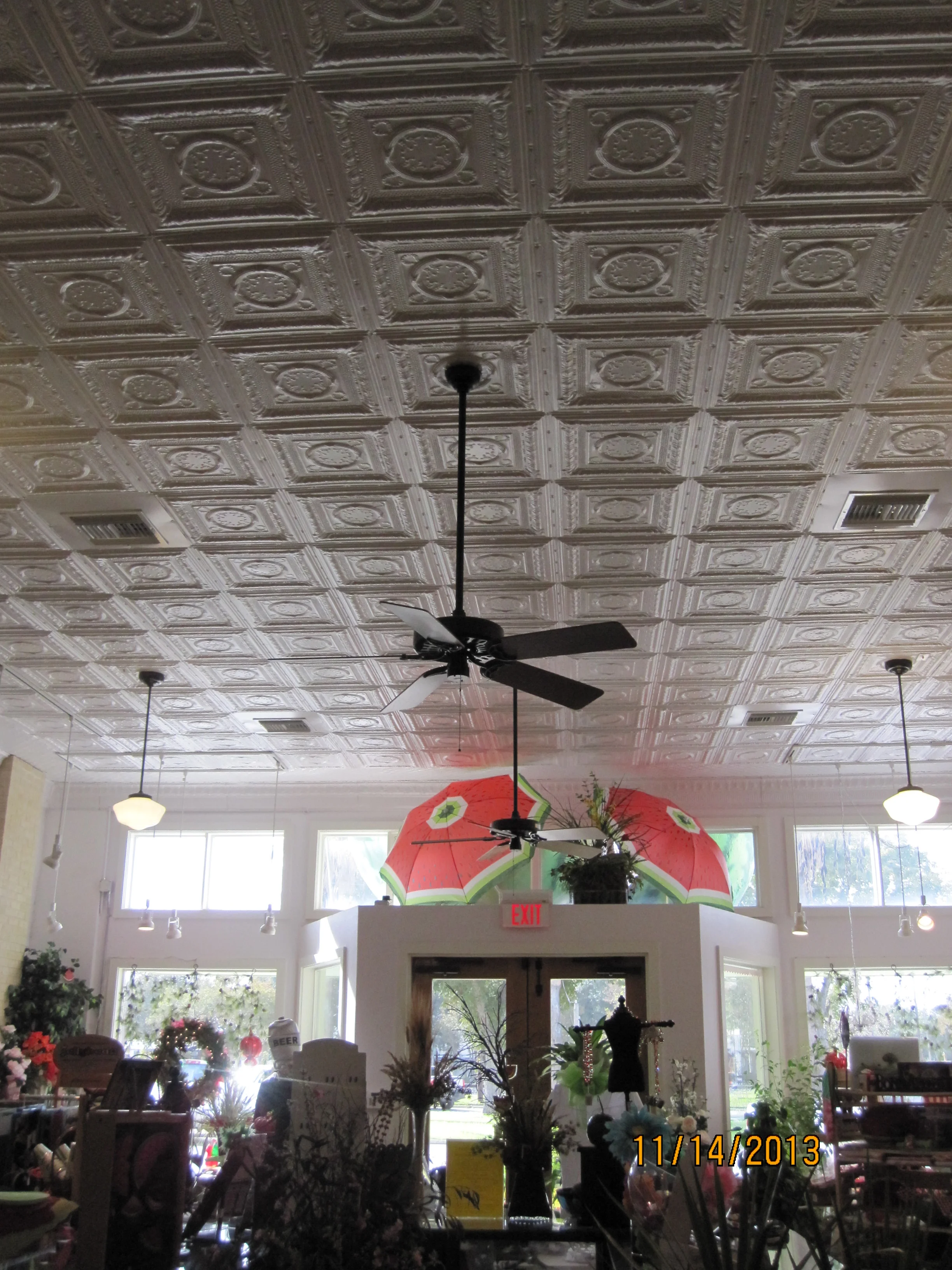
Pressed tin ceiling in historic building in Luling.
One of the greatest delights of a Texas Main Street site visit is looking up and seeing a beautiful pressed tin ceiling over your head. Some of these ceilings have been around for over 120 years and occasionally they look as good as the day they were installed. This brief article will take a look at the history of pressed tin ceilings as well as provide some information on care and maintenance.
Pressed tin ceilings peaked in popularity in North America in the late 1800’s. They were available from over 30 different manufacturers, some of whom offered hundreds of different patterns to choose from. One of the most successful companies was and still is W.F. Norman out of Nevada, Missouri. Half of the business W.F. Norman does these days is for the residential market, but it still serves the Main Street commercial building market as well. Interestingly, W.F. Norman pressed tin ceilings have always been made of steel with a tin coating, just like a tin can. Back in the day “tin” was the generic name for sheet metal much like “Kleenex” means tissue today.
Pressed metal originally became popular because it was relatively inexpensive and widely available. It was used for ceilings, cornices, wall panels, and wainscots. An almost uniquely North American design element, pressed metal was seen as an alternative to the elaborate plasterwork that was commonly used in stately European buildings and homes. The fact that tin ceilings were durable, lightweight, and fireproof made them especially appealing.
Pressed metal panels were (and are) made just like you would have imagined: sheets of tin were stamped one at a time using “rams” and cast iron molds. The ram, which was the top piece of the stamping mechanism was lifted (manually) by a rope and dropped onto the cast iron mold with the sheet metal piece sandwiched between. The force of gravity would embed the pattern of the cast iron mold (or “die”) onto the sheet metal. You would go through this process a few hundred times and, lo and behold, you’d have enough tiles to make a ceiling! If you would like to see this process in action, go to this website and watch the video at the bottom of the webpage: http://wfnorman.com/about/
As far as finished appearance, pressed metal ceilings were usually painted white so that they had the appearance of hand-carved or molded plaster, again, just as in those elegant European homes and shops. Of course, by the 1920’s and certainly the 1930’s, tastes had changed and new ceilings were designed with a simpler, cleaner, and more planar look and decorative pressed metal lost favor. When a building was being stylistically “updated”, the pressed metal ceilings were usually left in place and simply covered up with Tectum or suspended acoustic tile; good news for preservationists today! As it turns out, if there was no prolonged exposure to moisture, the tin ceilings usually fared well.
Re-exposed press metal ceilings usually need a bit of repair and maintenance when they are brought back; even when they haven’t been attacked by moisture. Sometimes the old paint needs to be stripped (the old paint likely has lead in it so proper procedures/precautions must be undertaken), and the metal treated with a protective base coat. When an area of the overall ceiling has noteworthy damage and replacement is the goal, there are three options: 1. Take ceiling panels from an obscure (unseen) area of the ceiling such as from a back storeroom and replace in the area undergoing rehabilitation, 2. Buy a replacement panel (some ceiling panel designs are still being manufactured), or 3. Create a mold from a good existing panel and have a new tile pressed.
Original pressed metal ceilings are considered to be important character defining features of many of our Texas Main Street commercial buildings. Every effort should be made to repair and maintain them for the enjoyment of generations to come.
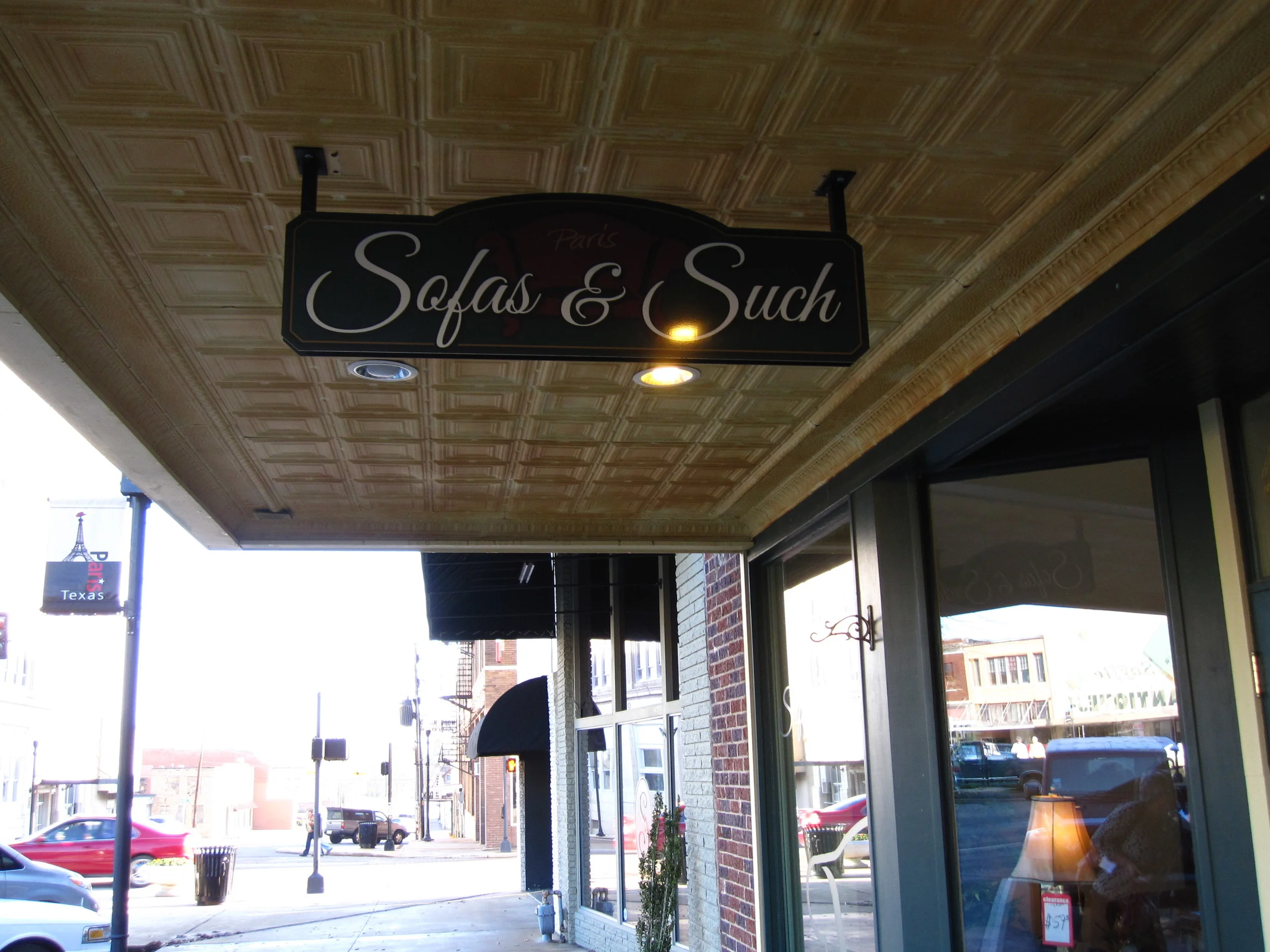
Pressed metal soffit on underside of canopy.
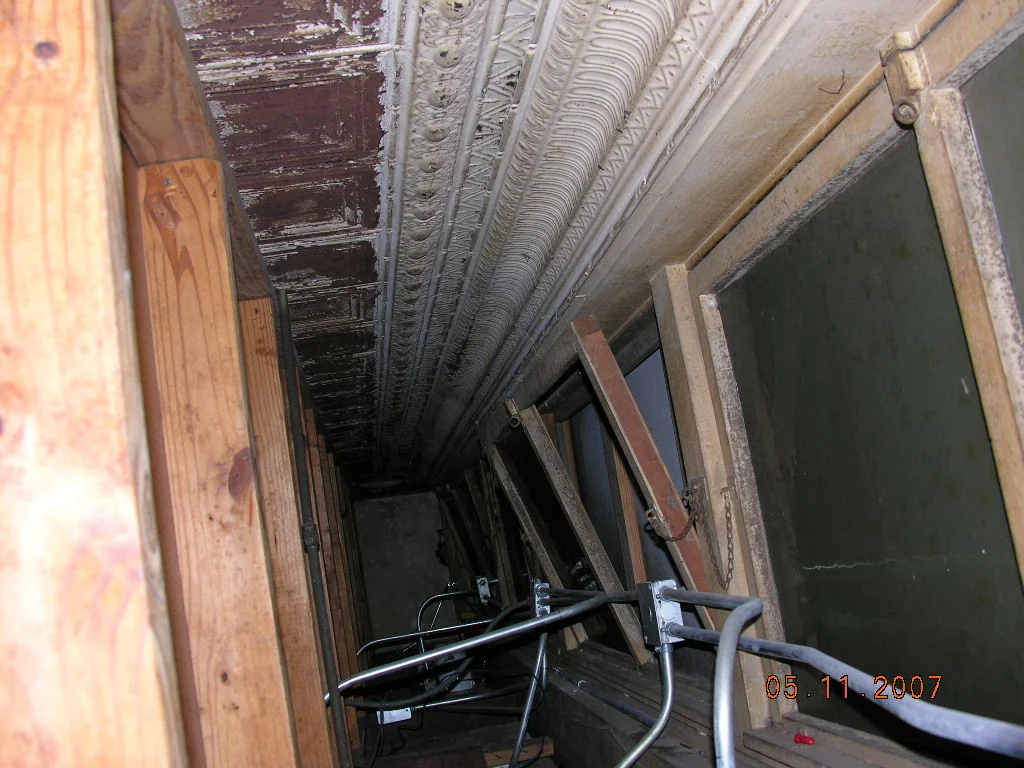
Interior view of encapsulated transom window with pressed metal trim.