
RETAIL RECRUITMENT
Updated October, 2020
Original article written by Sarah Marshall, Assistant State Coordinator/Small Business Specialist Texas Main Street
Small Business Recruitment
The best Main Streets across the nation have a thriving retail and restaurant scene, where small business owners know that downtown is the place to get considerable foot traffic and enjoy a connection with their community. However, not all entrepreneurs understand the value of being downtown, and Main Street managers can bridge that gap by recruiting great businesses to join their downtown to reap all the benefits the location has to offer. There are several different ways to recruit quality small businesses on to a Main Street, while decreasing the vacancy rates.
Main Street Website
1) Include info. for potential developers/investors: Many Main Streets have great websites that attract locals and visitors downtown, but the sites should also be utilized to entice new businesses to locate on Main Street. Establish a section of the site to include all pertinent information that might lure a business owner to locate downtown. This section should contain as much data-driven information that can be found or developed. This might include sales trade area, market profile (with demographics and psychographics), consumer trend reports, survey results, and sales gap analyses. The Main Street Economic Vitality committee can play a crucial role in helping to find and organize this data. Readily available sources for the information also include your local economic development corporation if one exists and the Census Bureau. The Texas Main Street Program team can also help guide managers toward this information. Nothing persuades a well-informed business owner more than data showing the potential for their business in your town.
2) Include financial incentives:. Connecting the business owner to financial incentives helps them find these opportunities more easily. If a lot of hard work has gone into creating retail rent subsidies or façade improvement grants, this is a great place to let prospects know about it. Links to small business loans or other programs designed to help entrepreneurs financially should also be included. Some good examples of Main Street websites working to assist small businesses are Denison (http://www.cityofdenison.com/339/Business-Start-Up-Information) and Elgin (http://elgintx.com/208/Do-Business-Downtown).
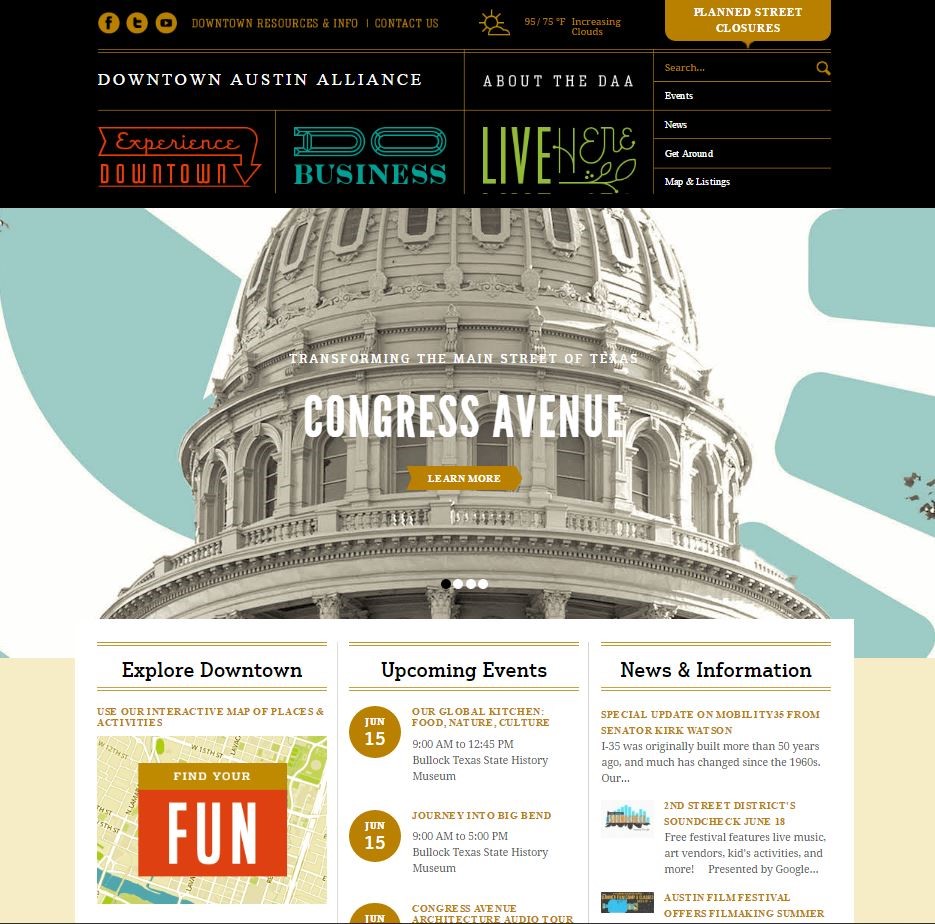
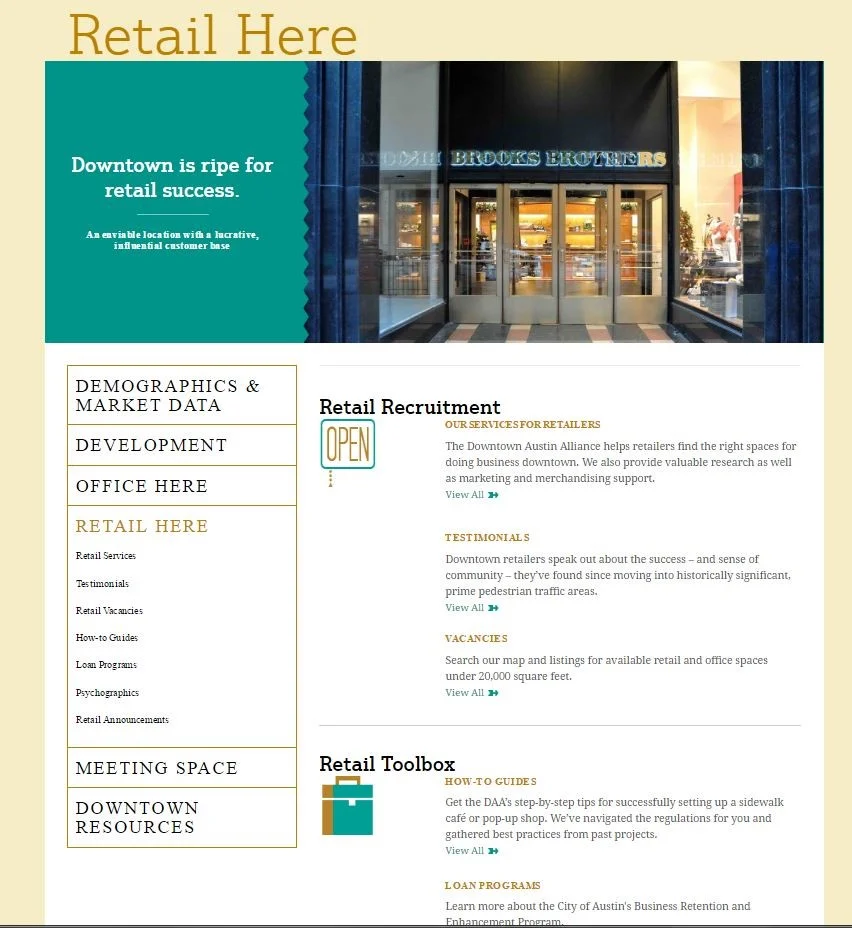
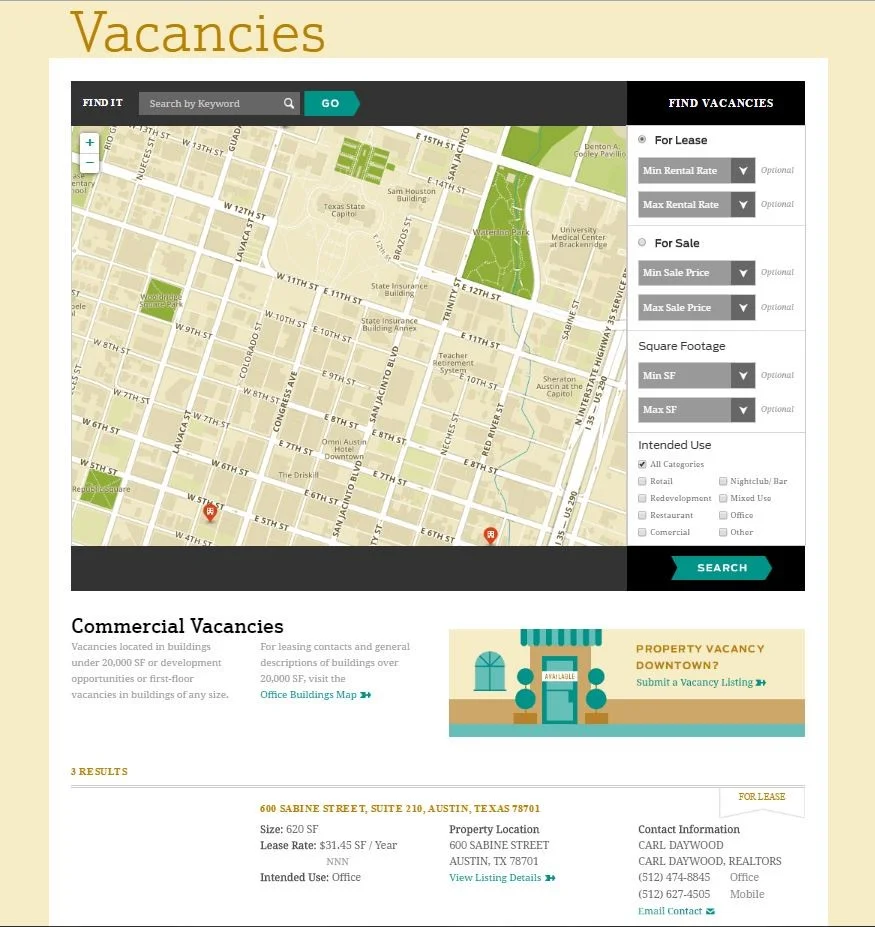
(Left) Main page of Austin Downtown Alliance allows users to choose if they want to experience downtown or do business downtown. (Middle) Austin Downtown Alliance offers demographic and market data, retail support information, testimonials, how-to guides, loan program information, psychographics, and other pertinent information for new small businesses. (Right) Downtown Austin Alliance lists their vacancies on their site and provides searchable information about them.
3) Include a link to DowntownTX and Imagine the Possibilities Tours: The comprehensive building inventory platform developed by the Texas Main Street Program makes it easy to connect website visitors with available spaces in your downtown. Potential investors/developers can use the platform to find properties that are available to buy or lease AND they can learn about financial incentives and preservations tools associated with those properties. The Imagine the Possibilities annual tours (or virtual tour videos, available year-round) can be used to highlight and market specific properties.
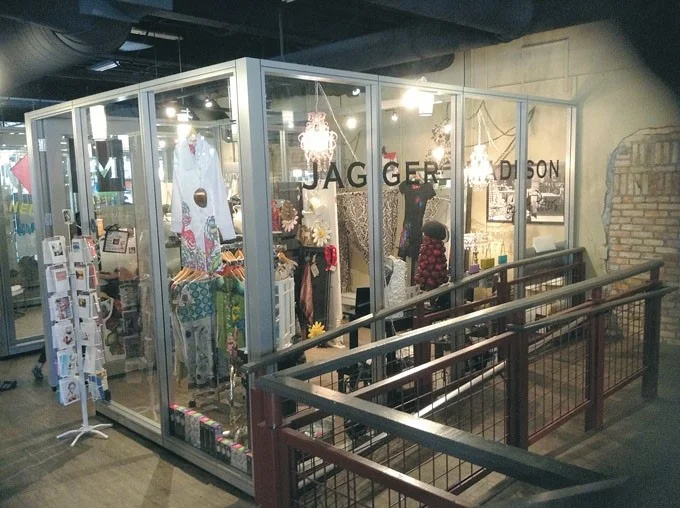
This retail incubator space leases to small businesses that are not quite ready for their own store.
Recruit Specific Tenants
There are steps managers can take to engage specific tenants that they want to locate downtown. There is no need to stand by idly with a list of vacancies and need for small businesses trying to attract the right kinds of businesses. By taking action, managers can get those vacancies filled.
Many cities have some sort of small business education program, whether it be an SBDC (http://www.sbdctexas.org/) or an informal entrepreneur instructional class. Sometimes it is through the city itself, or it could be located within a community college or nearby university. These programs are ripe with entrepreneurs who are ready to launch their business, and the fact that they sought help before beginning their business shows they are already a step ahead of many start-ups. Talk to the educators of these classes or the directors and specialists of the program to see if they can identify those with potential.
Scout for new businesses at local crafts fairs and Farmers Markets: any small businesses on Main Streets got their start in this type of venture. If a business is ringing up sales and can hardly keep up with the volume, they might be more inclined to take their business to the next level with your encouragement. Sometimes, these smaller businesses would do great in their own store, but they are still too small to open up a full shop. Consider working with vacant property owners to create retail incubator spaces, where you can set up these cottage businesses so that they can get started in the right direction before they own their own store. Pop-up shops are also great for small businesses that are not quite ready to open their own store.
Build Relationships: One important factor in building a relationship with a prospective business owner in your downtown is talking with them either face to face or over the phone. You can still email them information afterward, but you are going to have better luck recruiting people to move downtown if you build a relationship with them first instead of just cold-emailing them information. Like many other aspects of running a successful Main Street, relationship building goes a lot further than just doling out facts.
Who’s Job Is It? Regardless of the methods used to recruit businesses downtown, someone within the Main Street organization needs to be proactive in recruitment. These tasks need not just fall on the shoulders of managers either; empower Main Street board or committee members to also look for new businesses. By having more than one person actively recruiting new businesses to locate downtown, chances of success will increase over time.
Furthur Reading
Main Street Matters: