
Senior-Friendly Retail
April 2018 Main Street Matters
Written by Kimberly Klein, Office Manager, and Marie Oehlerking-Read, Project Design Assistant, Texas Main Street Program
Creating an accessible shopping experience for all ages and all abilities is an important consideration for a small business. Now more than ever, retailers must consider how accessible their space is for senior adults. As the Baby Boomer generation ages, roughly 20 percent of the U.S.
population will be over the age of 65 by 2029, according to projections by the U.S. Census Bureau. Small business owners must think about how to accommodate this changing demographic.
Universal Design
Universal design is an approach to the design of all products and environments so that they can be used by everyone to the greatest extent possible regardless of their age, size, ability, or disability. It was first introduced in 1968 in a series of guidelines entitled the Architectural
Barriers Act. It was one of the first efforts to ensure access to the “built environment’ and requires “access for all persons disabled or not” to facilities designed, built, altered, or leased with federal funds. These guidelines were supplemented in 1990 with the introduction of the
Americans with Disabilities Act (ADA).
It’s also very important to note that universal design benefits more people than just older people and people with disabilities. It can take into account physical and behavioral factors of everyone no matter their age. At some point in everyone’s lifetime, there will be a challenge for which accommodations will need to be made.
Universal design features can be incorporated into any design using standard building materials that are simply placed or oriented differently. Here are some of the basic tips and principles that can be applied in any store:
Adjust lighting. An aging eye tends to see more yellows. Subdued lighting with warm colors can make the shopping experience more pleasant for all ages. Spotlights and wall sconces along with overhead lighting can be used to highlight special pieces.
Exchange shiny floors for matte surfaces. Shiny floors may look nice and clean, but they appear slick, which can be scary to those with unstable footing. A matte and/or textured flooring material reduces this perception.
Keep merchandise uncluttered and accessible. Clutter or unorganized merchandise can be visually distracting and prevent senior customers from making a purchase. Place items at least 24 inches above the floor. Make sure there is enough space for a wheelchair to get through and around displays. The general rule of thumb for aisles and doorway widths is 36 inches or more. Assemble products so they are easy to grasp.
Avoid fine print on signs and price tags. Consider using large, and easy-to-read type on signage, price tags, and directional signage. Instead of using ornate script or font, consider simpler sans-serif fonts like Helvetica, Calibri, or Arial. Also use colors of high contrast for ease of reading. This concept also applies to merchandise. Some stores, like CVS Pharmacy, have installed magnifiers to read fine print on medicine bottles.
Greet your customers. Make sure your door has a chime or bell to let your staff know a customer has entered the store. People like to be acknowledged and know there is someone to assist them. The older the customer is, the more likely they are to want that personal interaction with the store staff.
Incorporate accessible seating. Make sure your store has seating for customers while in the store. This is very important for the aging population, especially for those using a walker or cane for assistance. Providing places to rest makes customers feel welcome.
Consider the five senses. It’s very important to create a total experience for your customers. In addition to light, consider the sound, touch, and smell of your retail spaces. For sound, play appropriate music. Music that is too loud can be distracting and alarming for some people. For touch, make sure items are easy to grasp. Lastly, too many odors or aromas or ones that are too strong—such as perfumes or candles—can dissuade people from lingering in your store. Your shop should smell inviting without overpowering the customer.
Tidy up your space inside and out. Research shows that it takes 8 seconds to attract a potential customer, so first impressions inside and outside of your store are important to attract customers of any age or disability. Keep windows clean. Make sure that planters are kept up and lively. Have a good eye-popping display in your main windows to attract attention. Make sure windows are clean and tidy.
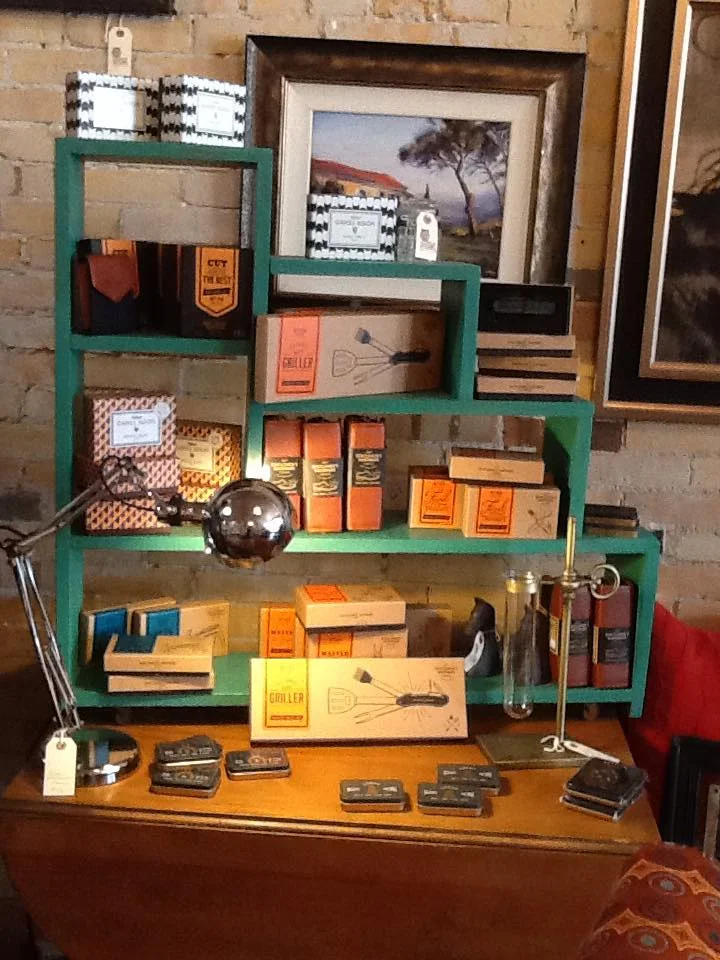
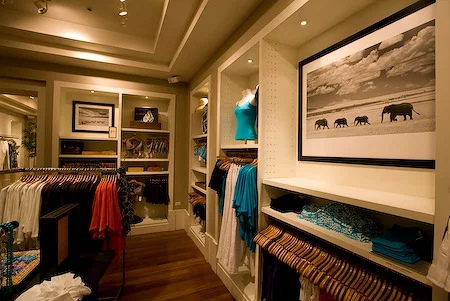
Using subdued lighting with warm colors in spotlights (left image), wall sconces, along with overhead lighting (right image source), can help
showcase special pieces.
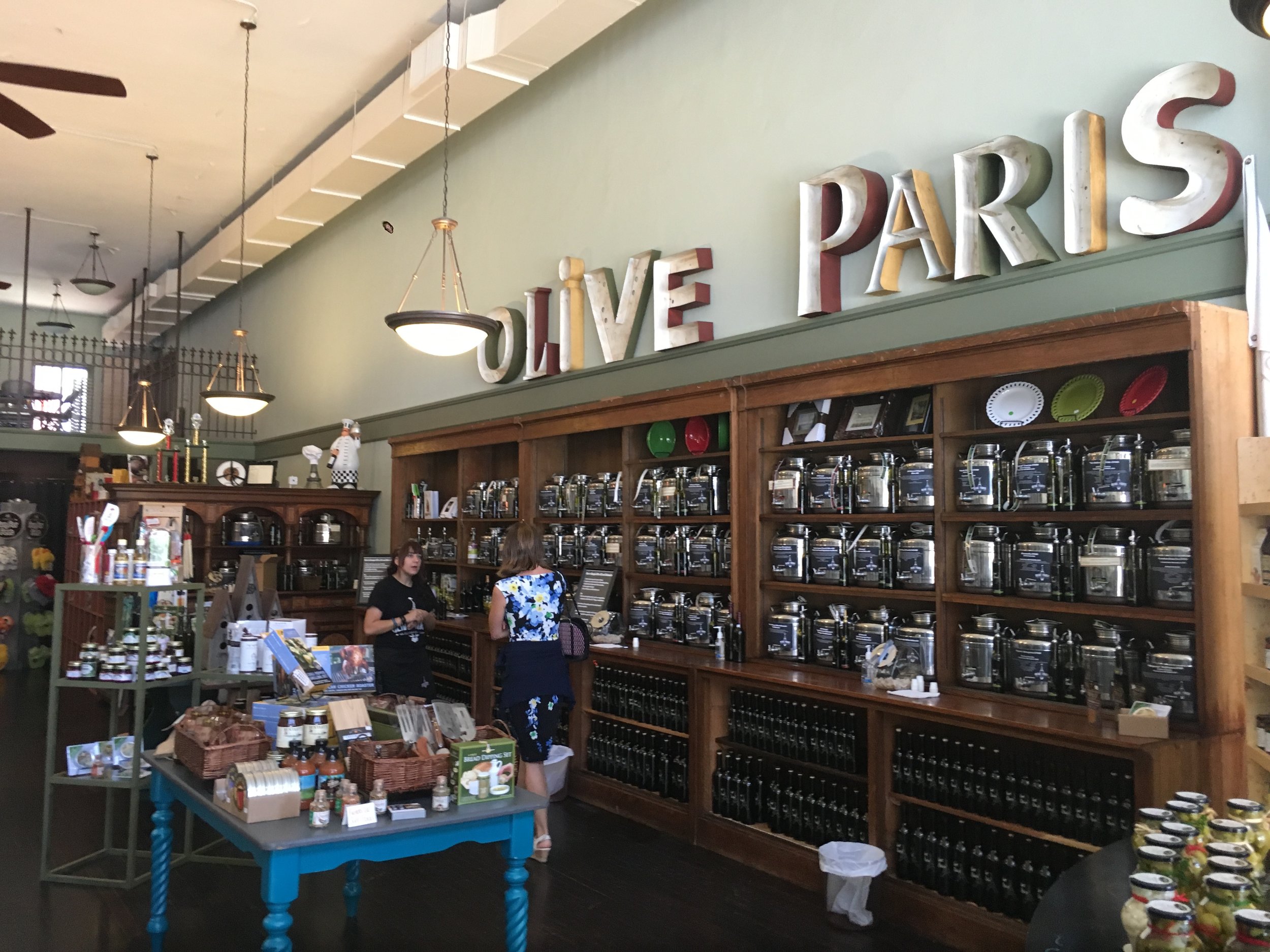
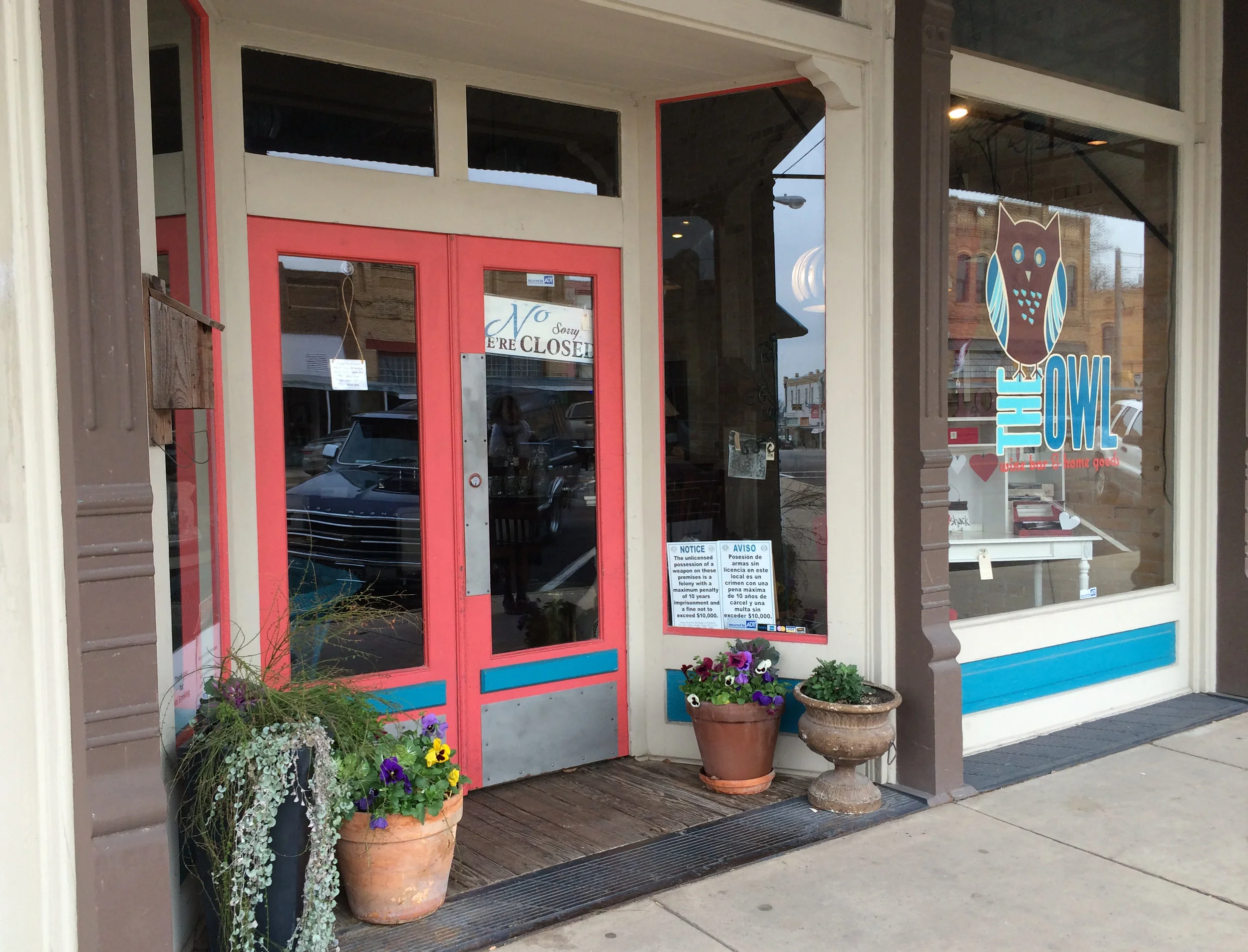
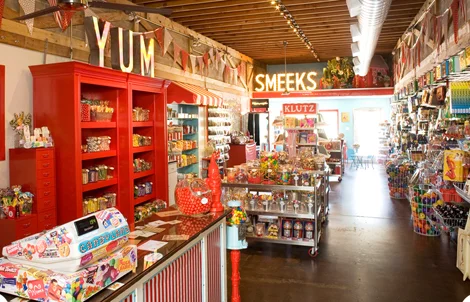
First impressions are important, and they come from welcoming accessible spaces inside and out.
Slight modifications to an existing space can make the shopping experience easier for senior adults or those with disabilities. From entering your business, accessing public restrooms, shopping in the space, and leaving, your entire store should be accessible to all.
Main Street Refresh
As part of the national Main Street Four Point Refresh process that has been ongoing since 2015, the new Main Street Approach is centered around
Transformation Strategies that help strengthen a downtown, and the way the work of Main Street programs is carried out. As part of this process, the national center has also developed a set of “ready-touse” Catalyst Strategies focusing on specific customer segments. They are broken into two broad types, Customer-Based Strategies and Industry, Product, or Service-Based Strategies. One of the Customer-Based Strategies is Elder-Friendly/Aging-in-Place, so there are more resources available to Main Street communities looking more deeply into addressing these population segments.

Improving sidewalk lighting is just one of the many examples on how local programs can develop an elder-friendly / aging in place strategy through the Main Street Four Point Refresh process.
Universal design goes beyond interior design, and can help downtown cater to the needs of all people. It recognizes that people have different needs as they advance in age and life. The strategy helps people continue living independently for as long as possible by providing retail goods and services, medical and social services, and a safe, accommodating environment. Special strategic planning and work plan development need to take place for local programs if they are going to target this segment in their programs. Here’s a few examples:
Improving sidewalk lighting
Apply for grants or develop a matching grant program to make shops handicapped accessible
Invite elder residents to serve on your committee boards
Set up walking and exercise groups in your district
Help businesses market to older households that may not be tech savvy or use social media
Offer home delivery services through businesses
For additional information related to this topic, please see the following:
Learn more about universal design here - http://universaldesign.ie/What-is-Universal-Design/
Certified Main Street cities can visit the Online Resource Library for articles pertaining to accessibility and visual merchandising.
The National Park Service Preservation Brief #18 and #32 provide in-depth articles on making historic properties accessible and rehabilitating the interiors of historic buildings.
Additional Sources: