
Solar Panels
October 2017
Generally speaking, solar panels should be placed where they are not visible from public right-of-way. This means that they should not be seen over the roof line or on the primary facades of a building. When solar panels are attached to a building, ensure that historic material is not damaged and that the panels can be removed in the future.
The National Park Service has athorough explanation on how to install solar panels while meeting the Secretary of the Interior Standardson their website. There is also an illustrated guide here.
Many cities have incorporated solar panels and other green technologies into their design guidelines.
San Antonio’s guidelines treat them as other mechanical equipment such AC units. See page 14 and 15 here.
NAPC has sample guidelines for solar panels on their website.
Solar Powered Everything
June 2016 Main Street Matters
Article written by Marie Oehlerking-Read, Project Design Assistant, Texas Main Street Program
Summer is coming, and in Texas we know that means two things: high temperatures and loads of sunshine. While these factors may have many of
us seeking shade and sunscreen, those solar rays can be put to work in your downtown to power everything from street lights to entire businesses. This article takes the opportunity to highlight communities around the state and nation that have put the sun’s rays to good use.
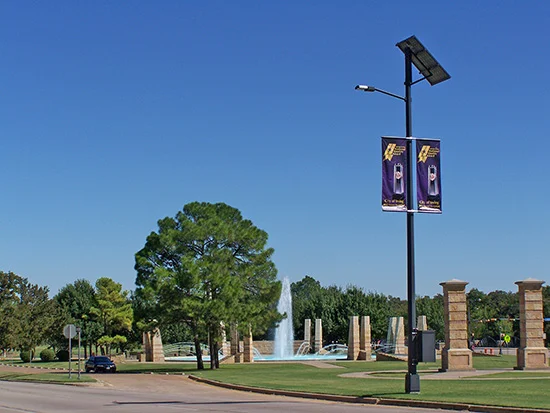
Solar-powered street lamp along Irving Boulevard. Source: http://www.dfwsolartour.org/locations/irvingstreetlights/
Solar-Powered Street Lights
Solar powered street lights have become a popular new piece of municipal infrastructure across Texas from the Dallas-Fort Worth Metroplex to the Rio Grande Valley. In Irving, over 200 grid-connected streetlights have been replaced with new American-made, solarpowered LED lights along one of the city’s major thoroughfares, Irving Boulevard. It is estimated that these new lights will save the city more than $1 million in energy costs over the first three years of use. The project was funded by a U.S. Department of Energy, Energy Efficiency and Conservation Block Grant program.
In Hidalgo County, 164 off-grid solar lights were installed in neighborhoods that previously did not have street lighting at all. The LED lights increased community safety after sunset and added no additional electricity costs because each post creates enough energy to power itself. Money was also saved during the installation process because the lights do not require new trenches and wiring systems to connect to the existing utility infrastructure.
Yet another advantage of solar lighting is that it continues to shine during brownouts and blackouts, which is becoming increasingly important with the increased stress on the electric grid and extreme weather events. The county used funding from the American Recovery and Reinvestment Act to install the solar power lights. (For more information: http://www.sustainablecitynetwork.com/topic_channels/energy/article_99879cde-6fd2-11e3-b257-001a4bcf6878.html)
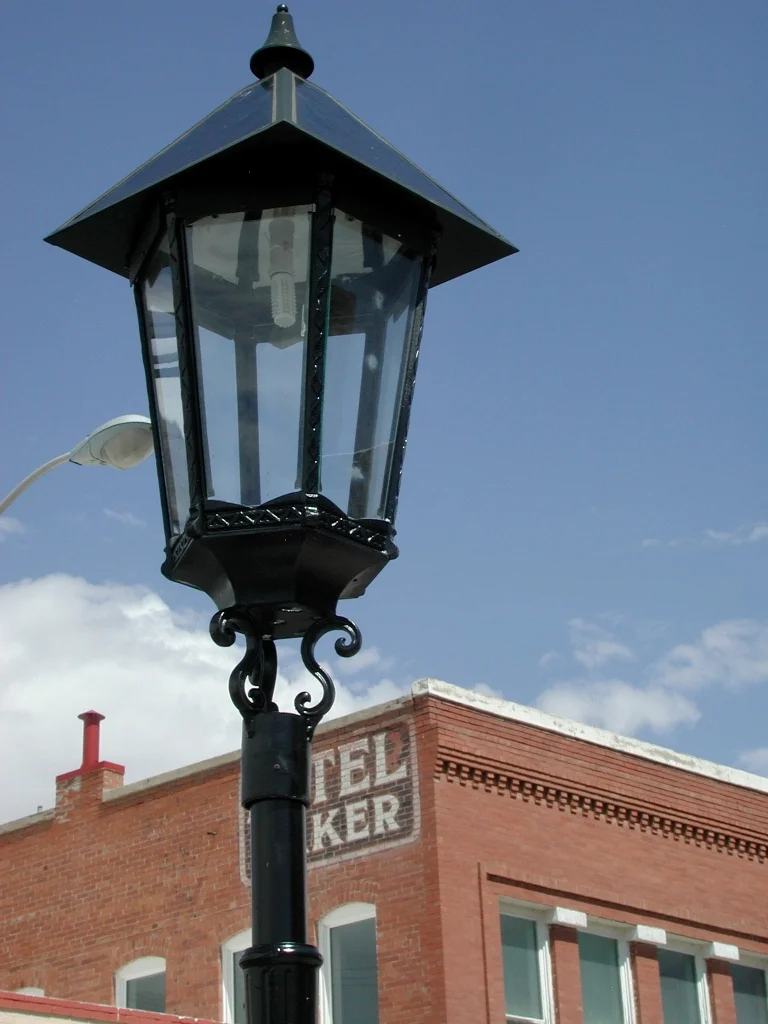
Example of solar-powered LED lights that replaced natural gas-powered lights in
the city of Deming, New Mexico. Source: Department of Energy, http://energy.
gov/articles/energy-efficiency-newmexico-
frees-money-local-coffers
You may notice that the design of the solar-powered light fixtures described above may not be compatible with most downtown historic districts. However, solar technology is being applied to decorative lamp posts in other parts of the country. For example, Deming, New Mexico, a Main Street community (http://demingmainstreet.org/), installed solar-powered LED fixtures on existing gas-fueled streetlight posts to produce their own electricity. The purpose of the installation was to replace the existing source of power without changing the unique design of the lamp post. The LED light re-creates the ambience of a gas light instead of the typical intense illumination that is often associated with LED light sources. This ambience was created by using a warmer yellow light bulb instead of the standard blue LED. Funding for the project was received through an Energy Efficiency and Conservation Block grant, funded by the American Recovery and Reinvestment Act.
Solar Street Furniture
Solar panels can be applied to street furniture as well. The Solar Bench below uses a solar panel to generate electricity and create shade for a picnic table, which has a built-in charging station for cell phones and laptops. This style bench could also be used for unique downtown branding. Imagine these benches with signage saying “Luling Main Street” or “Downtown Harlingen.” That would really grab people’s attention.
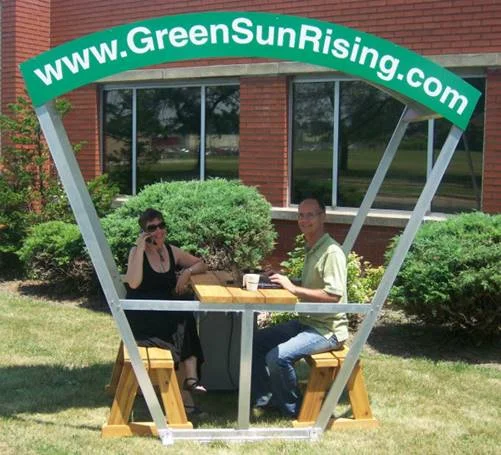
Solar bench that combines shade and charging station. Source: http://www.
greensunrising.com/
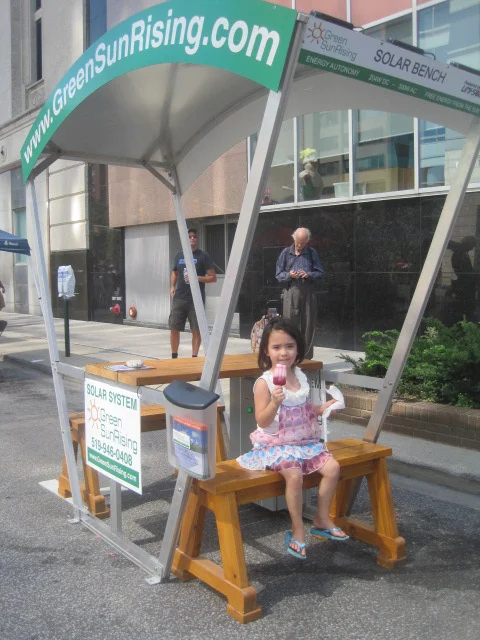
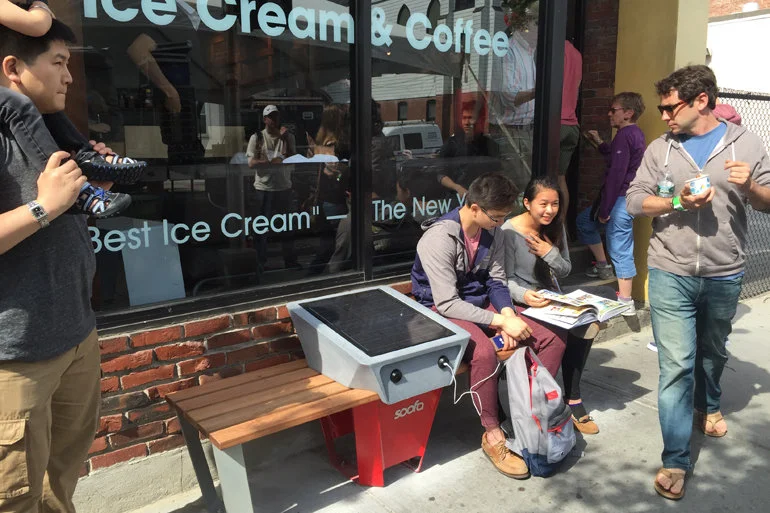
Smart bench in Cambridge Massachusetts. Source: http://www.govtech.com/fs/Boston-Pilots-Smart-Solar-Powered-Benches.html
Cambridge, Massachusetts upgraded several of its downtown benches with solar-powered charging stations. For now, the units benefit pedestrian traffic and add another amenity to the district. In a later phase, the “smart benches” will record different types of data levels of heat, light, and noise in public spaces. Pedestrian foot traffic data will also be collected for localized market research. For example, if a downtown district is trying to attract a grocery store or pharmacy to a neighborhood that doesn’t have one yet, the city will be able to easily access pedestrian foot traffic counts collected through the benches and use this information to grab a business’ interest.
Solar power can also be added to public art installations. In San Francisco, Wi-Fi Flowers were installed in Yerba Buena Gardens. The flower sculptures serve multiple purposes, including outdoor seating, Wi-Fi hotspots, and cell phone charging stations—all amenities that encourage
pedestrians to sit down and stay awhile in the gardens. This project was also a promotional piece for Toyota to market several of its products. Small solar panels are attached to the back of the sculpture to power the installation.
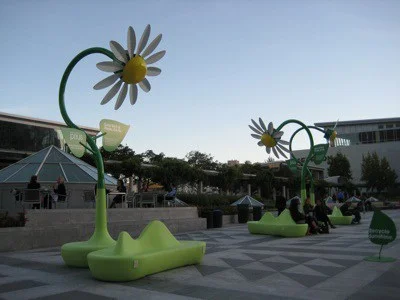
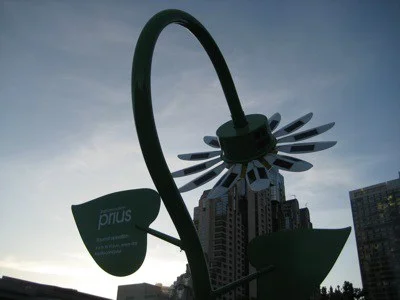
Wi-Fi Flowers in San Francisco’s Yerba Buena Gardens. Source: http://muniwireless.com/2009/09/17/wifi-flowers-come-to-sanfrancisco/
Solar Trash Receptacles
Downtown trash and recycling cans can even benefit from solar power. Denton installed Big Belly trash and recycling containers around the courthouse square and other parts of its Main Street district. The solar energy powers the internal compactor, which allows the bin to collect five times more trash and an internal console notifies city staff when they are full. This technology decreases the number of times each bin needs to be emptied, which reduces costs for labor and fuel. Funding to purchase the containers came from several sources including the Texas Commission on Environmental Quality Solid Waste grants administered through the North Central Texas Council of Governments, and another grant from Keep America Beautiful.
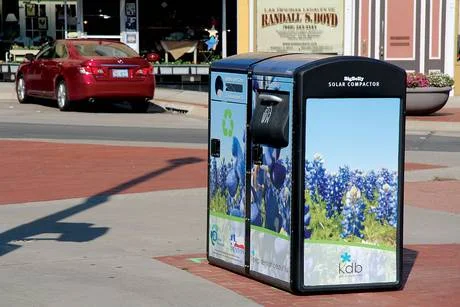
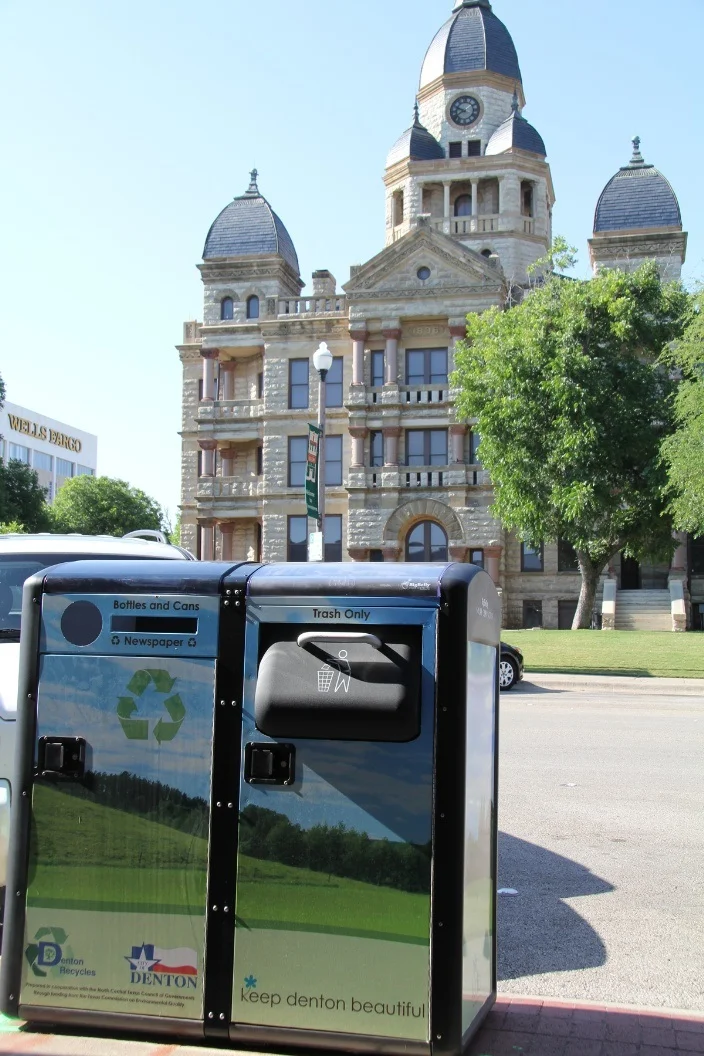
Big Belly trash and recycling containers in downtown Denton. Source: http://www.dentonrc.com/local-news/local-newsheadlines/20120522-belly-up-to-the-bin.ece; http://www.cityofdenton.com/Home/Components/News/News/1427/35?arch=1&npage=13
Similar style trash bins in New York serve double duty as a Wi-Fi hotspot. With the help of New York citybased Downtown Alliance, Big Belly has been conducting a pilot test in which several bins were turned into free public Wi-Fi hotspots, which will add to the pedestrian experience on the street. (For more information: http://www.gizmag.com/bigbelly-wifi-hotspot-solar-powered-recyclinggarbage-bins/38561/)
Small interventions such as solarpowered lighting, street furniture, and trash containers can make your downtown more efficient and sustainable. It can also change how people interact and use your downtown district, not to mention the positive impacts renewable energy can have on the environment as a whole. These steps will eventually lead to entire communities running on renewable energy, like Georgetown, which will be using 100 percent renewable energy by 2017. (For more information: https://gus.georgetown.org/renewable-energy-faqs/) We always have an excess of sunshine in Texas Main Streets. Make those solar rays work for your downtown!
For funding sources, please visit the following:
Texas Commission on Environmental Quality - http://www.tceq.state.tx.us/permitting/waste_permits/waste_planning/wp_grants.html
Energy Efficiency and Conservation Block Grant Program - http://energy.gov/eere/wipo/energy-efficiency-andconservation-block-grant-program
U.S. Environmental Protection Agency grants - https://www.epa.gov/grants
Database of State Incentives for Renewables & Efficiency - http://programs.dsireusa.org/system/program?state=TX
PACE Nation - http://www.pacenation.us/about-pace/