
by Sarah Blankenship, Project Design Assistant
“Historic downtown”, “downtown master plan”, “overlay district”, “design guidelines”,” review commission”, “ordinances”, “codes”, etc….these words can read as daunting red tape to a building owner who may end up feeling too restricted or scared to make bold, imaginative, or “out of the box” changes to the historic downtown fabric. Admittedly, sometimes this is a good thing while other times it creates a roadblock to creativity or a missed opportunity for something to stand out.
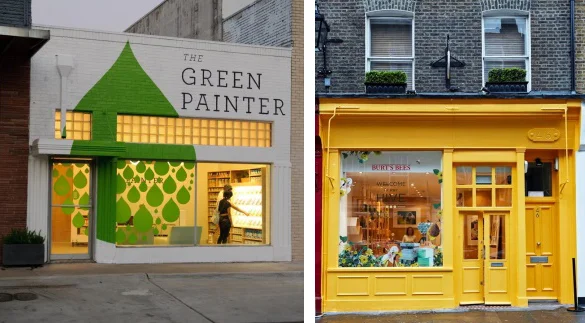
As design staff, I use the basic philosophy of keep and celebrate what is historic but let’s see where we can have a little fun with things like paint, signage, and streetscape. I’m not saying go paint your entire building bright neon yellow, but yes, have some fun with colors on accent areas (maybe in some cases even the whole storefront) and signage.
When the historic elements are long gone or it is an infill project, there can be even more room to push the boundaries. These should be looked at as an opportunity NOT to make the building look exactly the same as its neighbor.
Some design guidelines encourage unifying the downtown and visual continuity by having the same rectangular solid with flat roof, same historic building materials, and same traditional façade layout (bulkhead, display window, transoms, upper story windows). On the other hand, a new interpretation of a traditional building is encouraged. The problem with this is that it can be very difficult to interpret what is the same and a new interpretation at the same time. What we often end up with is flat, cartoon-like versions of a historic building that lack visual interest. We’ve all seen those at some point and they are becoming very common to strip centers, big box retailers, even in our downtowns.

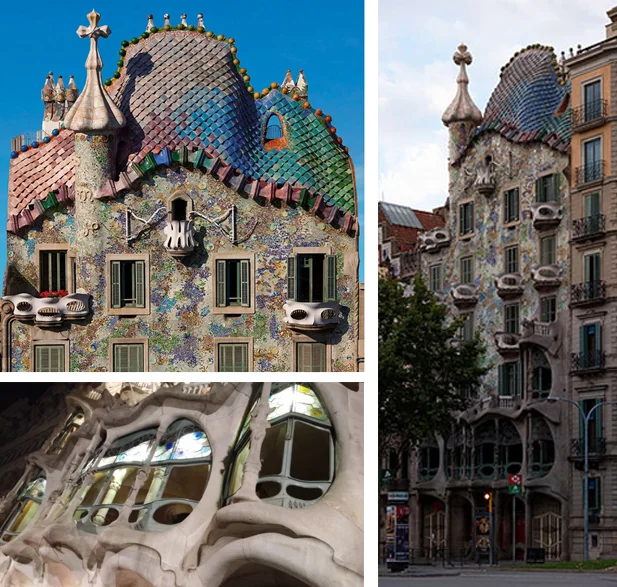
Casa Batllo' - Dragon Roof
Once when reviewing a project on the local historic landmark review commission, another member denied the design because the roof shape was nothing like any roof shape in the rest of the downtown. To that I say, so what! Our goal should not be to squash creativity, but to save our historic buildings. When an applicant is not harming something historic, let’s see where their imaginations can take them. In October, I got the opportunity to see buildings by architect Antoni Gaudi in Barcelona, Spain. On one of his buildings is a roof form I’ve never seen in any Texas Downtown, but I would sure welcome something unique like this. It is called Casa Batllo’ and the design of the roof was intended to resemble a dragon.
Just down the street is Casa Milà, which has found a way to find the wiggle room (literally hehehe) in downtown guidelines. When you turn the corner down this street the building stands out as unique right away. The curved shapes are very different than its neighbors but it still works!
What works about both these buildings (Batllo’ and Mila’) within the context of the downtown is that although they have very unique patterns, shapes and colors, they still align in setback and general height with the rest of the buildings around them. There is a main entry with storefront windows on the ground floor, and the upper story windows relate to the upper floor windows of the neighboring buildings to continue the patterns of voids and solids of a downtown. These elements are crucial for supporting a downtown environment.
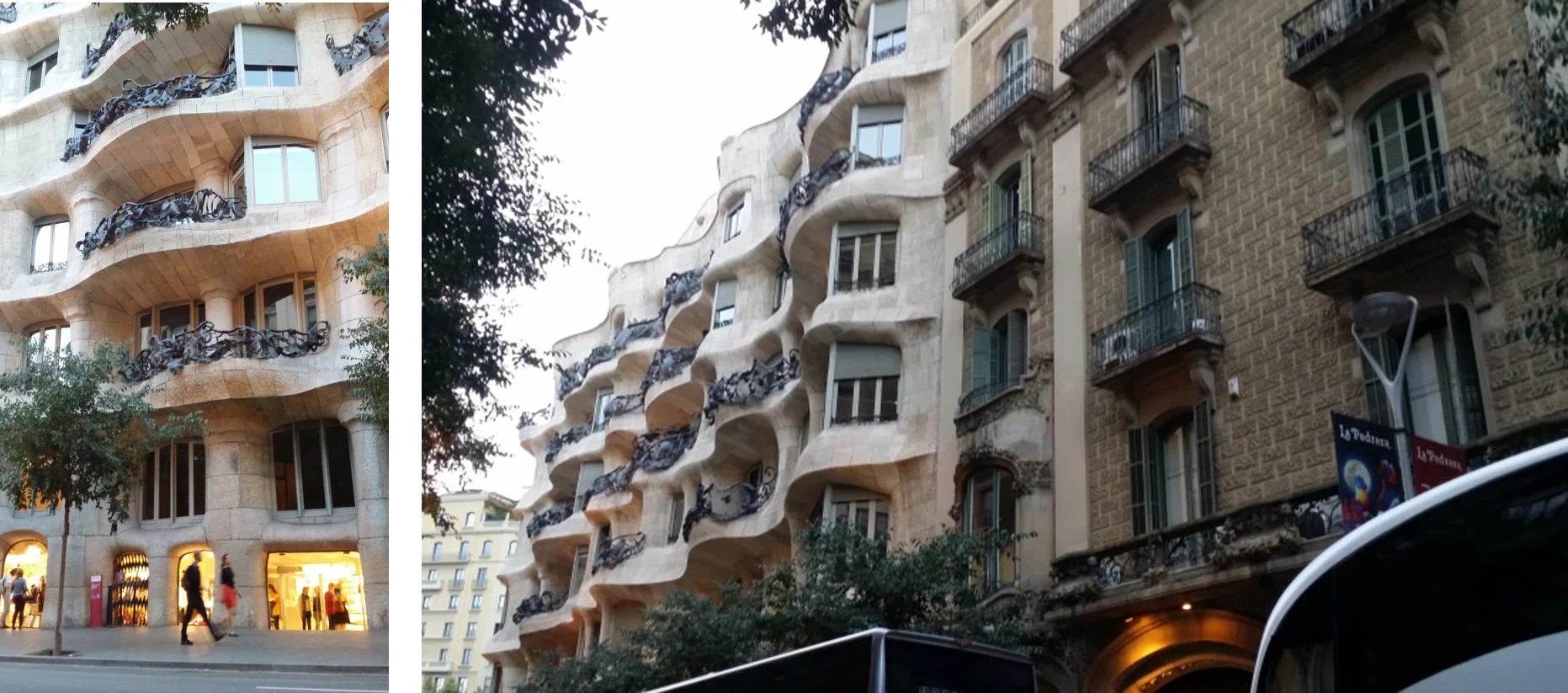
Casa Mila'
Passeig de Gracia
This building, also on the same street (Passeig de Gracia), breaks some rules by obscuring the second floor windows. However, they are still visible, especially at night from an angle. The storefront windows are left unobscured to ensure the pedestrian can see the stores’ merchandise. What this new appearance does to the streetscape is very interesting. In my opinion, this is what our downtowns should embrace rather than asking for exactly the same or a simplified same as next door. Just as Art Deco, Art Nouveau, Mid-Century modern designs etc. have dramatically changed downtowns, so should the new buildings that are designed today; together they will create a pattern of rich fabric that is unique and worth preserving in all their appearances.
While Barcelona proved an inspirational place for me, there are loads of examples of places that have or are embracing new designs. As is common to many artists, Antonio Gaudi’s work was not appreciated in his time, because it was very different from previous designs. Today, his work is celebrated and is a main tourist attraction for Barcelona.
Is your downtown intended to be a frozen place in time or part of a changing timeline?
***Don’t forget - the caveat to this is always save what is already important and/or historic.
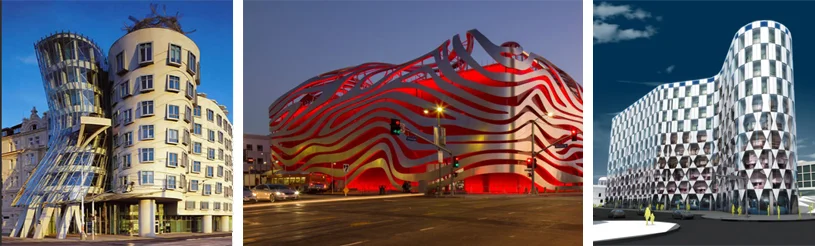
Casadanzante: Prague Peterson Automotive: Los Angles Infill mixed-use plan: Fargo, ND