

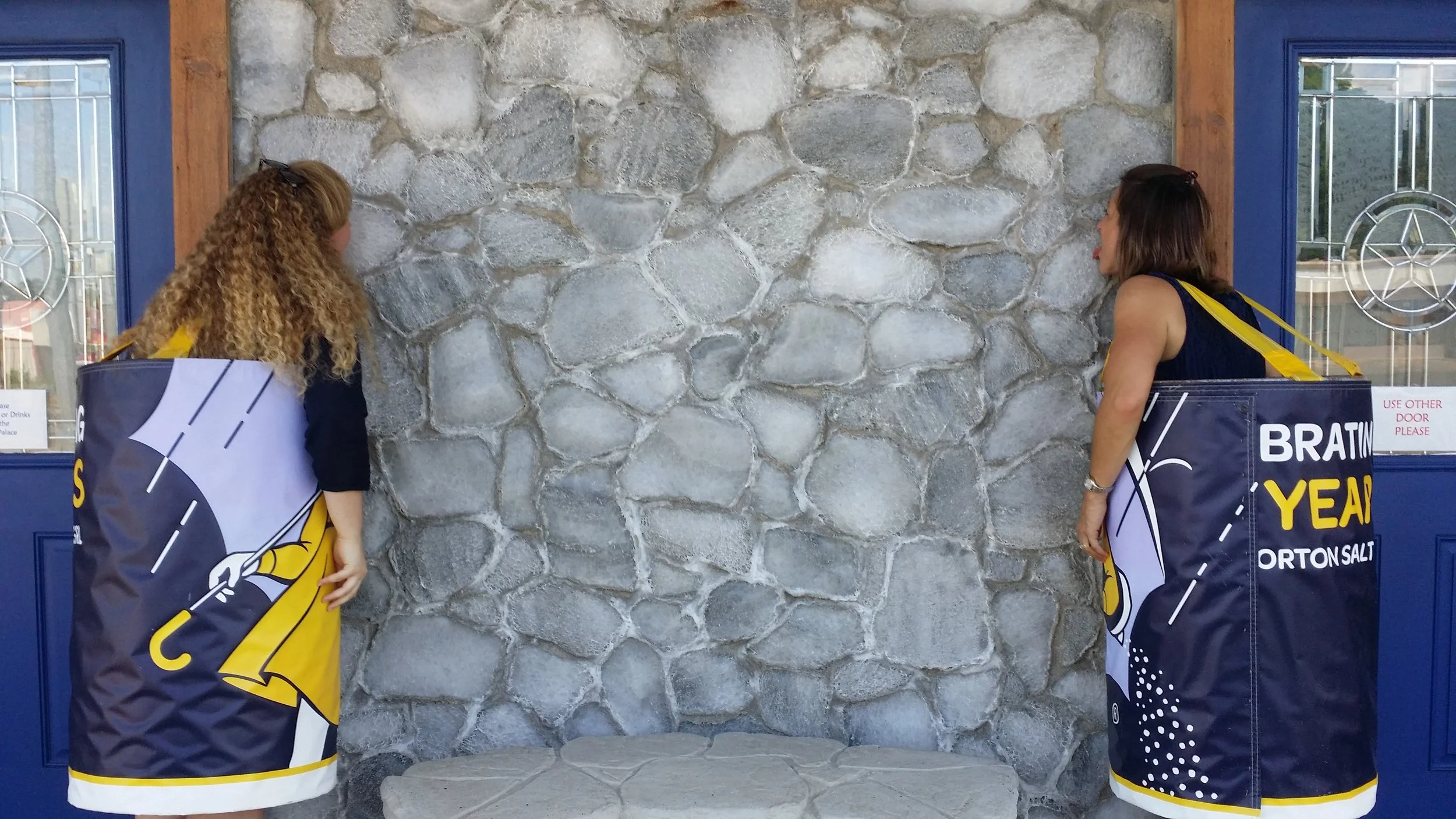
Grand Saline, TX October 2016
Main Street design staff does a considerable amount of work remotely, but when we get out on the road we get to see all sorts of interesting design in our Main Streets and beyond. Marie and I joke when we are on vacation we are still always looking at work stuff, as I'm sure you do too. We take hundreds of photos, but they don't always get shared or necessitate a big long explanation. Below are a few photos from travels in a variety of areas with a short caption and links that may be useful. Feel free to use any of the photos for presentations or explanations. If you'd like a larger image or more information, please give me a shout.
Sarah Jane Blankenship
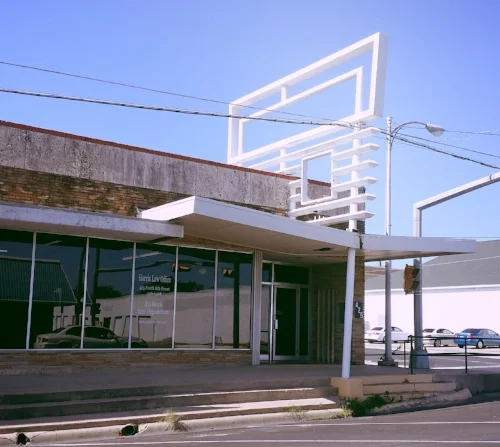
Where: Killeen, TX When: October 2016
For those of you who missed my walking tour at TDA (Texas Downtown Association) conference in November, here is a shot of one of my favorite mid-century modern buildings in downtown Killeen. The oversized angular sign frame that integrates into the butterfly canopy is beautiful. Note the more horizontal nature of the building compared to traditional turn of the century downtown buildings. Materials to note: roman brick/razor stone which has thinner proportions to traditional brick, band of shell limestone and aluminum storefront.
Killeen has worthwhile design guidelines to check out in that they incorporate traditional architecture and mid-century modern well: http://www.killeentexas.gov/downtown
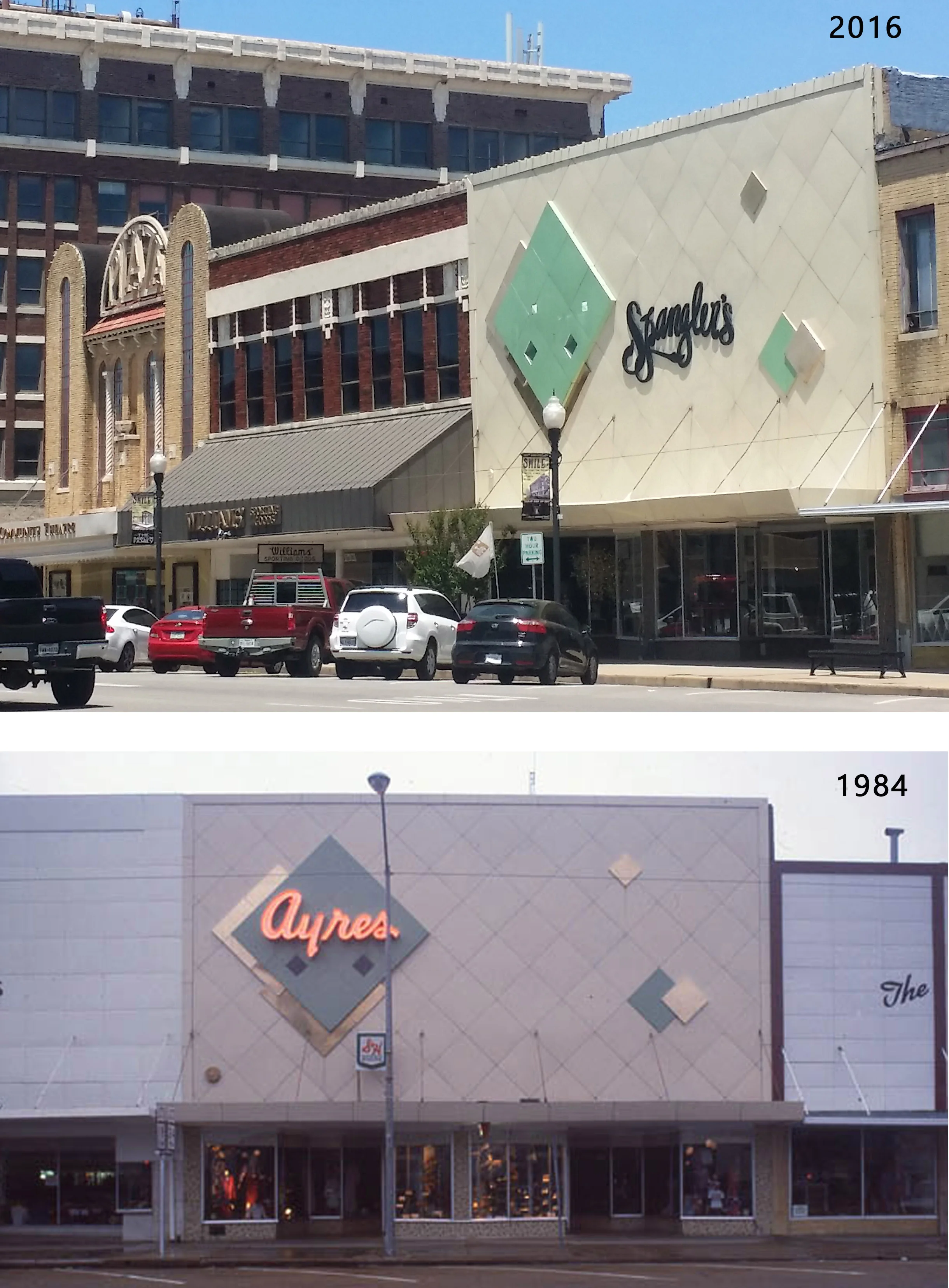
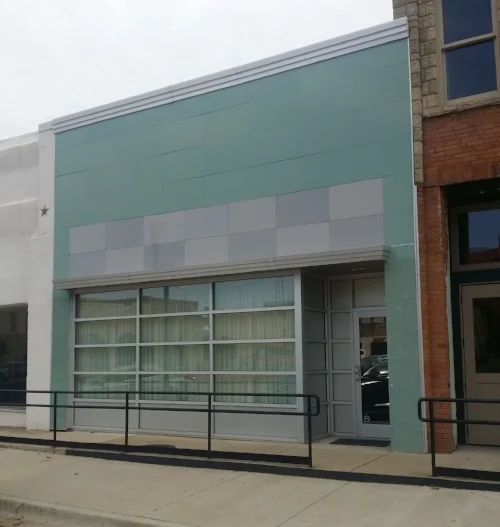
Where: Paris, TX
When: October 2016
Are there such things as good slipcovers? YEP! This one on the far right in Paris was nice to see in person, and to see that the current business has added new signage that fits with the mid-centtury style of the slipcover. There were talks of removing the slipcover years ago, but the historic material is not underneath. Also, this slipcover is interesting and historic in its own right.
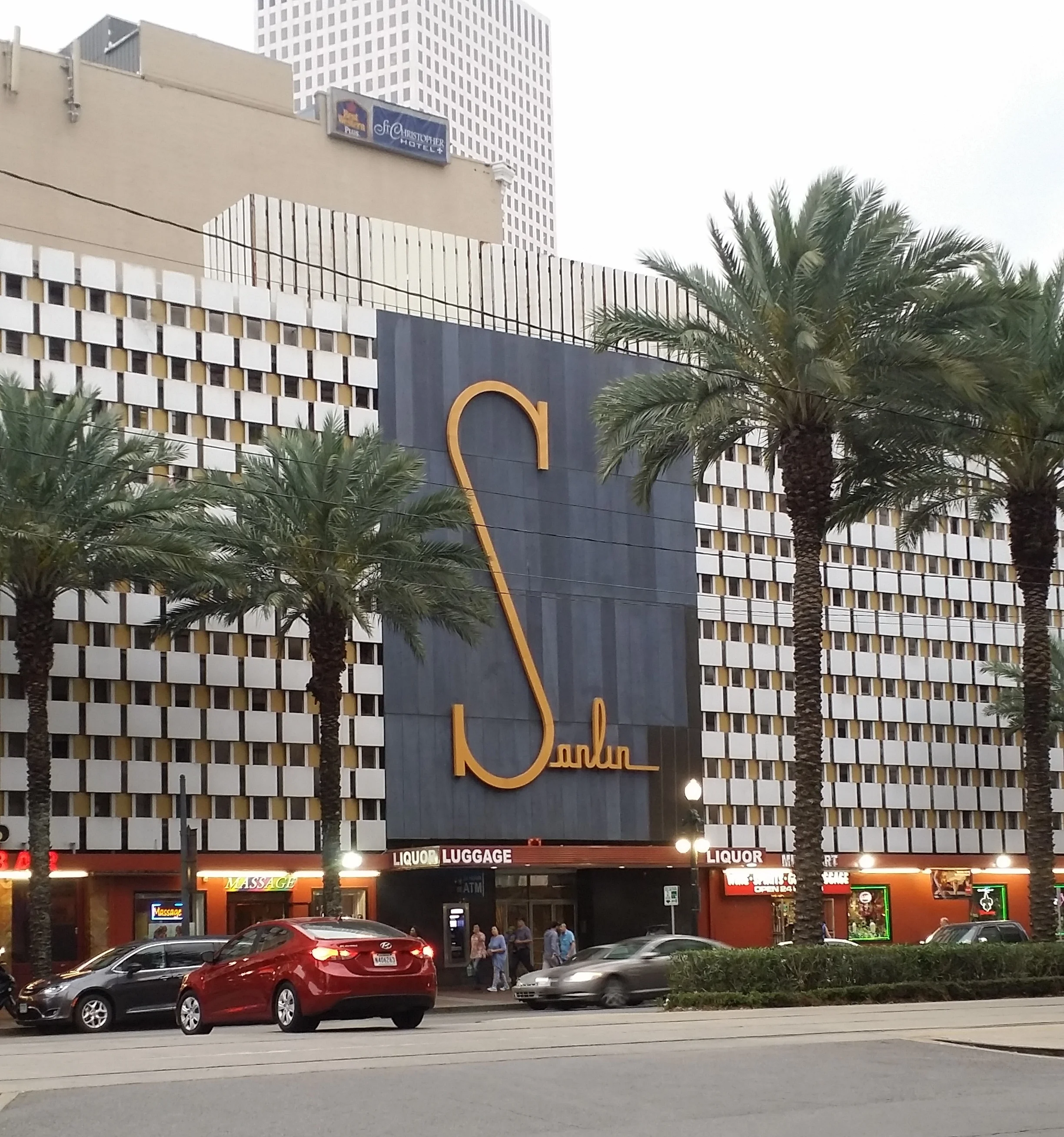
Where: New Orleans, LA
When: March 2017
Another mid-century modern beauty. Here, it is the signage that stands out. Look how large it is! The sign appearance, font and size, is an essential part of mid-century modern architecture. Would your design guidelines prohibit a sign this large? If you have mid-century modern buildings, it is important that your design guidelines address what is appropriate for them that may not be appropriate for a traditional downtown 1900s commercial building.
Again, look to Killeen's design guidelines for some pointers: http://www.killeentexas.gov/downtown
Also extremely helpful is this guidebook on How to Work with Storefronts of the Mid-Twentieth Century by Carol Dyson.
Where: Texarkana
When: October 2016
Materials! Vitrolite a.k.a Carrera Glass a.k.a Pigmented Structural Glass is treasured historic material that is no longer in production. We encourage all our cities to retain any pigmented structural glass. This is an interesting one in Texarkana where a new rehabilitation project used salvaged pigmented structural glass for their new business. The owner shared that the material was obtained from Tim Dunn, the Vitrolite Specialist: http://www.vitrolitespecialist.com/
Further information on the material can be found in Preservation Brief #12: https://www.nps.gov/tps/how-to-preserve/briefs/12-structural-glass.htm:
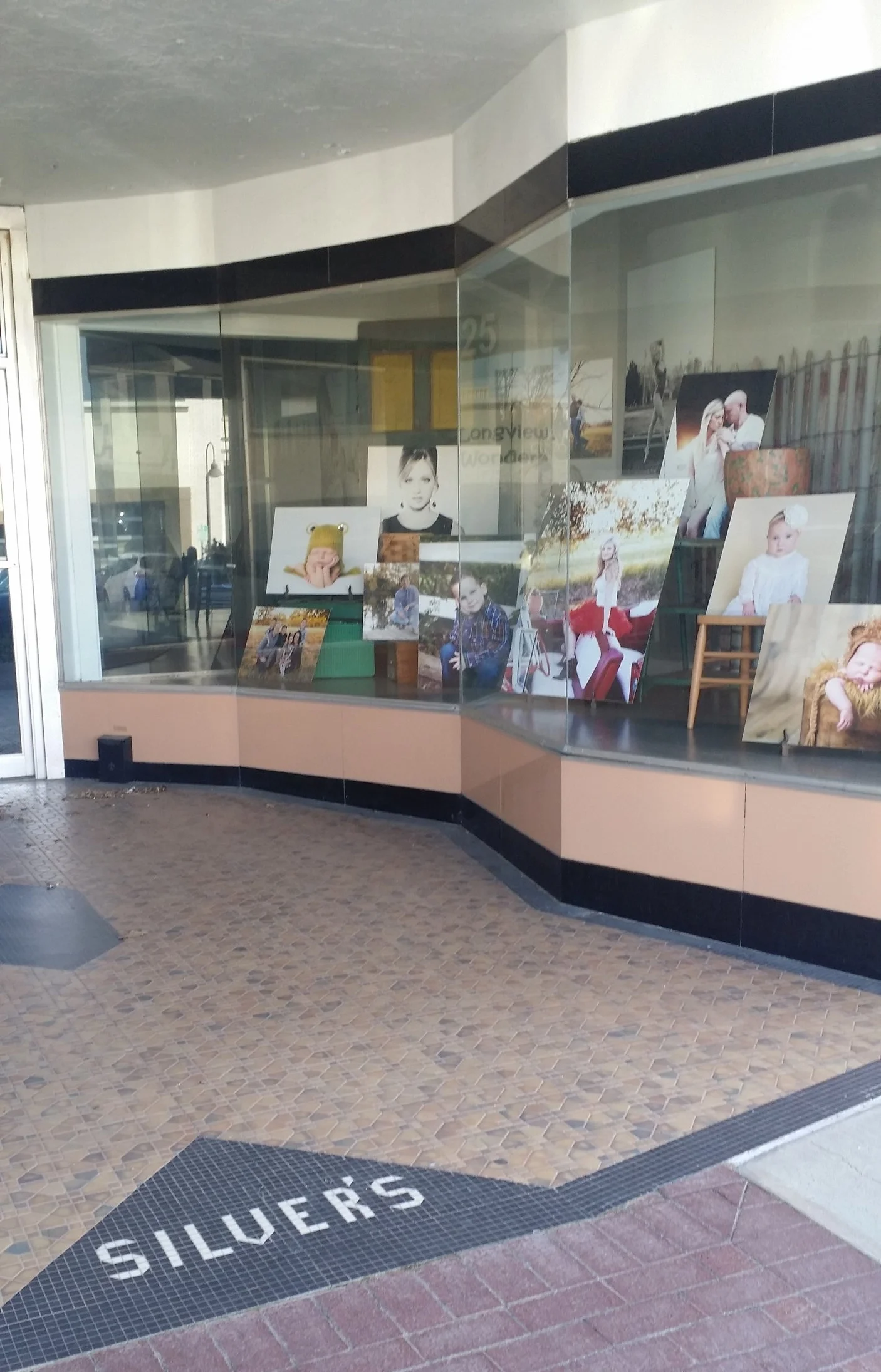
Where: Longview, TX
When: October 2016
Pigmented structural glass was also seen in Longview, TX during a site visit. Note the light orange and black color scheme and distinctive shape of the recessed storefront, both of which are essential to retain. Longview has a variety of mid-century buildings and storefronts.
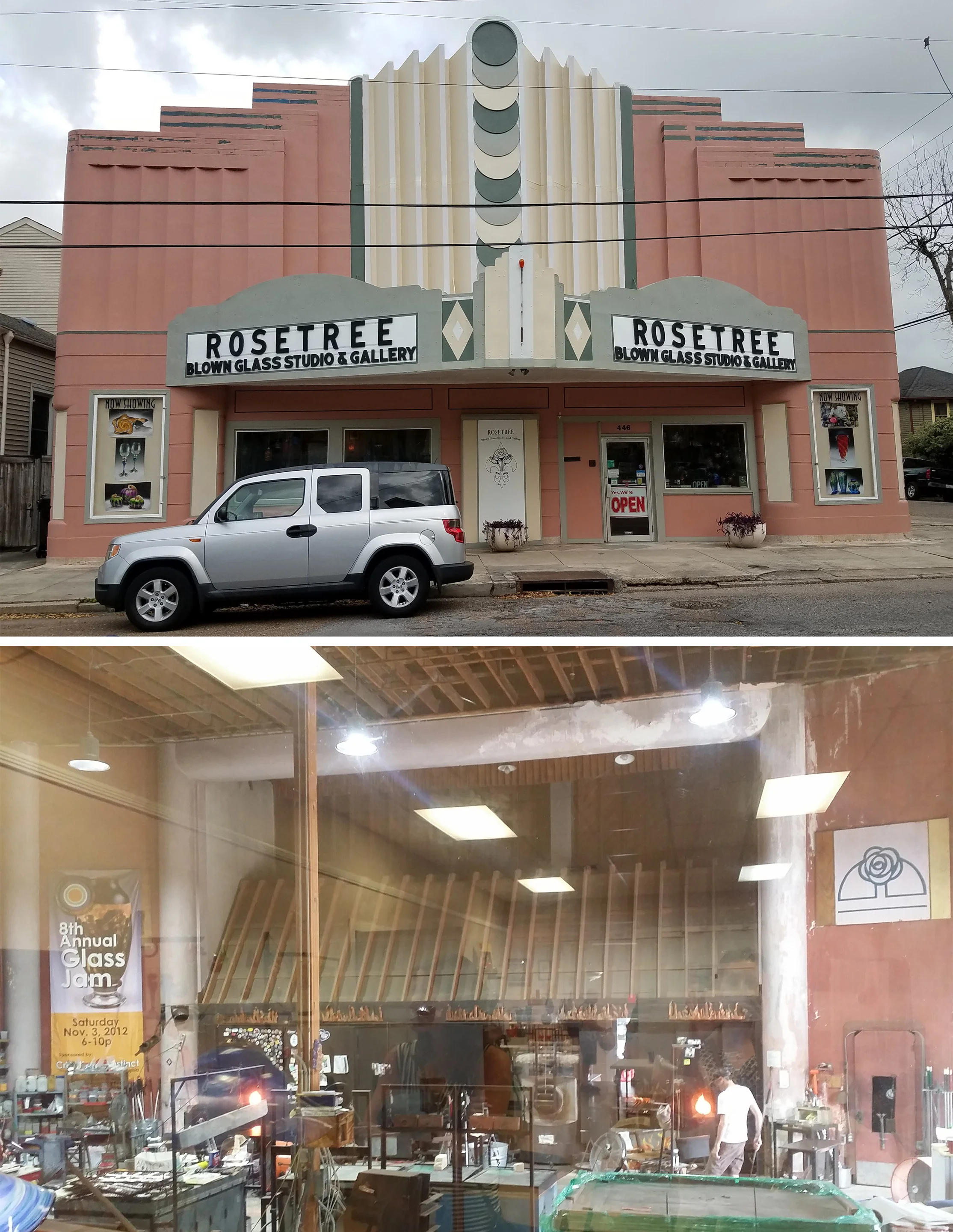
Where: New Orleans, LA
When: March 2017
This was a fascinating reuse of an old theater. On the outside the theater looks very similar to how it did historically. The Marque is retained and advertises the new business, Rosetree Blown Glass Studio & Gallery. The historic poster cases that use to have the latest movie, now advertise the glass-work that is being showcased. On the interior, the stage is now houses the ovens. There is a viewing area where you can watch the new performance of glass making. This approach honors the historic purpose of theaters, performance art, in a new way.
Rose Tree Blown Glass Studio & Gallery: http://rosetreegallery.com/
This is a report done by the Town Square Initiative program on a theater Feasibility Study in Kingsville: Texas Theater Feasibility Study
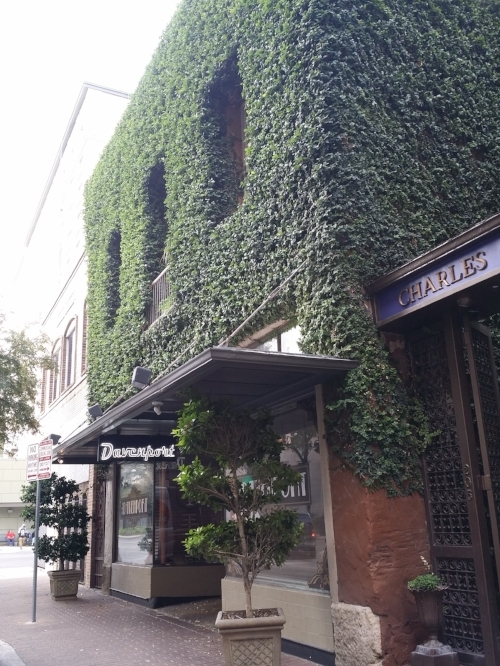
Where: San Antonio, TX
When: November 2016
Photo taken during Association for Preservation Technology International (APTI) conference in San Antonio. Vegetation gone Wild! While we certainly understand the green facade looks beautiful, this is something that gives design staff a lot of worry. Heavy vegetative growth from masonry can pose many problems, such as holding moisture against the masonry surface, blocking gutters and downspouts, scouring soft wall surfaces, eroding mortar and hindering or limiting access for maintenance inspections and repairs. Please advise you building owners to remove heavy vegitation on buildings and provide them with this technical guide: http://www.gsa.gov/portal/content/111782
Where: Luling, TX
When: Februay 2017
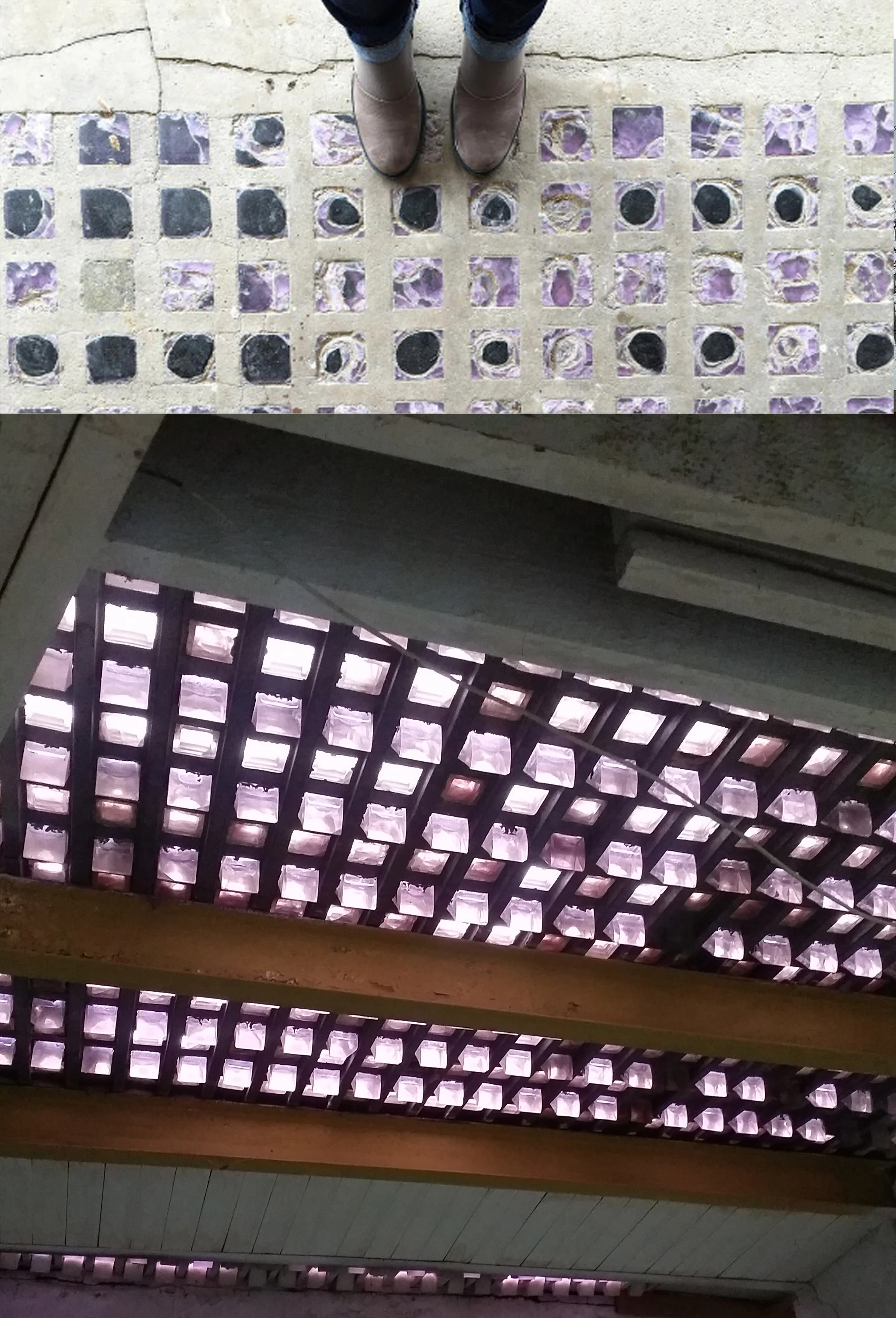
Materials! This is prism glass. The top is a view of Marie's shoes on the sidewalk showing what the glass looks like from above. The bottom picture is in the basement of the Luling Oil Museum. See how much light this lets into the basement. In sidewalk projects, this is one of those historic elements you do not want to cover!
More information:
http://glassian.org/Prism/
http://sidewalkglass.weebly.com/history.html
Current Prism glass companies: http://glassian.org/Prism/current.html
Where: New Orleans, LA
When: March 2017
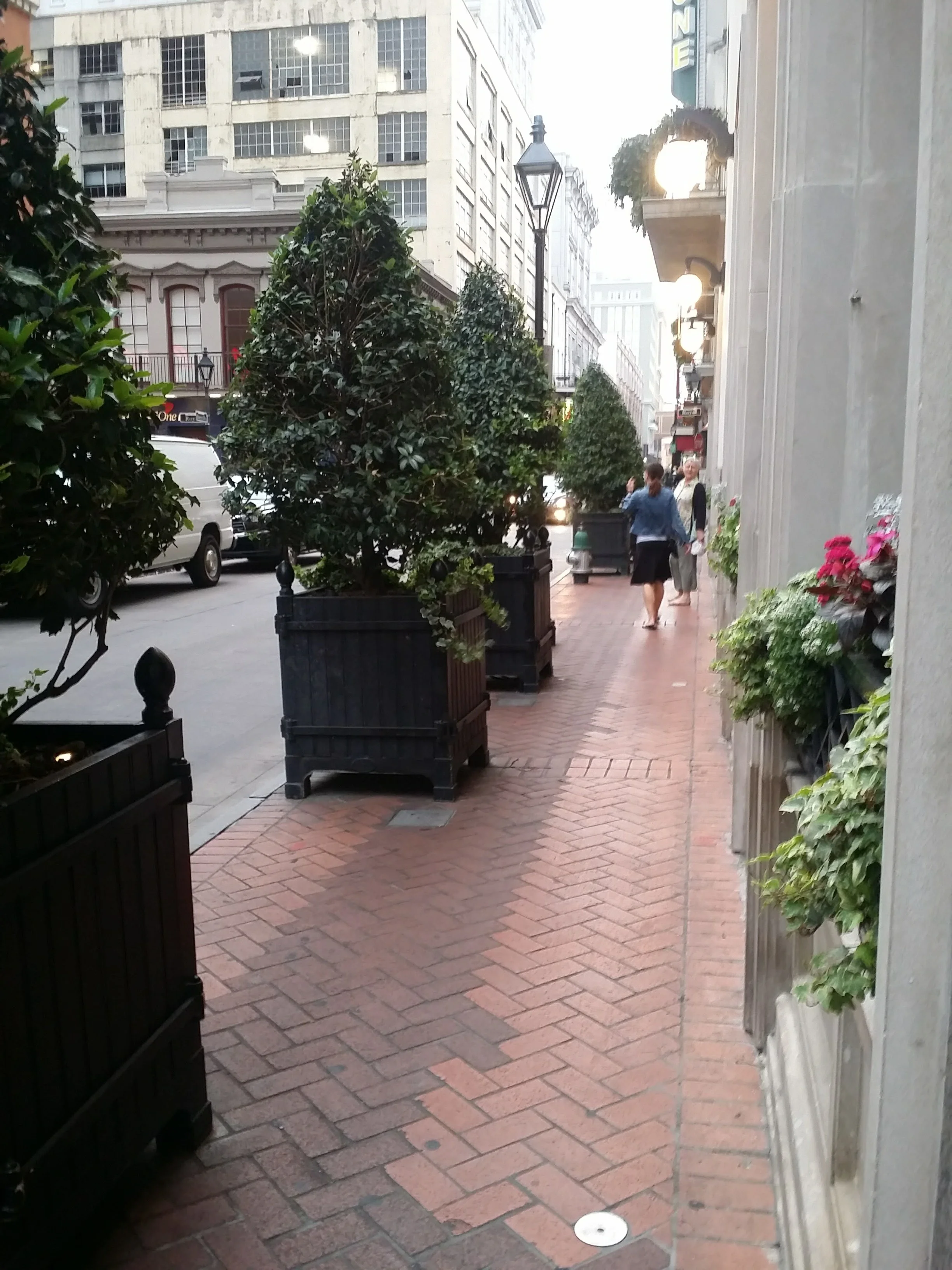
Streetscapes have become a big topic within the different divisions in the Texas Historical Commission. Often in our Texas Main Street cities we do large streetscape projects that encompass the whole Main Street district or courthouse square. The controversy in this is what materials to use. Can the sidewalk stand out and be beautiful as a design element itself or should it be subdued and be in the background? Should the streetscape match in the entire district or grow organically and change throughout? Should trees and planters be a permanent inclusion? New Orleans is a perfect example of the sidewalks being secondary to the buildings. There are trip hazards everywhere and the materials change from block to block. The sidewalks are updated organically with some plaques that provide the year of the particular sidewalk improvement project. The picture here was taken because the planters add a lot of greenery to the current sidewalk conditions without serious infrastructure changes and permanent landscaping decisions.
The Texas Historical Commission is continuing to work on the streetscape debate and have had several meetings with TxDOT trying to come to consensus on a more unified approach. In the meantime, this is the current Streetscape Guidelines for Historic Commercial Districts from 2011.
Where: New Orleans, LA
When: March 2017
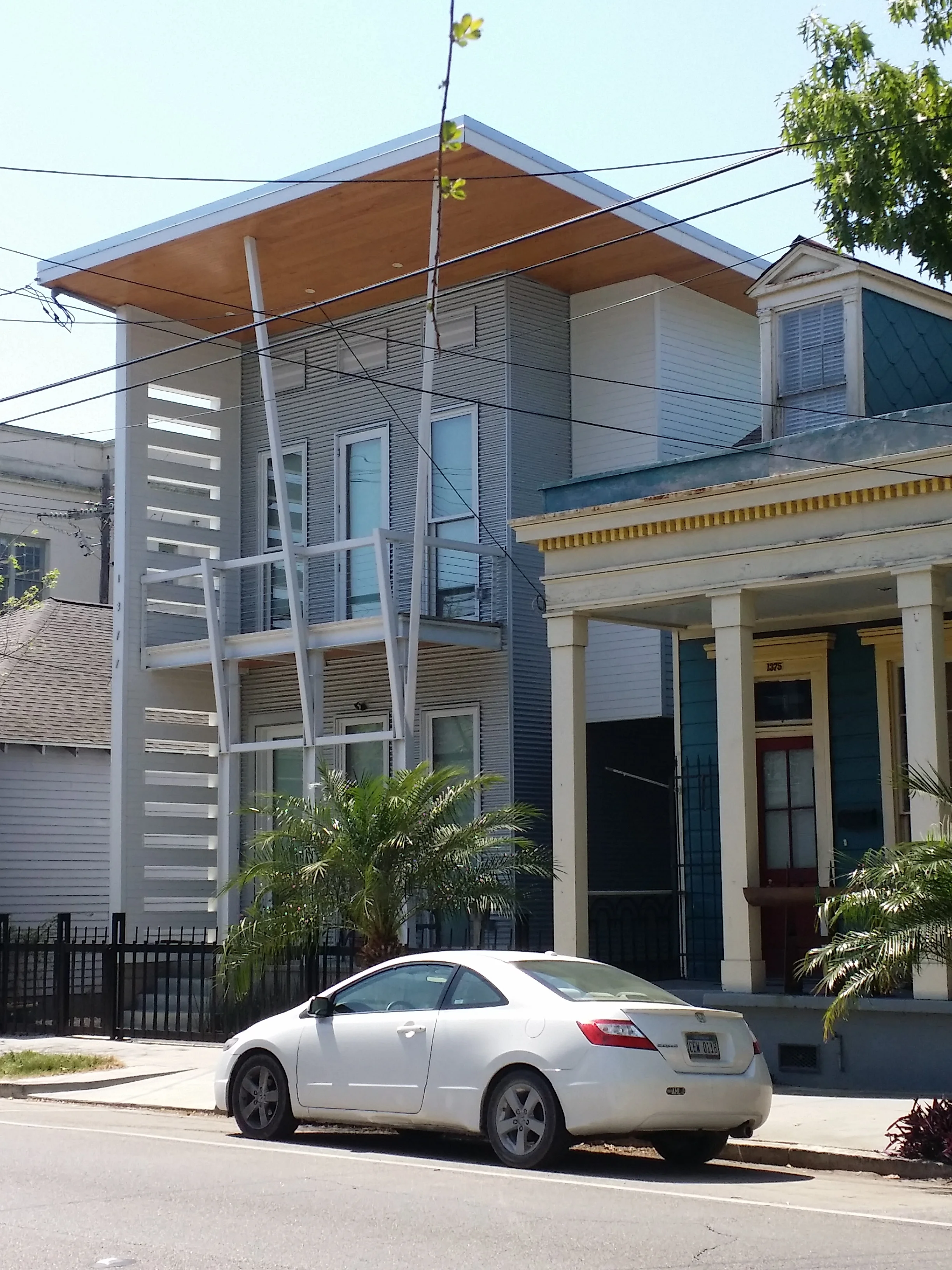
New Infill is a topic that my interest has increased in over the years. The main goal of new architecture should be to meet the same setback (sidewalk edge) and be the same general proportion. When it comes to design, there are basically two ways to approach it: (1) A design that blends in and is similar to the the neighboring building, or (2) a design that is new and represents modern architecture. Both approaches are valid, but I tend to gravitate more toward the new designs because the represent the evolution of our downtown's rather than being stuck in time. This one is from New Orleans in the Garden District. All the houses around it are beautiful historic Victorian designs. This new one came in and is just as bold and beautiful in its new design. Note: though new architecture is truly fascinating to me, I in no means support the demolition of historic buildings for the purpose of new infill. Always save those historic buildings!
Where: Buda, TX
When: February 2017
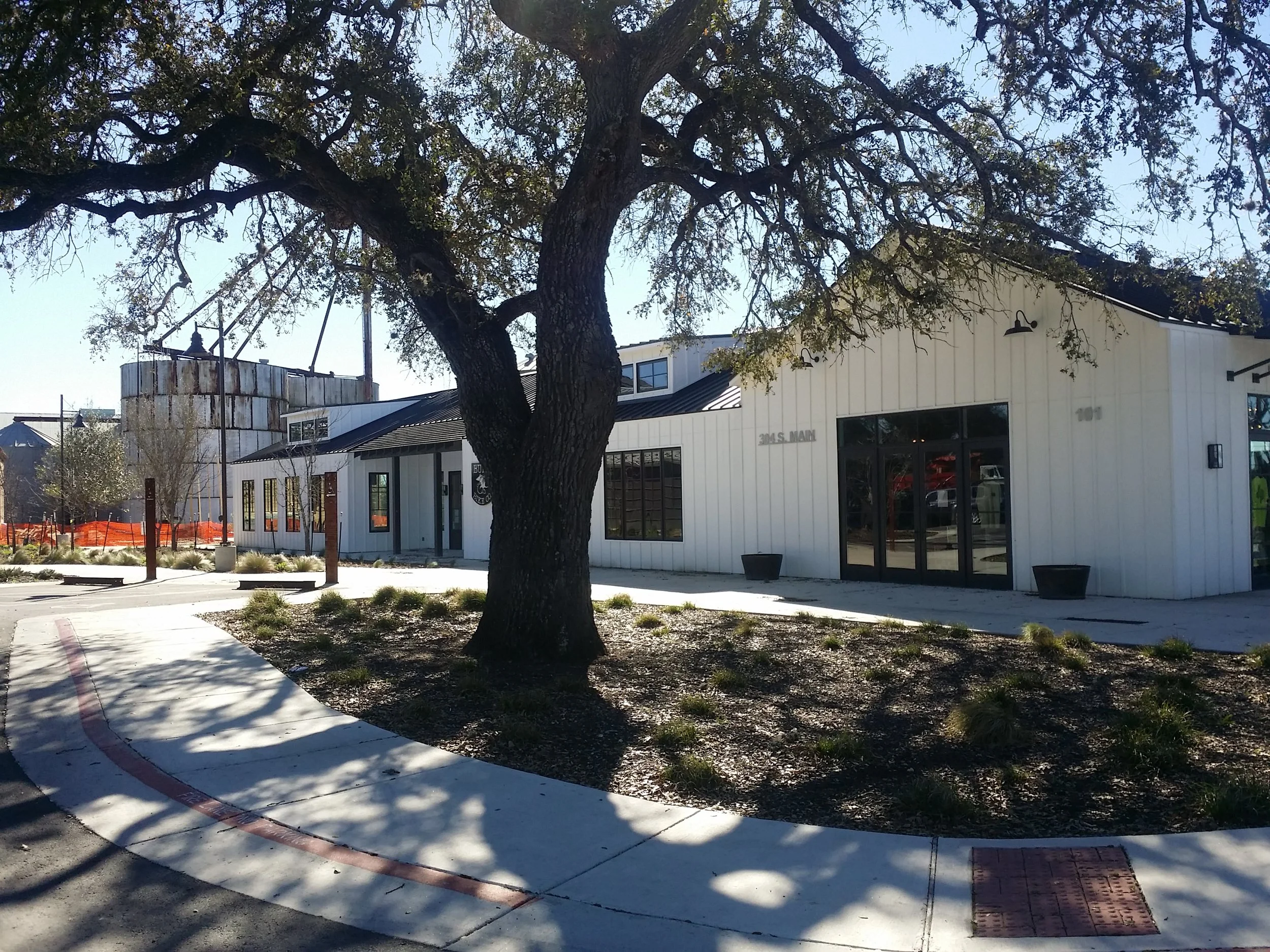
Buda, one of our newest Main Street cities, has some excellent new infill on the edge of their district. This area is historically industrial. Historic elements from the Mill are being retained while new buildings are being built adjacent to bolster retail and restaurants in this part of downtown. The new details compliment the industrial style of the site, while differentiating from the historic parts.
For more information on the project: http://www.budamillandgrain.com/
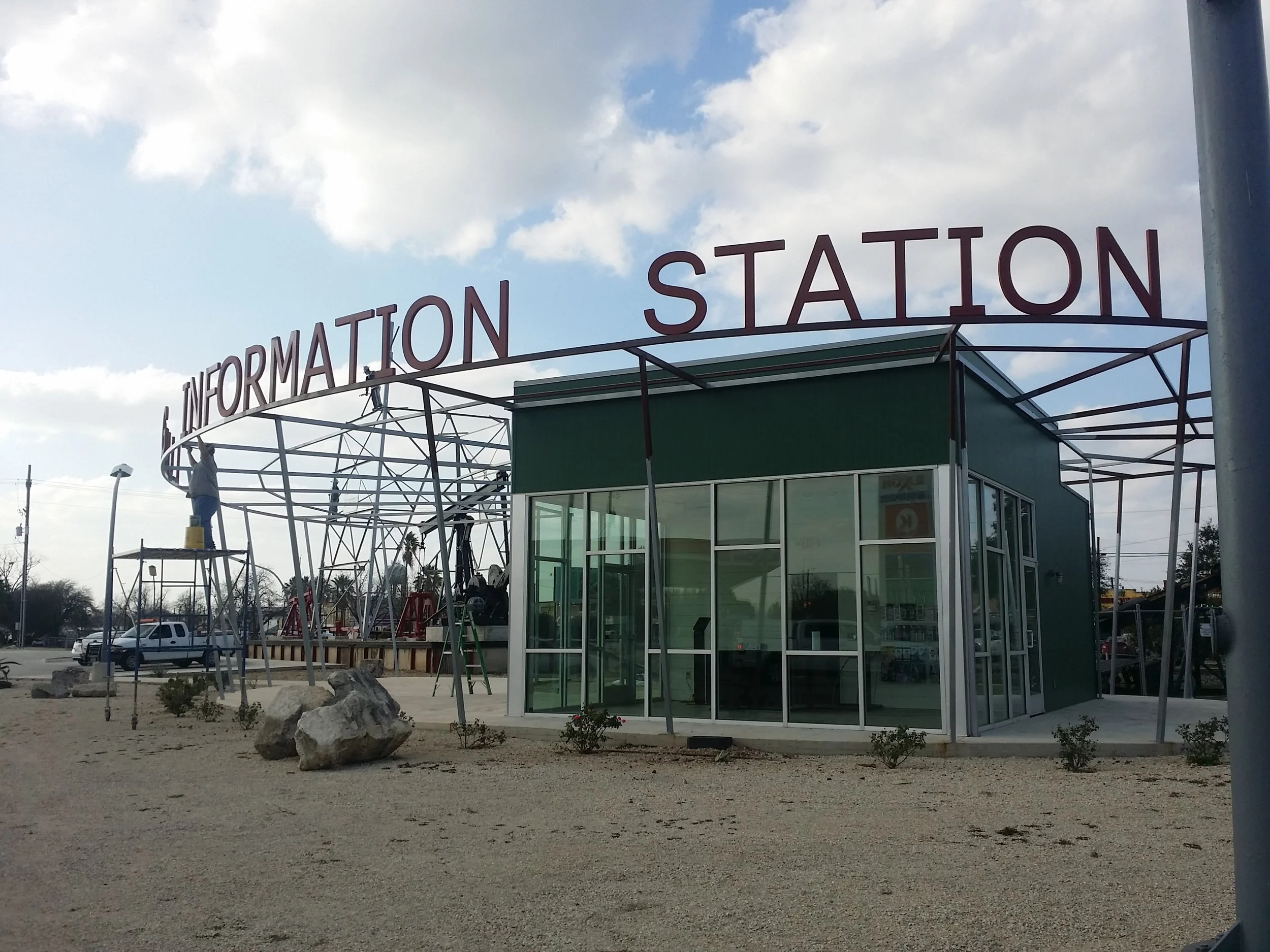
Where: Luling, TX
When: February 2017
This new infill Visitor's information Center project was in the final stages of construction when we visited. What a treat! In the background is a portion of an oil derrick and pumps. The design fits in well with their oil history while providing a fun new design. There is no need for the building to match the historic buildings nearby. It fits in perfect with its new design.
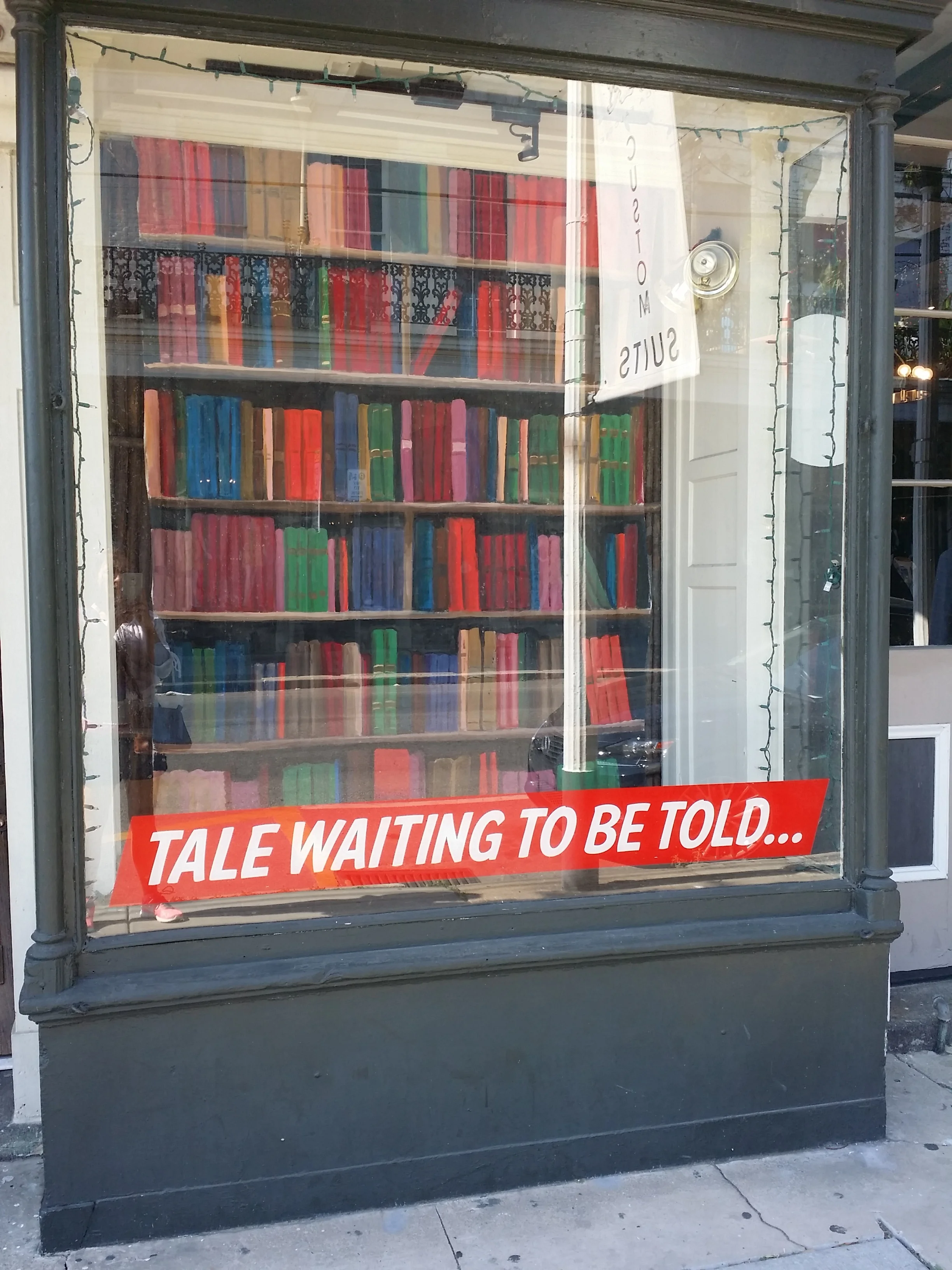
Where: New Orleans, LA
When: March 2017
Vacant stores and storefronts, a constant topic. I love this "window display" for the empty building. A painting of books with the tag line, "Tale waiting to be told..." very creative!
Also on the Resource Library:
Vacant building signs: http://www.txms-resourcelibrary.org/vacant-building-signs/?rq=vacant%20storefronts
Vacant building ordinances: http://www.txms-resourcelibrary.org/vacant-properties/?rq=vacant
Understanding Vacant Commercial buildings: http://www.txms-resourcelibrary.org/understanding-commercial-vacant-properties/?rq=vacant
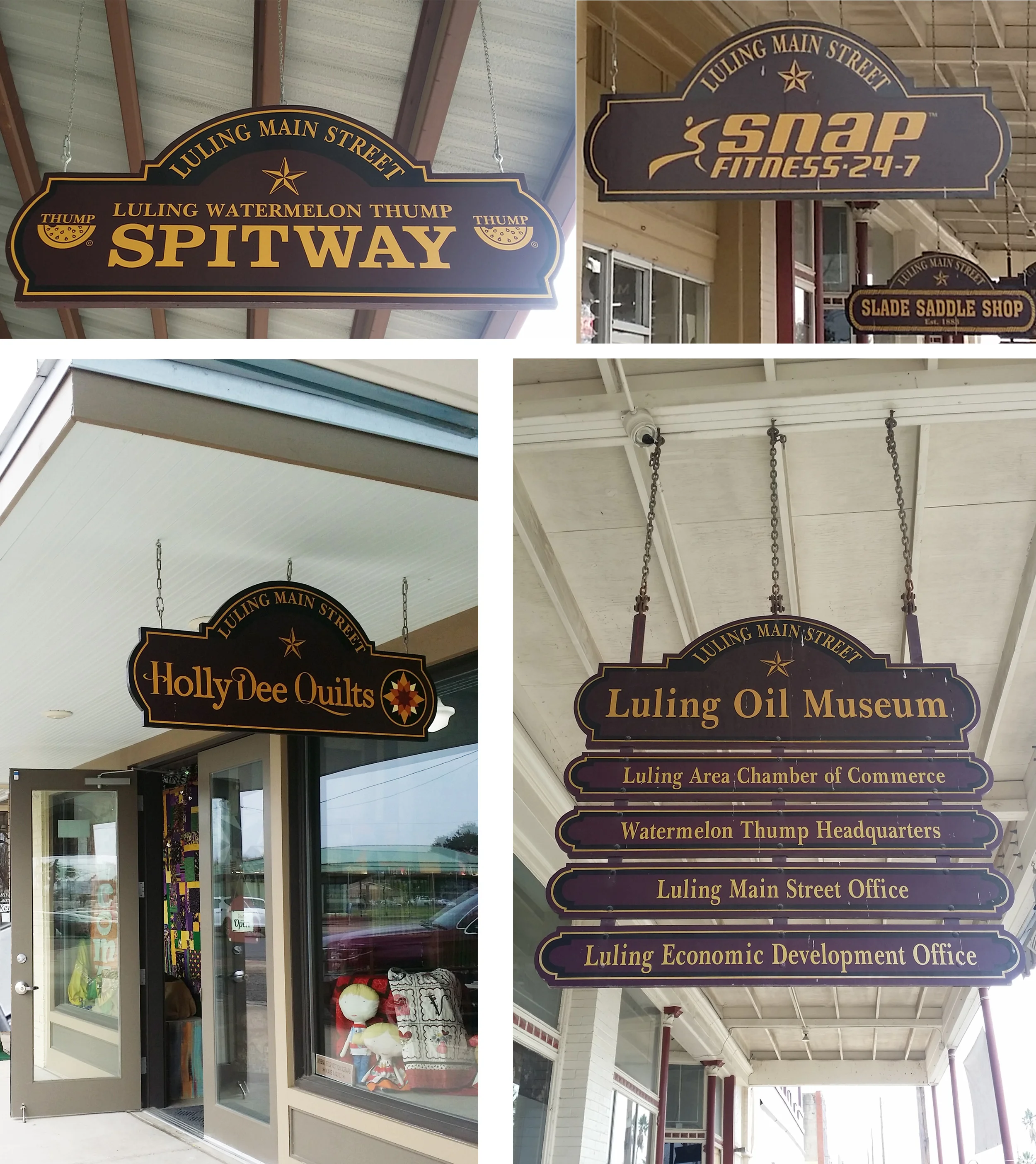
Where: Luling, TX
When: Feb 2017
Luling has been doing a pedestrian sign program for many years. The pedestrian signs have a unified look but still allow some flexibility of individual in font and logos. Each sign says "Luling Main Street" at the top. Note how a sign with multiple tenants is addressed. Contact Derek for more details: https://lulingmainstreet.com/
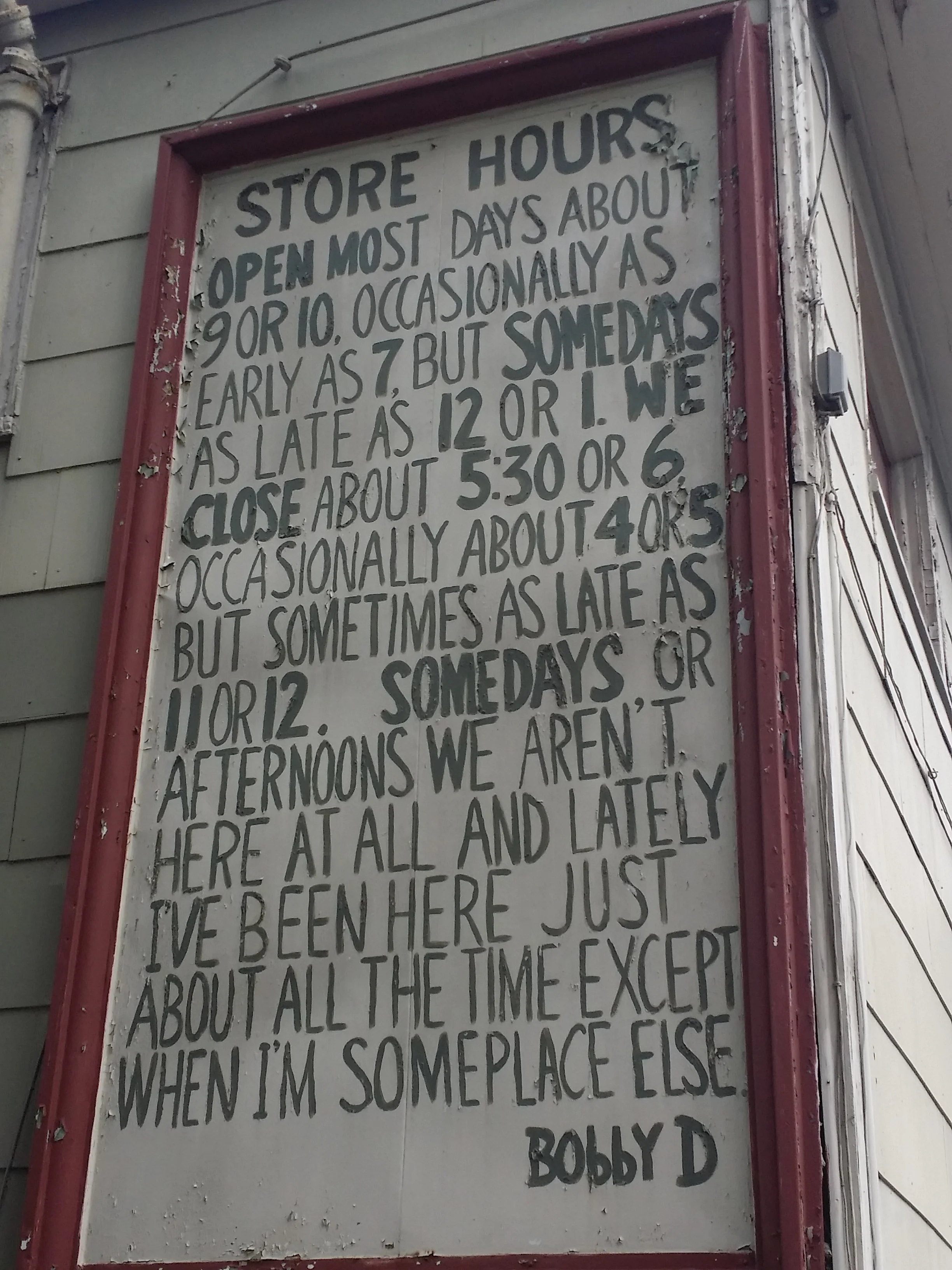
Where: New Orleans, LA
When: March 2017
Well this just says it all when it comes to some Main Street hours doesn't it! Too funny, had to share.
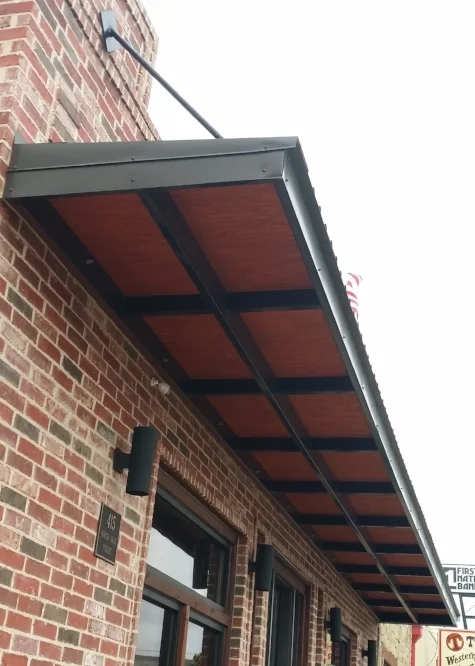
Where: Killeen, TX
When: November 2016
This is a good new canopy for a historic district. Note the metal frame and most importantly wood beadboard (not cheap corrugated metal) on the underside.
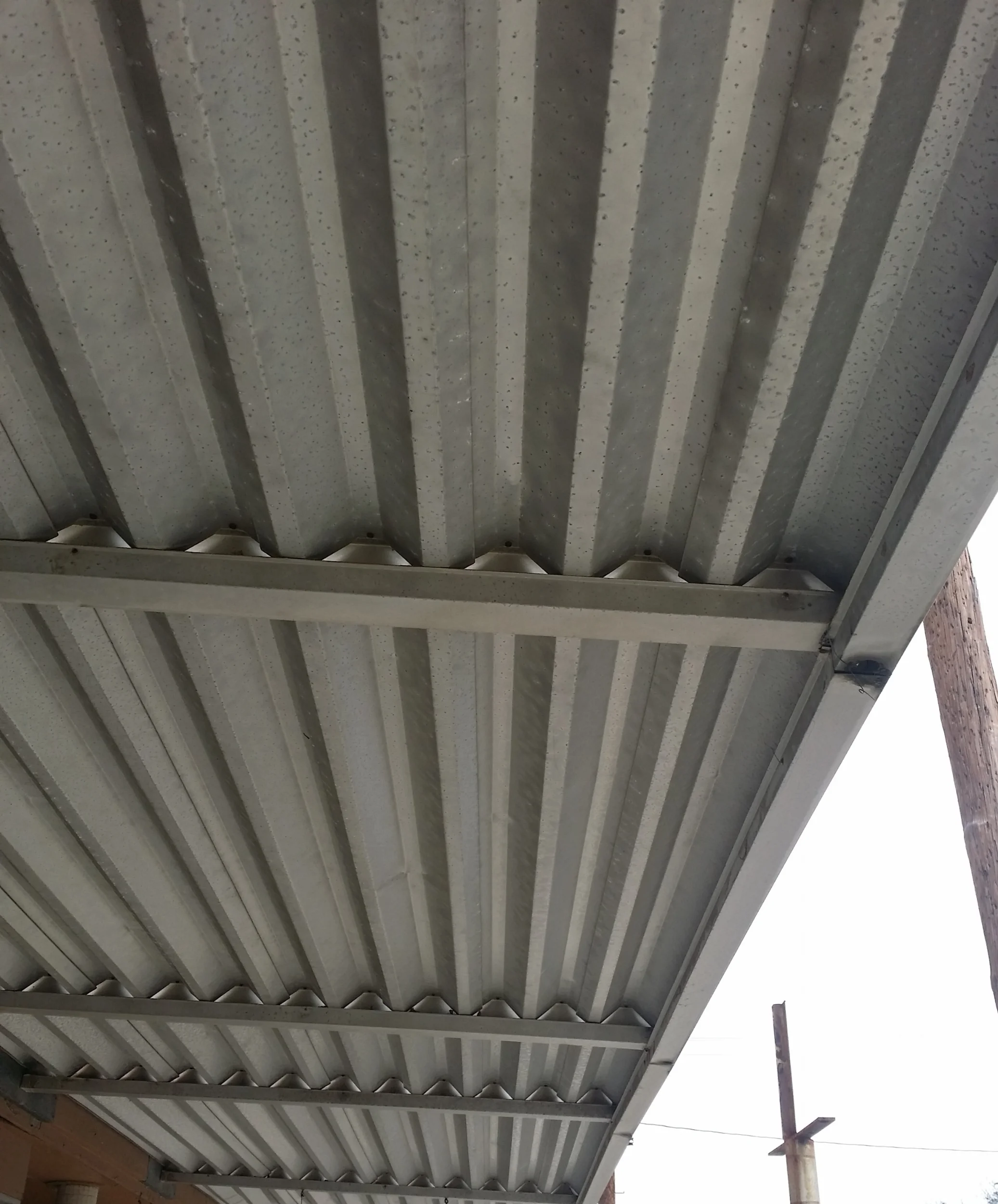
Where: I won't say where
When: 2017
Craftsmanship and materials in canopies is something we are currently encouraging. There are lots of appropriate choices in both metal and wood for new canopies. This is a prime example of the type of metal we DO NOT recommend for canopies and drives me crazy when I see it in our Main Street cities. It conveys inferior quality.
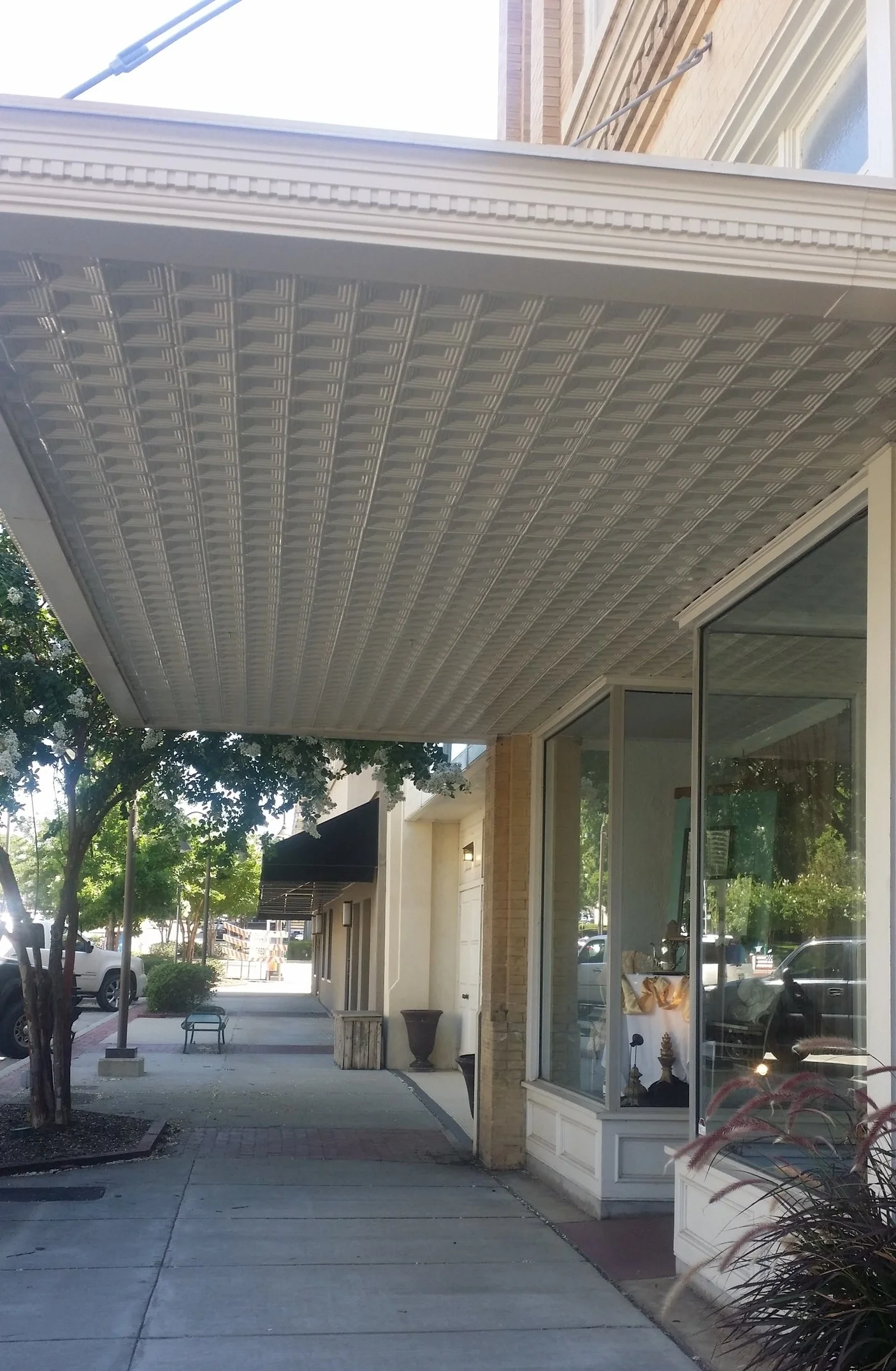
Where: Longview, TX
When: October 2016
Decorative pressed metal is not as common on the underside of a canopy, but there are many examples thoughout Texas. The pressed metal conveys quality craftsmanship. Consider when walking under a canopy that the pedestrian only sees the storefront and the underside of the canopy. While the upper facade may be gorgeous, the customer is most often making their decision to shop in the store based on the lower facade, quality in the storefront and canopy elements is essential.